✨ Calm support for bedtime, focus and overwhelm, Free for 14 days. No card needed
✨ Calm support for bedtime, focus and overwhelm, Free for 14 days. No card needed
✨ Start your free trial today!

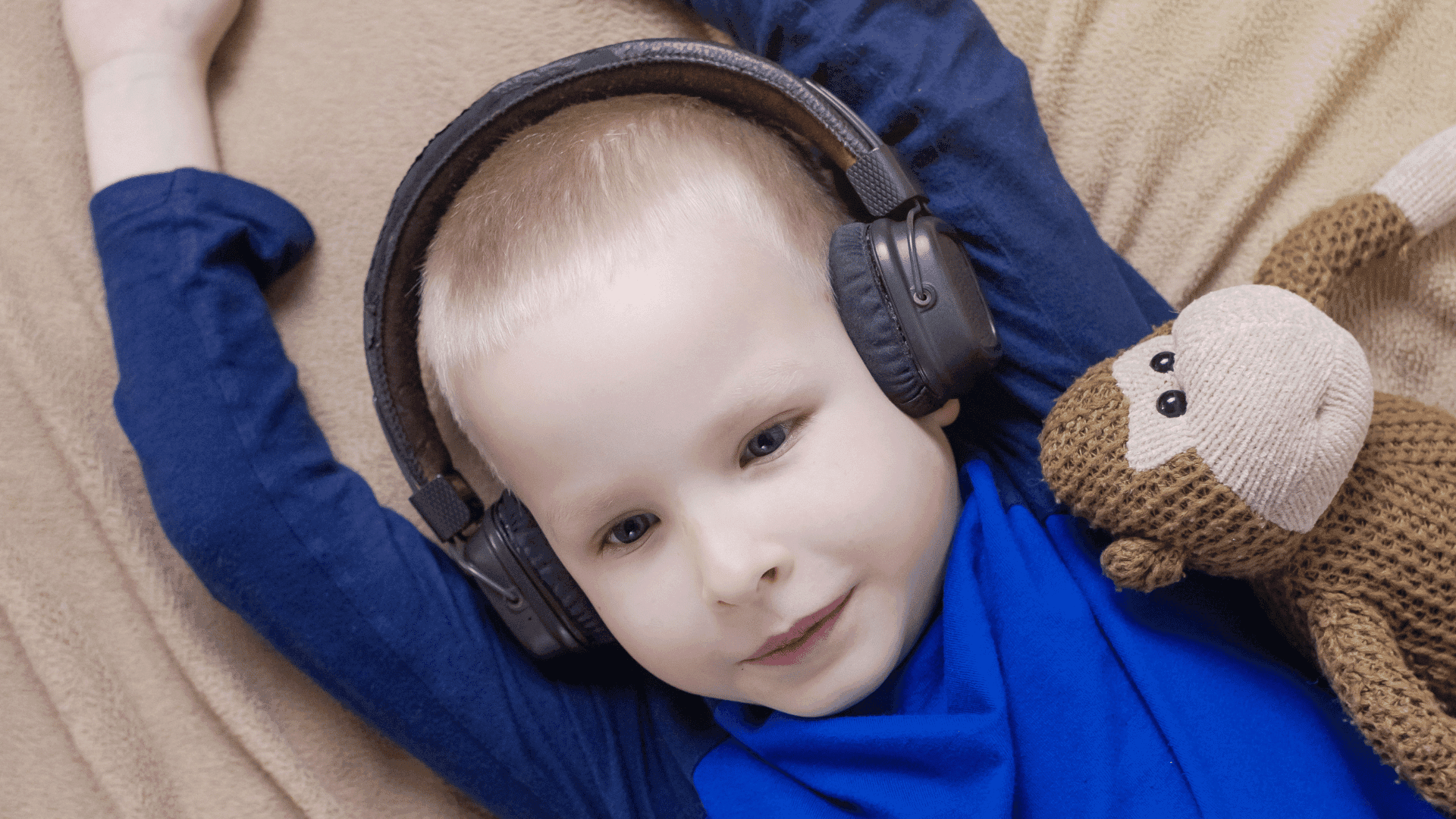
Sound Therapy at Home: The Parent's Guide (No Practitioners Needed)
Sound Therapy at Home: The Parent's Guide (No Practitioners Needed)
You've read about sound therapy. You've seen the promises. And then you've seen the prices.
Hundreds of pounds for practitioner sessions. Clinics that require a two-hour drive each way. Programmes that want weeks of commitment before you see any benefit. It starts to feel like yet another thing designed for families with more time, more money, and more energy than you have.
Here's the thing: what if you just want to try sound therapy at home with your child tonight?
This is the guide nobody writes. Not because the information is secret, but because most sound therapy resources come from practitioners who want you to book their services. At HushAway, we're taking a different approach.
Sound therapy at home for your child is possible. It's accessible. And you can start today, with equipment you probably already own. This guide covers everything you need to know about sound therapy at home child-friendly approaches that actually work.
No waiting lists. No driving across town. No adding another appointment to an already packed week.
Why Sound Therapy at Home Makes Sense for Many Families
Clinical approaches to sound therapy have their place. Programmes like the Safe and Sound Protocol (a listening-based intervention that uses specially filtered music to help regulate the nervous system) involve trained practitioners, specific equipment, and careful monitoring. For some children and situations, that level of support genuinely helps.
But here's what those clinical models don't tell you: much of what helps neurodivergent children calm, focus, and settle doesn't require a practitioner at all.
If you've ever put on nature sounds at bedtime and watched your child's breathing slow, you've already done a form of sound therapy at home. If you've noticed certain music helps your child concentrate on homework, that's DIY sound therapy too.
The question isn't whether parents can use sound to support their children. The question is how to do it more intentionally and effectively.
Research supports this approach. A 2020 study by Linnemann et al., Music listening and stress in daily life, found that simply listening to music reduced cortisol levels and subjective stress in daily life settings. No therapist required. Just sound, in the right context.
For families dealing with:
Long NHS waiting lists (often 18-24 months for neurodevelopmental assessment)
Geographic limitations (clinics clustered in major cities)
Financial constraints (clinical programmes cost hundreds to thousands)
Children who struggle with clinical settings
Sound therapy at home isn't a compromise. It's often the better starting point. And honestly? It's what most of us need to try first anyway.
What You Need to Get Started
One of the barriers to sound therapy at home is the assumption that you need special equipment.
You don't. Not to start.
Essential equipment (what you probably already have)
A speaker or device that plays audio
This can be:
A phone or tablet with a speaker
A smart speaker
A bluetooth speaker
A laptop
For most home sound therapy, the speaker built into your device works fine. Better speakers improve the experience, but they're not essential for getting results.
A quiet-ish space
Perfection not required. You're not soundproofing a recording studio. You just need a space where competing sounds won't overpower what you're playing.
This might be:
Your child's bedroom
A corner of the living room
The car (excellent for after-school decompression)
A tent or den
That's it. Really.
Optional additions that can help
Headphones become useful for:
Binaural beats (which require stereo headphones to work properly)
Situations where you need to isolate your child from environmental noise
Older children who want personal control over their listening
If you're using headphones, look for:
Comfortable fit (your child won't keep them on if they hurt)
Over-ear rather than in-ear for most children
Volume limiting for younger children
A dedicated device helps if you want sound therapy available without the distraction of other apps and notifications.
Sound Therapy at Home: Matching Sounds to Situations
Different sounds support different needs. This is where understanding what sound therapy actually is helps, because you can make better choices about what to try when.
Here's a practical breakdown of what works when.
For settling at bedtime
What often works:
Nature sounds (rain, ocean waves, forest ambience)
Gentle instrumental music
ASMR sounds (soft textures, gentle tapping)
Low frequency ambient sounds
Why: These sounds tend to be consistent, non-stimulating, and don't demand attention. They create a sound blanket that masks unpredictable household noises while helping the nervous system settle.
Tips for bedtime sound therapy at home:
Start the sound during the bedtime routine, not when your child is already in bed struggling. By then, their nervous system is already activated.
Keep volume low. It should be audible but not prominent.
Consistency helps. Using the same sounds each night builds association. Your child's brain learns "this sound means sleep is coming."
Let it play longer than you think you need. Many parents turn sounds off too early.
For emotional overwhelm and meltdown recovery
What often works:
Frequencies (particularly lower frequencies around 174 Hz or 285 Hz)
Very simple ambient sounds
Nature sounds without sudden changes
Minimal, slow-tempo music
What tends not to work:
Complex music
Songs with lyrics (especially familiar lyrics that might trigger associations)
Sounds with sudden volume changes
Anything that requires processing
Why: During or after emotional overwhelm, your child's capacity for processing is reduced. Simple, steady sounds provide regulation support without adding cognitive load.
Tips:
Don't expect sound to stop a meltdown in progress. It's better for recovery and prevention.
Having sounds already available matters. You don't want to be searching for the right audio when your child is overwhelmed and you're stressed too.
Some children need silence during acute distress. Follow your child's cues. They'll tell you what helps.
For focus and homework time
What often works:
Binaural beats see our binaural beats guide for proper use
White, pink, or brown noise
Lo-fi ambient music without lyrics
Nature sounds that don't have bird calls or other attention-grabbing elements
Why: These sounds mask distracting noises while providing a consistent auditory environment that helps sustain attention.
Tips:
Try different types. Some children focus better with total silence, others need sound.
Volume matters. Too loud becomes distracting. Too quiet becomes irrelevant.
Consistency across homework sessions helps build the association between sound and focus.
For transitions
What often works:
Predictable sound sequences (same sounds used each morning, each school departure, each mealtime)
Countdown sounds or transition music
Calming sounds that start before the transition and continue through it
Why: Transitions are often the hardest moments for neurodivergent children. Sound can provide predictability and a sensory anchor through unpredictable moments.
Tips:
Routine matters more than the specific sound
Give warning: "When this song ends, we're going to..."
Use shorter pieces for shorter transitions
How to Know if Sound Therapy at Home is Working
One challenge with DIY sound therapy is knowing whether it's actually helping. Without a practitioner tracking progress, you need to notice changes yourself.
The good news: you know your child better than any practitioner ever will. Here's what to watch for.
Positive signs
Immediate:
Visible relaxation (shoulders dropping, jaw unclenching)
Breathing becoming slower or deeper
Movement slowing down
Eye contact becoming available (if that's typical for your child when calm)
Verbal communication becoming easier
Over time:
Bedtime taking less time
Fewer meltdowns or shorter recovery time
Your child asking for specific sounds
Homework sessions extending
Transitions becoming smoother when sounds are used
When to adjust
The sound might not be right if:
Your child actively avoids or refuses it
Distress increases when the sound plays
No difference after two weeks of consistent use
Try:
Different sound types
Different volume levels
Different times of day
Different delivery (headphones vs speakers)
A note on expectations
Sound therapy at home for your child isn't magic. It won't cure ADHD or autism. It won't replace sleep, good nutrition, or appropriate professional support when that's needed.
What it can do is provide one more tool in your toolkit. A way to make hard moments a bit easier. A support that doesn't require appointments, doesn't cost ongoing fees, and doesn't add demands to an already overwhelmed child.
Sometimes one quiet moment changes a whole day. That's worth having.
Being realistic about what the evidence actually shows helps you use sound therapy appropriately while avoiding disappointment.
Common Mistakes with Home Sound Therapy
We've seen parents struggle with DIY sound therapy for a few common reasons.
Playing sound only during crisis
We get it. You're exhausted and you reach for whatever might help in the moment.
But sound therapy works best as prevention and routine support, not emergency intervention. If you only reach for calming sounds when your child is already melting down, you're unlikely to see much benefit.
Build sounds into daily routines: morning wake-up, after-school decompression, bedtime. This creates the association and habit that makes sound support effective.
Using stimulating content
Not all "calming" content is actually calming. Videos marketed as relaxation often include visual stimulation that counteracts any benefit from the audio. Apps designed for engagement might have calming sounds but include interactive elements that add demands.
For sound therapy, focus on audio-only content. This removes the visual processing load and keeps things genuinely passive.
Giving up too quickly
Parents often try a new sound twice, see no dramatic change, and conclude it doesn't work.
Sound therapy builds over time. The association between specific sounds and specific states strengthens with repetition. Give any new approach at least two weeks of consistent use before deciding.
Forcing it
If your child hates a particular sound, don't push it. Sensory preferences vary enormously, especially among neurodivergent children. What feels soothing to one child might feel genuinely painful to another.
Your child's response tells you whether a sound is right for them. Listen to that feedback.
Getting Started Tonight
You don't need to read another article or research another programme. You can try sound therapy at home with your child tonight.
Tonight's plan:
Pick one situation to target (bedtime is usually easiest to start with)
Choose a simple sound (rain, ocean waves, or gentle ambient music)
Start playing it during your regular bedtime routine, about 15 minutes before your child gets into bed
Keep the volume low
Let it continue playing after your child is in bed
Notice what happens (no pressure for it to "work")
That's it. No equipment to buy. No practitioner to book. Just you, your child, and some gentle sound.
If you want more variety than whatever free sounds you can find online, HushAway's Sound Sanctuary has a library of sounds specifically designed for neurodivergent children. Solfeggio frequencies, binaural beats and ASMR-informed soundscapes created with sensory processing in mind.
You can explore HushAway's 14 day trial and find sounds that match what your child needs tonight. Everything is designed for passive listening. No interaction required from your child, no effort required from you beyond pressing play.
When Home Sound Therapy Isn't Enough
We believe in home-based support. But we're also honest about its limits.
Consider seeking professional support if:
Your child has suspected or confirmed hearing issues (get those checked first)
You've tried consistent home sound therapy for several months with no benefit
Your child's struggles are severe enough to significantly impact daily functioning
You want access to specific clinical protocols like the Safe and Sound Protocol
Sound therapy at home can work alongside professional support too. Many families use clinical approaches for specific training and home-based sound for daily regulation support.
The goal isn't to replace appropriate professional help. It's to have tools you can use every day, without waiting lists, without driving across town, without spending money you don't have.
That's what sound therapy at home is really about. Support that fits your life, not the other way around.
For the complete picture of all sound therapy approaches and how home-based support fits in, see our complete guide to sound therapy for children.
You've read about sound therapy. You've seen the promises. And then you've seen the prices.
Hundreds of pounds for practitioner sessions. Clinics that require a two-hour drive each way. Programmes that want weeks of commitment before you see any benefit. It starts to feel like yet another thing designed for families with more time, more money, and more energy than you have.
Here's the thing: what if you just want to try sound therapy at home with your child tonight?
This is the guide nobody writes. Not because the information is secret, but because most sound therapy resources come from practitioners who want you to book their services. At HushAway, we're taking a different approach.
Sound therapy at home for your child is possible. It's accessible. And you can start today, with equipment you probably already own. This guide covers everything you need to know about sound therapy at home child-friendly approaches that actually work.
No waiting lists. No driving across town. No adding another appointment to an already packed week.
Why Sound Therapy at Home Makes Sense for Many Families
Clinical approaches to sound therapy have their place. Programmes like the Safe and Sound Protocol (a listening-based intervention that uses specially filtered music to help regulate the nervous system) involve trained practitioners, specific equipment, and careful monitoring. For some children and situations, that level of support genuinely helps.
But here's what those clinical models don't tell you: much of what helps neurodivergent children calm, focus, and settle doesn't require a practitioner at all.
If you've ever put on nature sounds at bedtime and watched your child's breathing slow, you've already done a form of sound therapy at home. If you've noticed certain music helps your child concentrate on homework, that's DIY sound therapy too.
The question isn't whether parents can use sound to support their children. The question is how to do it more intentionally and effectively.
Research supports this approach. A 2020 study by Linnemann et al., Music listening and stress in daily life, found that simply listening to music reduced cortisol levels and subjective stress in daily life settings. No therapist required. Just sound, in the right context.
For families dealing with:
Long NHS waiting lists (often 18-24 months for neurodevelopmental assessment)
Geographic limitations (clinics clustered in major cities)
Financial constraints (clinical programmes cost hundreds to thousands)
Children who struggle with clinical settings
Sound therapy at home isn't a compromise. It's often the better starting point. And honestly? It's what most of us need to try first anyway.
What You Need to Get Started
One of the barriers to sound therapy at home is the assumption that you need special equipment.
You don't. Not to start.
Essential equipment (what you probably already have)
A speaker or device that plays audio
This can be:
A phone or tablet with a speaker
A smart speaker
A bluetooth speaker
A laptop
For most home sound therapy, the speaker built into your device works fine. Better speakers improve the experience, but they're not essential for getting results.
A quiet-ish space
Perfection not required. You're not soundproofing a recording studio. You just need a space where competing sounds won't overpower what you're playing.
This might be:
Your child's bedroom
A corner of the living room
The car (excellent for after-school decompression)
A tent or den
That's it. Really.
Optional additions that can help
Headphones become useful for:
Binaural beats (which require stereo headphones to work properly)
Situations where you need to isolate your child from environmental noise
Older children who want personal control over their listening
If you're using headphones, look for:
Comfortable fit (your child won't keep them on if they hurt)
Over-ear rather than in-ear for most children
Volume limiting for younger children
A dedicated device helps if you want sound therapy available without the distraction of other apps and notifications.
Sound Therapy at Home: Matching Sounds to Situations
Different sounds support different needs. This is where understanding what sound therapy actually is helps, because you can make better choices about what to try when.
Here's a practical breakdown of what works when.
For settling at bedtime
What often works:
Nature sounds (rain, ocean waves, forest ambience)
Gentle instrumental music
ASMR sounds (soft textures, gentle tapping)
Low frequency ambient sounds
Why: These sounds tend to be consistent, non-stimulating, and don't demand attention. They create a sound blanket that masks unpredictable household noises while helping the nervous system settle.
Tips for bedtime sound therapy at home:
Start the sound during the bedtime routine, not when your child is already in bed struggling. By then, their nervous system is already activated.
Keep volume low. It should be audible but not prominent.
Consistency helps. Using the same sounds each night builds association. Your child's brain learns "this sound means sleep is coming."
Let it play longer than you think you need. Many parents turn sounds off too early.
For emotional overwhelm and meltdown recovery
What often works:
Frequencies (particularly lower frequencies around 174 Hz or 285 Hz)
Very simple ambient sounds
Nature sounds without sudden changes
Minimal, slow-tempo music
What tends not to work:
Complex music
Songs with lyrics (especially familiar lyrics that might trigger associations)
Sounds with sudden volume changes
Anything that requires processing
Why: During or after emotional overwhelm, your child's capacity for processing is reduced. Simple, steady sounds provide regulation support without adding cognitive load.
Tips:
Don't expect sound to stop a meltdown in progress. It's better for recovery and prevention.
Having sounds already available matters. You don't want to be searching for the right audio when your child is overwhelmed and you're stressed too.
Some children need silence during acute distress. Follow your child's cues. They'll tell you what helps.
For focus and homework time
What often works:
Binaural beats see our binaural beats guide for proper use
White, pink, or brown noise
Lo-fi ambient music without lyrics
Nature sounds that don't have bird calls or other attention-grabbing elements
Why: These sounds mask distracting noises while providing a consistent auditory environment that helps sustain attention.
Tips:
Try different types. Some children focus better with total silence, others need sound.
Volume matters. Too loud becomes distracting. Too quiet becomes irrelevant.
Consistency across homework sessions helps build the association between sound and focus.
For transitions
What often works:
Predictable sound sequences (same sounds used each morning, each school departure, each mealtime)
Countdown sounds or transition music
Calming sounds that start before the transition and continue through it
Why: Transitions are often the hardest moments for neurodivergent children. Sound can provide predictability and a sensory anchor through unpredictable moments.
Tips:
Routine matters more than the specific sound
Give warning: "When this song ends, we're going to..."
Use shorter pieces for shorter transitions
How to Know if Sound Therapy at Home is Working
One challenge with DIY sound therapy is knowing whether it's actually helping. Without a practitioner tracking progress, you need to notice changes yourself.
The good news: you know your child better than any practitioner ever will. Here's what to watch for.
Positive signs
Immediate:
Visible relaxation (shoulders dropping, jaw unclenching)
Breathing becoming slower or deeper
Movement slowing down
Eye contact becoming available (if that's typical for your child when calm)
Verbal communication becoming easier
Over time:
Bedtime taking less time
Fewer meltdowns or shorter recovery time
Your child asking for specific sounds
Homework sessions extending
Transitions becoming smoother when sounds are used
When to adjust
The sound might not be right if:
Your child actively avoids or refuses it
Distress increases when the sound plays
No difference after two weeks of consistent use
Try:
Different sound types
Different volume levels
Different times of day
Different delivery (headphones vs speakers)
A note on expectations
Sound therapy at home for your child isn't magic. It won't cure ADHD or autism. It won't replace sleep, good nutrition, or appropriate professional support when that's needed.
What it can do is provide one more tool in your toolkit. A way to make hard moments a bit easier. A support that doesn't require appointments, doesn't cost ongoing fees, and doesn't add demands to an already overwhelmed child.
Sometimes one quiet moment changes a whole day. That's worth having.
Being realistic about what the evidence actually shows helps you use sound therapy appropriately while avoiding disappointment.
Common Mistakes with Home Sound Therapy
We've seen parents struggle with DIY sound therapy for a few common reasons.
Playing sound only during crisis
We get it. You're exhausted and you reach for whatever might help in the moment.
But sound therapy works best as prevention and routine support, not emergency intervention. If you only reach for calming sounds when your child is already melting down, you're unlikely to see much benefit.
Build sounds into daily routines: morning wake-up, after-school decompression, bedtime. This creates the association and habit that makes sound support effective.
Using stimulating content
Not all "calming" content is actually calming. Videos marketed as relaxation often include visual stimulation that counteracts any benefit from the audio. Apps designed for engagement might have calming sounds but include interactive elements that add demands.
For sound therapy, focus on audio-only content. This removes the visual processing load and keeps things genuinely passive.
Giving up too quickly
Parents often try a new sound twice, see no dramatic change, and conclude it doesn't work.
Sound therapy builds over time. The association between specific sounds and specific states strengthens with repetition. Give any new approach at least two weeks of consistent use before deciding.
Forcing it
If your child hates a particular sound, don't push it. Sensory preferences vary enormously, especially among neurodivergent children. What feels soothing to one child might feel genuinely painful to another.
Your child's response tells you whether a sound is right for them. Listen to that feedback.
Getting Started Tonight
You don't need to read another article or research another programme. You can try sound therapy at home with your child tonight.
Tonight's plan:
Pick one situation to target (bedtime is usually easiest to start with)
Choose a simple sound (rain, ocean waves, or gentle ambient music)
Start playing it during your regular bedtime routine, about 15 minutes before your child gets into bed
Keep the volume low
Let it continue playing after your child is in bed
Notice what happens (no pressure for it to "work")
That's it. No equipment to buy. No practitioner to book. Just you, your child, and some gentle sound.
If you want more variety than whatever free sounds you can find online, HushAway's Sound Sanctuary has a library of sounds specifically designed for neurodivergent children. Solfeggio frequencies, binaural beats and ASMR-informed soundscapes created with sensory processing in mind.
You can explore HushAway's 14 day trial and find sounds that match what your child needs tonight. Everything is designed for passive listening. No interaction required from your child, no effort required from you beyond pressing play.
When Home Sound Therapy Isn't Enough
We believe in home-based support. But we're also honest about its limits.
Consider seeking professional support if:
Your child has suspected or confirmed hearing issues (get those checked first)
You've tried consistent home sound therapy for several months with no benefit
Your child's struggles are severe enough to significantly impact daily functioning
You want access to specific clinical protocols like the Safe and Sound Protocol
Sound therapy at home can work alongside professional support too. Many families use clinical approaches for specific training and home-based sound for daily regulation support.
The goal isn't to replace appropriate professional help. It's to have tools you can use every day, without waiting lists, without driving across town, without spending money you don't have.
That's what sound therapy at home is really about. Support that fits your life, not the other way around.
For the complete picture of all sound therapy approaches and how home-based support fits in, see our complete guide to sound therapy for children.
Make tomorrow feel easier
Whether it’s bedtime battles, big emotions or sensory overload, small sound moments can bring your child the reassurance and stability they need.


Make tomorrow feel easier
Whether it’s bedtime battles, big emotions or sensory overload, small sound moments can bring your child the reassurance and stability they need.
Make tomorrow feel easier
Whether it’s bedtime battles, big emotions or sensory overload, small sound moments can bring your child the reassurance and stability they need.
Can I do sound therapy at home without any training?
Yes. Passive listening to calming sounds doesn't require training. You're not diagnosing or treating anything. You're using sound to support your child's environment and routine, which parents do all the time.
How long should sound therapy sessions be at home?
There's no required length. For bedtime, 30-60 minutes is common (including falling asleep). For focus support, the duration of the task works fine. For transitions, a few minutes is often enough. Follow what works for your child rather than arbitrary rules.
Is sound therapy at home safe for my child?
For passive listening at reasonable volumes, yes. Keep volume comfortable, not loud. If your child has epilepsy, avoid strobe-like audio effects. If your child has hearing aids or cochlear implants, consult their audiologist about any concerns.
What's the difference between sound therapy at home and just playing music?
The difference is intention and selection. Playing random music isn't sound therapy. Intentionally choosing specific sounds to support specific outcomes, and using them consistently, is home sound therapy. The sounds themselves matter less than the thoughtful, consistent approach.
Will sound therapy at home work for my child's specific diagnosis?
Sound therapy isn't diagnosis-specific. It supports regulation, focus, and calm in ways that help most children, regardless of whether they have ADHD, autism, sensory processing differences, or no diagnosis at all. What works varies by child, not by diagnosis.
Can I do sound therapy at home without any training?
Yes. Passive listening to calming sounds doesn't require training. You're not diagnosing or treating anything. You're using sound to support your child's environment and routine, which parents do all the time.
How long should sound therapy sessions be at home?
There's no required length. For bedtime, 30-60 minutes is common (including falling asleep). For focus support, the duration of the task works fine. For transitions, a few minutes is often enough. Follow what works for your child rather than arbitrary rules.
Is sound therapy at home safe for my child?
For passive listening at reasonable volumes, yes. Keep volume comfortable, not loud. If your child has epilepsy, avoid strobe-like audio effects. If your child has hearing aids or cochlear implants, consult their audiologist about any concerns.
What's the difference between sound therapy at home and just playing music?
The difference is intention and selection. Playing random music isn't sound therapy. Intentionally choosing specific sounds to support specific outcomes, and using them consistently, is home sound therapy. The sounds themselves matter less than the thoughtful, consistent approach.
Will sound therapy at home work for my child's specific diagnosis?
Sound therapy isn't diagnosis-specific. It supports regulation, focus, and calm in ways that help most children, regardless of whether they have ADHD, autism, sensory processing differences, or no diagnosis at all. What works varies by child, not by diagnosis.
Founder & Creative Lead - The PeacePath® | Creator of HushAway® Neurodivergent Inclusive Coach | Voice Artist & Storyteller | Sound Therapy Practitioner