✨ Calm support for bedtime, focus and overwhelm, Free for 14 days. No card needed
✨ Calm support for bedtime, focus and overwhelm, Free for 14 days. No card needed
✨ Start your free trial today!

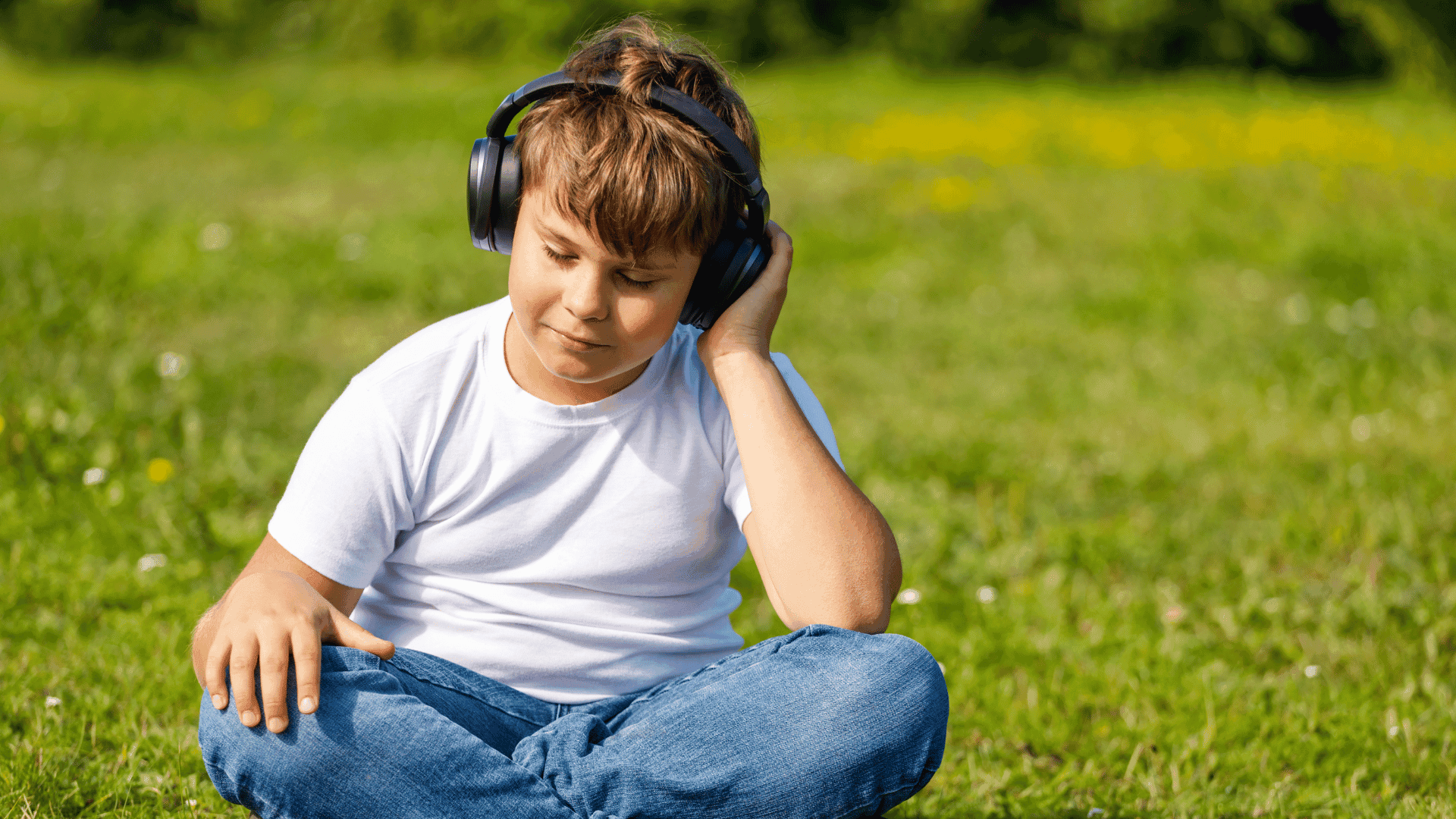
Calming Sounds for Sensory Overload: The Zero-Demand Solution That Actually Works
Calming Sounds for Sensory Overload: The Zero-Demand Solution That Actually Works
Your child is in sensory overload. Crying. Shaking. Hands over ears.
You reach for the weighted blanket. They throw it off. You offer a fidget toy. They can't hold it. You try deep breathing. They can't hear you.
You've tried everything. Nothing works.
Here's what most parents don't realise: calming sensory overload child moments is different with sound. Your child can hear even when they can't process anything else. Sound reaches them without demanding anything back.
That seems backwards. If they're overwhelmed, why would MORE sensory input help?
Sound is different. And understanding why can change everything about how you support your child through these moments.
Why Sound Works for Calming Sensory Overload Child
During sensory overload, your child's nervous system is flooded. Their brain is trying to process too much input at once. Touch feels too intense. Visuals are overwhelming. Even gentle requests feel like demands.
Most sensory calming strategies ask something of your child. Weighted blankets need them to tolerate touch. Fidgets need motor control. Deep pressure needs them to accept physical contact. Breathing exercises need them to follow instructions and coordinate their body.
Every single one requires something.
When a child is in peak overload, all of these demands become impossible.
Sound is different.
It requires nothing.
Your child doesn't need to reach for it, hold it, or do anything with it. They don't need to follow instructions or coordinate their muscles. The sound simply exists in the space around them. It enters through their ears without asking permission.
If you haven't already, read our guide on what sensory overload actually is to understand why the nervous system responds this way.
The Science Behind Sounds for Sensory Overload
Why does this actually work? Research on sounds for sensory overload shows us why passive auditory input can calm an overwhelmed nervous system.
Stephen Porges' Polyvagal Theory explains that certain sound frequencies can signal safety to the nervous system. Porges, 2017: The Polyvagal Theory: Neurophysiological Foundations of Emotions demonstrates how the middle ear muscles respond to specific frequencies, and this response connects directly to our sense of safety and social engagement.
In practical terms, this means:
Predictable patterns calm. When sound follows a consistent pattern, the nervous system can anticipate what comes next. Predictability reduces the threat response. The brain stops scanning for danger. It begins to settle.
Specific frequencies regulate. Lower frequencies tend to activate the parasympathetic nervous system, the "rest and digest" mode. This is why nature sounds, low humming, and certain musical tones can feel soothing even when we don't consciously notice them.
Passive input bypasses resistance. Because sound doesn't require action, it bypasses the overwhelmed prefrontal cortex entirely. The auditory input reaches the regulation centres directly, without needing the child's conscious cooperation.
Research on ASMR (Autonomous Sensory Meridian Response) has found that these gentle sounds produce measurable physiological changes. Poerio et al., 2018: More than a feeling: Autonomous sensory meridian response found that ASMR sounds reduced heart rate and increased skin conductance in those who experience it, indicating genuine calming effects rather than just placebo.
Types of Calming Sensory Items That Use Sound
Not all calming sensory items work the same way. The differences matter. Understanding them helps you choose what's right for your child and their specific profile.
ASMR Sounds
ASMR includes whispered voices, gentle tapping, soft brushing sounds, and similar triggers. These work particularly well for children who:
Are soothed by gentle, close-proximity sounds
Respond well to repetitive, predictable patterns
Find comfort in human voice elements (even without words)
ASMR provides intimacy without physical contact. This makes it especially useful when touch is overwhelming but your child still needs to feel connection.
Nature Soundscapes
Rain, ocean waves, forest sounds, birdsong. These work by providing consistent, predictable background that the nervous system can settle into. They're especially helpful for:
Children who find pure silence uncomfortable or anxiety-provoking
Masking unpredictable environmental sounds
Creating a sense of space and calm environment
Frequency-Based Sounds
This includes solfeggio frequencies and binaural beats. Thaut et al., 2019: Neurologic Music Therapy shows how specific sound frequencies affect brainwave patterns and can support regulation and focus.
Frequency-based sounds work well for:
Children who don't respond to narrative or voice-based content
Times when you need regulation without engagement
Longer listening sessions where variety isn't needed
Combined Approaches
Many children benefit from layered sounds, such as ASMR combined with gentle frequencies or nature sounds blended with soft ambient tones. The combination provides multiple entry points for the nervous system.
Matching Sounds to Sensory Profiles
Your child's sensory profile affects which sounds will help. Understanding the signs of sensory overload in your specific child helps you choose the right approach.
For Auditory Seekers
Some children actively seek sound input. They might hum constantly, prefer loud environments, or create their own noise. For these children:
White noise or pink noise provides consistent auditory "fullness"
Layered soundscapes satisfy the need for rich input
Multiple sound textures (tapping + humming + ambient) can work better than single sources
For Auditory Sensitives
Children who are sensitive to sound might cover their ears often, react strongly to sudden noises, or prefer quiet environments. It might seem paradoxical to offer sound to a sound-sensitive child. But the key is the TYPE of sound:
Predictable sounds feel safe; unpredictable sounds feel threatening
Controlled volume is essential; never start loud
Simple, single-layer sounds often work better than complex compositions
The child should always control whether it plays
The difference between overwhelming sound and calming sound isn't volume. It's predictability. It's control. It's the specific qualities of the sound itself.
For Mixed Profiles
Many neurodivergent children have mixed sensory profiles. They might be sensitive to certain sounds while seeking others. For these children:
Offer variety and let them guide preferences
Note patterns: what works during stress vs what works for prevention
The same child might need different sounds at different times
Sensory Calming Strategies Using Sound Throughout the Day
Sound isn't just for crisis moments.
Building regular sound-based regulation into daily routines can reduce the frequency and intensity of overload episodes. Think of it as preventative care for your child's nervous system.
Morning Regulation
Start the day with gentle sounds before the demands begin. This might look like:
Playing soft ambient sounds while they wake
Using calming audio during the getting-ready routine
Offering a few minutes of chosen sounds before leaving for school
Morning sound helps the nervous system start regulated rather than already climbing toward overload.
Transition Support
Transitions are high-risk moments for sensory overload. Sound can bridge the gap:
In the car on the way home from school
When moving between activities
During the shift from active play to quiet time
Having a "transition sound" that your child associates with settling can become a powerful cue over time. Their nervous system learns to respond before they even realise it.
Pre-Sleep Wind-Down
The nervous system needs time to shift from daytime alertness to sleep readiness. For neurodivergent children, this transition often takes longer.
Sound-based wind-down might include:
Starting calming audio 30-60 minutes before bed
Using the same sounds consistently to build association
Layering sounds with dimmed lighting for combined sensory input
Recovery After Overload
Even after a meltdown or shutdown passes, the nervous system needs recovery time. Understanding the auditory system's role in regulation helps explain why sound works here too.
During recovery:
Keep sounds playing even after visible distress has passed
Use simpler, less stimulating sounds than during active overload
Don't rush back into demands; let the sound do its work
Practical Implementation: Making Sound Work in Real Life
Knowing that sound helps is one thing. Making it work in the chaos of real family life is another.
We get it. You're juggling meals, siblings, school runs, and a hundred other demands. The last thing you need is another complicated strategy to remember.
Start Before the Storm
Sound works best when it's already present as overload builds. Not introduced at peak crisis.
You know your child. You see the early signs. Reach for sound first, before trying other interventions.
Remove Demands From the Sound
The calming power of sound comes from its passivity. Don't ask your child to:
Choose what to play (have it ready)
Put on headphones (let it play in the room)
Tell you if it's helping (let them just receive it)
Do anything except be present with the sound
The more you ask, the more you undermine the zero-demand benefit.
Build a Sound Library
Have sounds ready and accessible. Create a playlist or collection that you've tested when your child is calm, so you know what works before you need it urgently.
Categories to include:
Crisis sounds (what works during active overload)
Transition sounds (what helps between activities)
Sleep sounds (what supports bedtime)
General calm sounds (everyday regulation)
Use Technology Simply
The goal is "press play." Complicated apps, multiple choices, or technology that requires attention defeats the purpose. Aim for:
A single tap to start
No bright screens during use
Sounds that loop or continue without interaction
Volume that's pre-set to safe levels
What Sound Cannot Do
Sound is powerful. But it's one tool among many. Let's be honest about what it can and cannot do.
Sound cannot:
Replace co-regulation entirely (your calm presence still matters)
Fix underlying sensory processing differences
Work immediately the first time (building familiarity takes time)
Be the only strategy you use
Sound works best as part of a broader approach. This includes understanding your child's sensory profile, making environmental modifications, and getting appropriate professional support when needed. But sound can be the easiest piece to start with today.
Starting Today
If you're new to using sound for sensory overload, start small. You don't need a perfect system. You need something that works tonight.
Today: Find one calming sound source (nature sounds, gentle ambient music, or ASMR) and play it during a low-stress moment. Watch your child's response. No questions. No pressure. Just notice.
This week: Try introducing that same sound during a transition time. See if it helps bridge the gap between activities.
This month: Build a small collection of sounds you know work for your child. Have them ready on your phone, no setup required.
The Sound Sanctuary at HushAway® offers sounds specifically designed for sensitive and neurodivergent children. These aren't generic sleep sounds or meditation tracks. They're created for your child's nervous system.
Press play when your child needs it. That's all it takes.
One quiet moment can change a whole day for a child.
For more on understanding and supporting sensory overload, see our comprehensive guide to sensory overload in children.
Your child is in sensory overload. Crying. Shaking. Hands over ears.
You reach for the weighted blanket. They throw it off. You offer a fidget toy. They can't hold it. You try deep breathing. They can't hear you.
You've tried everything. Nothing works.
Here's what most parents don't realise: calming sensory overload child moments is different with sound. Your child can hear even when they can't process anything else. Sound reaches them without demanding anything back.
That seems backwards. If they're overwhelmed, why would MORE sensory input help?
Sound is different. And understanding why can change everything about how you support your child through these moments.
Why Sound Works for Calming Sensory Overload Child
During sensory overload, your child's nervous system is flooded. Their brain is trying to process too much input at once. Touch feels too intense. Visuals are overwhelming. Even gentle requests feel like demands.
Most sensory calming strategies ask something of your child. Weighted blankets need them to tolerate touch. Fidgets need motor control. Deep pressure needs them to accept physical contact. Breathing exercises need them to follow instructions and coordinate their body.
Every single one requires something.
When a child is in peak overload, all of these demands become impossible.
Sound is different.
It requires nothing.
Your child doesn't need to reach for it, hold it, or do anything with it. They don't need to follow instructions or coordinate their muscles. The sound simply exists in the space around them. It enters through their ears without asking permission.
If you haven't already, read our guide on what sensory overload actually is to understand why the nervous system responds this way.
The Science Behind Sounds for Sensory Overload
Why does this actually work? Research on sounds for sensory overload shows us why passive auditory input can calm an overwhelmed nervous system.
Stephen Porges' Polyvagal Theory explains that certain sound frequencies can signal safety to the nervous system. Porges, 2017: The Polyvagal Theory: Neurophysiological Foundations of Emotions demonstrates how the middle ear muscles respond to specific frequencies, and this response connects directly to our sense of safety and social engagement.
In practical terms, this means:
Predictable patterns calm. When sound follows a consistent pattern, the nervous system can anticipate what comes next. Predictability reduces the threat response. The brain stops scanning for danger. It begins to settle.
Specific frequencies regulate. Lower frequencies tend to activate the parasympathetic nervous system, the "rest and digest" mode. This is why nature sounds, low humming, and certain musical tones can feel soothing even when we don't consciously notice them.
Passive input bypasses resistance. Because sound doesn't require action, it bypasses the overwhelmed prefrontal cortex entirely. The auditory input reaches the regulation centres directly, without needing the child's conscious cooperation.
Research on ASMR (Autonomous Sensory Meridian Response) has found that these gentle sounds produce measurable physiological changes. Poerio et al., 2018: More than a feeling: Autonomous sensory meridian response found that ASMR sounds reduced heart rate and increased skin conductance in those who experience it, indicating genuine calming effects rather than just placebo.
Types of Calming Sensory Items That Use Sound
Not all calming sensory items work the same way. The differences matter. Understanding them helps you choose what's right for your child and their specific profile.
ASMR Sounds
ASMR includes whispered voices, gentle tapping, soft brushing sounds, and similar triggers. These work particularly well for children who:
Are soothed by gentle, close-proximity sounds
Respond well to repetitive, predictable patterns
Find comfort in human voice elements (even without words)
ASMR provides intimacy without physical contact. This makes it especially useful when touch is overwhelming but your child still needs to feel connection.
Nature Soundscapes
Rain, ocean waves, forest sounds, birdsong. These work by providing consistent, predictable background that the nervous system can settle into. They're especially helpful for:
Children who find pure silence uncomfortable or anxiety-provoking
Masking unpredictable environmental sounds
Creating a sense of space and calm environment
Frequency-Based Sounds
This includes solfeggio frequencies and binaural beats. Thaut et al., 2019: Neurologic Music Therapy shows how specific sound frequencies affect brainwave patterns and can support regulation and focus.
Frequency-based sounds work well for:
Children who don't respond to narrative or voice-based content
Times when you need regulation without engagement
Longer listening sessions where variety isn't needed
Combined Approaches
Many children benefit from layered sounds, such as ASMR combined with gentle frequencies or nature sounds blended with soft ambient tones. The combination provides multiple entry points for the nervous system.
Matching Sounds to Sensory Profiles
Your child's sensory profile affects which sounds will help. Understanding the signs of sensory overload in your specific child helps you choose the right approach.
For Auditory Seekers
Some children actively seek sound input. They might hum constantly, prefer loud environments, or create their own noise. For these children:
White noise or pink noise provides consistent auditory "fullness"
Layered soundscapes satisfy the need for rich input
Multiple sound textures (tapping + humming + ambient) can work better than single sources
For Auditory Sensitives
Children who are sensitive to sound might cover their ears often, react strongly to sudden noises, or prefer quiet environments. It might seem paradoxical to offer sound to a sound-sensitive child. But the key is the TYPE of sound:
Predictable sounds feel safe; unpredictable sounds feel threatening
Controlled volume is essential; never start loud
Simple, single-layer sounds often work better than complex compositions
The child should always control whether it plays
The difference between overwhelming sound and calming sound isn't volume. It's predictability. It's control. It's the specific qualities of the sound itself.
For Mixed Profiles
Many neurodivergent children have mixed sensory profiles. They might be sensitive to certain sounds while seeking others. For these children:
Offer variety and let them guide preferences
Note patterns: what works during stress vs what works for prevention
The same child might need different sounds at different times
Sensory Calming Strategies Using Sound Throughout the Day
Sound isn't just for crisis moments.
Building regular sound-based regulation into daily routines can reduce the frequency and intensity of overload episodes. Think of it as preventative care for your child's nervous system.
Morning Regulation
Start the day with gentle sounds before the demands begin. This might look like:
Playing soft ambient sounds while they wake
Using calming audio during the getting-ready routine
Offering a few minutes of chosen sounds before leaving for school
Morning sound helps the nervous system start regulated rather than already climbing toward overload.
Transition Support
Transitions are high-risk moments for sensory overload. Sound can bridge the gap:
In the car on the way home from school
When moving between activities
During the shift from active play to quiet time
Having a "transition sound" that your child associates with settling can become a powerful cue over time. Their nervous system learns to respond before they even realise it.
Pre-Sleep Wind-Down
The nervous system needs time to shift from daytime alertness to sleep readiness. For neurodivergent children, this transition often takes longer.
Sound-based wind-down might include:
Starting calming audio 30-60 minutes before bed
Using the same sounds consistently to build association
Layering sounds with dimmed lighting for combined sensory input
Recovery After Overload
Even after a meltdown or shutdown passes, the nervous system needs recovery time. Understanding the auditory system's role in regulation helps explain why sound works here too.
During recovery:
Keep sounds playing even after visible distress has passed
Use simpler, less stimulating sounds than during active overload
Don't rush back into demands; let the sound do its work
Practical Implementation: Making Sound Work in Real Life
Knowing that sound helps is one thing. Making it work in the chaos of real family life is another.
We get it. You're juggling meals, siblings, school runs, and a hundred other demands. The last thing you need is another complicated strategy to remember.
Start Before the Storm
Sound works best when it's already present as overload builds. Not introduced at peak crisis.
You know your child. You see the early signs. Reach for sound first, before trying other interventions.
Remove Demands From the Sound
The calming power of sound comes from its passivity. Don't ask your child to:
Choose what to play (have it ready)
Put on headphones (let it play in the room)
Tell you if it's helping (let them just receive it)
Do anything except be present with the sound
The more you ask, the more you undermine the zero-demand benefit.
Build a Sound Library
Have sounds ready and accessible. Create a playlist or collection that you've tested when your child is calm, so you know what works before you need it urgently.
Categories to include:
Crisis sounds (what works during active overload)
Transition sounds (what helps between activities)
Sleep sounds (what supports bedtime)
General calm sounds (everyday regulation)
Use Technology Simply
The goal is "press play." Complicated apps, multiple choices, or technology that requires attention defeats the purpose. Aim for:
A single tap to start
No bright screens during use
Sounds that loop or continue without interaction
Volume that's pre-set to safe levels
What Sound Cannot Do
Sound is powerful. But it's one tool among many. Let's be honest about what it can and cannot do.
Sound cannot:
Replace co-regulation entirely (your calm presence still matters)
Fix underlying sensory processing differences
Work immediately the first time (building familiarity takes time)
Be the only strategy you use
Sound works best as part of a broader approach. This includes understanding your child's sensory profile, making environmental modifications, and getting appropriate professional support when needed. But sound can be the easiest piece to start with today.
Starting Today
If you're new to using sound for sensory overload, start small. You don't need a perfect system. You need something that works tonight.
Today: Find one calming sound source (nature sounds, gentle ambient music, or ASMR) and play it during a low-stress moment. Watch your child's response. No questions. No pressure. Just notice.
This week: Try introducing that same sound during a transition time. See if it helps bridge the gap between activities.
This month: Build a small collection of sounds you know work for your child. Have them ready on your phone, no setup required.
The Sound Sanctuary at HushAway® offers sounds specifically designed for sensitive and neurodivergent children. These aren't generic sleep sounds or meditation tracks. They're created for your child's nervous system.
Press play when your child needs it. That's all it takes.
One quiet moment can change a whole day for a child.
For more on understanding and supporting sensory overload, see our comprehensive guide to sensory overload in children.
Make tomorrow feel easier
Whether it’s bedtime battles, big emotions or sensory overload, small sound moments can bring your child the reassurance and stability they need.



Make tomorrow feel easier
Whether it’s bedtime battles, big emotions or sensory overload, small sound moments can bring your child the reassurance and stability they need.
Make tomorrow feel easier
Whether it’s bedtime battles, big emotions or sensory overload, small sound moments can bring your child the reassurance and stability they need.
Can calming sounds make sensory overload worse?
The wrong sounds can, yes. Unpredictable sounds, sudden volume changes, or complex audio with many layers can add to overwhelm rather than reduce it.
The key is predictable, controlled sound at appropriate volume. Start quiet. Let your child guide whether they want more or less.
My child is sound-sensitive. Won't playing sounds overwhelm them more?
Sound sensitivity isn't about all sounds being bad. It's about unpredictable, uncontrolled sounds feeling threatening. Therapeutic sound, played at safe volumes with consistent patterns, can actually help sound-sensitive children. The difference is predictability and control.
How loud should calming sounds be?
Start quieter than you think necessary. You can always increase volume slightly, but starting too loud can trigger defensiveness. The sound should be noticeable without requiring attention. Think background presence rather than foreground focus.
What if my child covers their ears when I play sounds?
Ears covered might mean the specific sound isn't right, the volume is too high, or they're too deep in overload for any additional input. Try different sounds, reduce volume significantly, or wait until overload begins to pass before introducing sound.
How long should my child listen to calming sounds?
There's no set time. During active overload, let sounds play until the nervous system settles. This might be 10 minutes. It might be an hour.
For prevention and daily regulation, shorter sessions of 15-30 minutes can be effective. Follow your child's lead.
Do calming sounds work for all neurodivergent children?
Most children respond to some form of calming sound, but preferences vary widely. ADHD, autism, and sensory processing differences all affect which sounds help and when. Finding the right match for your child takes some experimentation, but the zero-demand nature of sound makes it worth trying.
Can calming sounds make sensory overload worse?
The wrong sounds can, yes. Unpredictable sounds, sudden volume changes, or complex audio with many layers can add to overwhelm rather than reduce it.
The key is predictable, controlled sound at appropriate volume. Start quiet. Let your child guide whether they want more or less.
My child is sound-sensitive. Won't playing sounds overwhelm them more?
Sound sensitivity isn't about all sounds being bad. It's about unpredictable, uncontrolled sounds feeling threatening. Therapeutic sound, played at safe volumes with consistent patterns, can actually help sound-sensitive children. The difference is predictability and control.
How loud should calming sounds be?
Start quieter than you think necessary. You can always increase volume slightly, but starting too loud can trigger defensiveness. The sound should be noticeable without requiring attention. Think background presence rather than foreground focus.
What if my child covers their ears when I play sounds?
Ears covered might mean the specific sound isn't right, the volume is too high, or they're too deep in overload for any additional input. Try different sounds, reduce volume significantly, or wait until overload begins to pass before introducing sound.
How long should my child listen to calming sounds?
There's no set time. During active overload, let sounds play until the nervous system settles. This might be 10 minutes. It might be an hour.
For prevention and daily regulation, shorter sessions of 15-30 minutes can be effective. Follow your child's lead.
Do calming sounds work for all neurodivergent children?
Most children respond to some form of calming sound, but preferences vary widely. ADHD, autism, and sensory processing differences all affect which sounds help and when. Finding the right match for your child takes some experimentation, but the zero-demand nature of sound makes it worth trying.
Founder & Creative Lead - The PeacePath® | Creator of HushAway® Neurodivergent Inclusive Coach | Voice Artist & Storyteller | Sound Therapy Practitioner