✨ Calm support for bedtime, focus and overwhelm, Free for 14 days. No card needed
✨ Calm support for bedtime, focus and overwhelm, Free for 14 days. No card needed
✨ Start your free trial today!

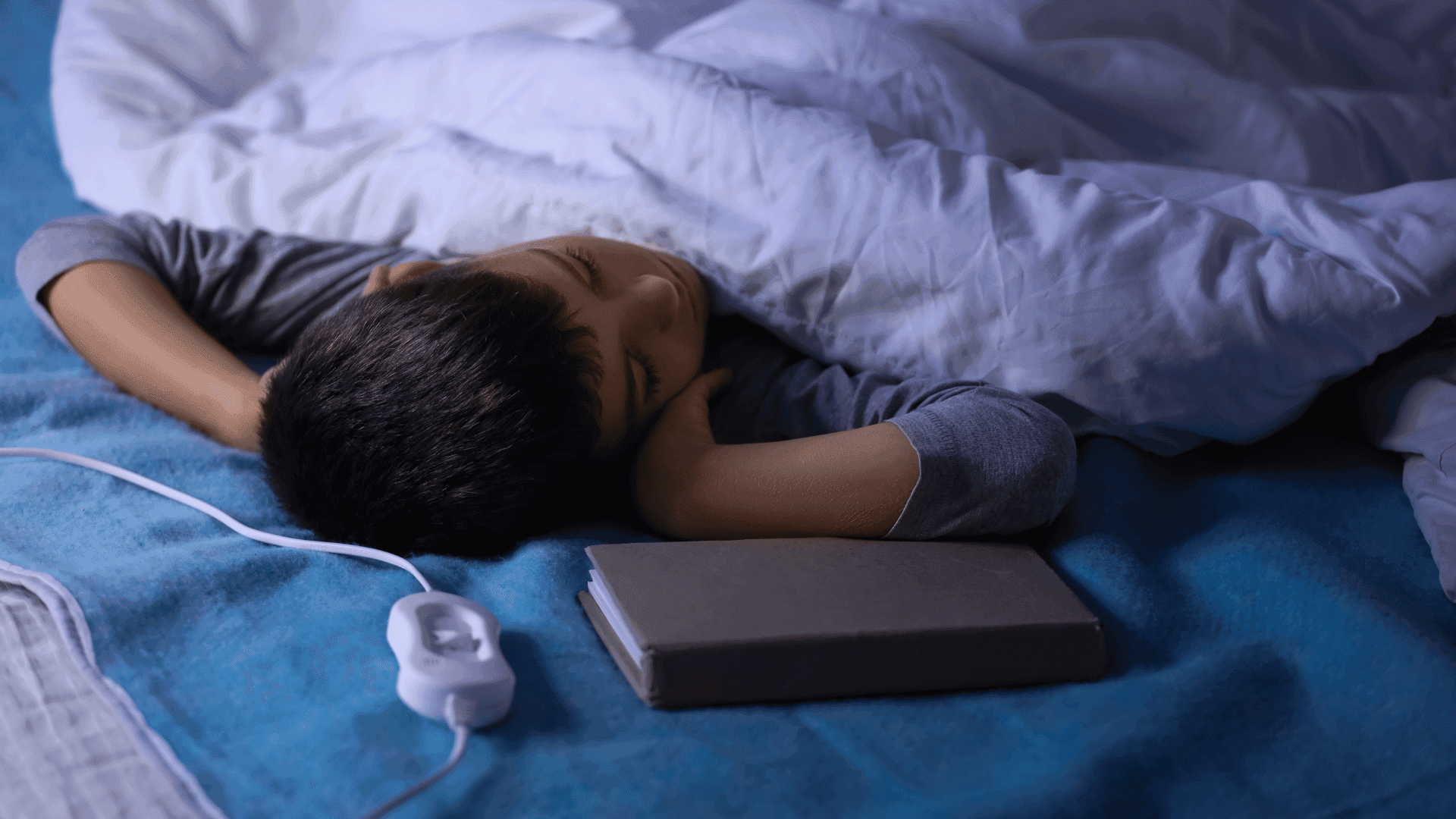
Bedtime Anxiety in Children: Why Sound Stays When You Leave the Room
Bedtime Anxiety in Children: Why Sound Stays When You Leave the Room
You're standing in the doorway. Again.
Your child's eyes are fixed on you. Wide. Watchful. Their body rigid under the duvet, tracking your every movement towards the door.
"Just five more minutes."
"Don't close the door."
"Stay until I fall asleep."
"I can hear something."
You've lived this dance hundreds of times. The gradual retreat that stretches to two hours. The promises broken because you're so tired you'd agree to anything. The guilt when you finally close the door and hear the sobbing start.
Here's what we've learned after years of working with families just like yours: bedtime anxiety in a child isn't manipulation. It isn't stalling. It's genuine fear. Your child genuinely believes that when you leave, something bad will happen. That the dark hides threats. That being alone is dangerous.
And here's what changes everything.
Your child doesn't actually need you to stay. They need something to stay. Something consistent. Something that fills the silence when you're gone.
Sound stays when you leave the room.
That's not a workaround. It's not a trick. For children with bedtime anxiety, sound can provide the presence they're desperate for. Without requiring you to sit on that bedroom floor until midnight. Without the two-hour gradual retreat. Without the guilt.
Neurodivergent children often have heightened auditory awareness. Their nervous systems are already working overtime at bedtime. Sound gives them something to hold onto when you can't be there.
Why Children Develop Bedtime Anxiety
Your child seems perfectly fine all day. Then bedtime arrives, and everything falls apart.
You're not imagining this. And you're not alone.
Research confirms what you're experiencing. According to Kushnir and Sadeh, 2019: Sleep and Anxiety in Preschool Children, there's a strong bidirectional relationship between sleep problems and anxiety in young children. Anxiety makes sleep harder. Poor sleep increases anxiety. The cycle feeds itself, night after night.
Bedtime anxiety in a child typically stems from four fears. Understanding which ones drive your child's behaviour makes all the difference.
Fear of separation. Your child has been with you all day. Bedtime means being alone. For some children, "goodnight" feels like abandonment. It doesn't matter that you'll be downstairs. Their nervous system registers one thing: alone means unsafe. The American Academy of Pediatrics, 2022: Separation Anxiety & Sleeping Trouble in Young Children confirms that separation anxiety commonly disrupts sleep, typically emerging in the second half of a child's first year and sometimes persisting well into the toddler years.
Fear of the dark. This isn't childish imagination. The dark genuinely changes sensory input. Your child can't see threats. Can't orient themselves. Their brain starts scanning for danger. Every creak becomes a footstep. Every shadow becomes a shape.
Fear of the quiet. This is the one most parents miss. Silence isn't peaceful for an anxious brain. Silence is empty. Silence lets every worry get louder. For children with racing thoughts, silence at bedtime becomes an echo chamber.
Fear of losing control. Falling asleep means surrendering consciousness. For a child who already feels unsafe, that surrender feels terrifying. What if something happens while they're asleep? What if they can't wake up fast enough?
If your child won't sleep alone, it's likely some combination of these fears. Standard advice like "just be consistent" or "let them cry it out" misses the point entirely. You can't reason a child out of fear.
You can only help them feel safe.
The Problem with Standard Gradual Retreat
Most sleep advice for separation anxiety bedtime problems follows the same pattern: gradual retreat.
Night one: sit on the bed.
Night two: sit on a chair by the bed.
Night three: move the chair to the middle of the room.
Night four: move to the doorway.
Eventually: close the door.
The theory makes sense. Slowly reduce your presence until your child learns they're safe without you.
But here's what actually happens in most households. For many children, especially neurodivergent ones, this approach fails completely.
Every step backwards feels like rejection. Your child isn't tracking gradual progress. They're tracking the distance between you and them. Last night you were on the bed. Tonight you're further away. Tomorrow, further still. Their anxious brain interprets this one way: Mum is leaving. Mum will be gone.
The silence stays empty. You might be moving further away, but when you close that door, the room becomes equally silent whether you sat on the bed or in the doorway. The emptiness your child fears hasn't changed at all.
You're asking them to feel safe with less. Gradual retreat assumes your child will learn to self-soothe. But you're not giving them tools to self-soothe. You're just removing the one thing that made them feel safe, and hoping they'll adjust.
This doesn't mean gradual retreat can't work. It means it needs something else. Something your child can hold onto when you're not there.
Sound as Presence: Why It Works
Sound stays.
When you leave the room, silence rushes in. But if sound is already playing, your leaving doesn't create emptiness. The auditory environment stays consistent. Your child's brain, which was bracing for the scary quiet, registers something different: same sound. Same as when Mum was here. Still safe.
According to the Sleep Foundation, 2024: Children and Sleep, consistent bedtime routines help children feel secure. What they don't always mention is that the most powerful consistency isn't your actions during bedtime.
It's what remains after you leave.
Sound provides presence without physical presence. Think about what that means. Your child isn't consciously thinking "the sound means safety." Their nervous system is responding to continuity. No abrupt change. No scary silence. No alarm bells telling their brain to scan for threats.
This is especially powerful for neurodivergent children. If you've read about why bedtime is harder for neurodivergent children, you'll know that these children often have heightened auditory awareness. They notice changes that neurotypical children filter out. When sound stays consistent, that heightened awareness becomes an asset. Instead of scanning for threats, they're wrapped in familiarity.
How Sound Addresses Each Fear
Different fears need different approaches. Here's how sound specifically addresses the common anxieties behind a child scared at bedtime.
Sound for Separation Anxiety
The core fear: "When you leave, I'm alone."
Here's what sound does differently: it doesn't leave. It continues playing whether you're in the room or not. Your child's brain learns to associate the sound with safety, not your physical presence. Over time, the sound becomes the comfort object that helps them tolerate your absence.
What works: Gentle, continuous soundscapes without peaks or sudden changes. Something that runs all night without stopping. Ambient sounds, frequencies, or soft ASMR-style audio work well because they're predictable and endless.
The key: Start the sound while you're still in the room. Let your child associate it with your presence first. Then, when you leave, the sound remains as a bridge between your being there and their being okay alone.
Sound for Fear of the Dark
The core fear: "I can't see what's in the darkness."
Hearing fills the gap that vision leaves. In the dark, your child's brain is desperate for information. Sound provides it. Consistent, gentle audio tells their brain something reassuring: the environment is unchanged. No new sounds means no new threats.
Research supports this. According to Gregory and Eley, 2005: Sleep Problems, Anxiety and Cognitive Style in School-Aged Children, anxious children are more likely to interpret ambiguous situations as threatening. Darkness is the ultimate ambiguous situation. Sound makes it less ambiguous by providing consistent sensory input.
What works: Nature sounds can help, but avoid anything with sudden animal calls or weather changes. Rain works if it's consistent. Frequencies or ambient sounds work even better because they don't suggest a physical environment that could contain hidden threats.
The key: The sound should be boring in the best way. Predictable. Nothing to interpret or analyse. Just gentle, constant presence filling the darkness.
Sound for Fear of Quiet
The core fear: "The silence lets my thoughts get loud."
Sound gives the anxious brain something external to focus on. Instead of spiralling through worries, their attention has somewhere to rest. Not active engagement, not distraction. Just something to land on.
If you've read about sound-based bedtime routines, you'll recognise this as the "anchor" effect. The brain needs something to hold onto. Without external input, it creates internal noise. An anxious child lying in silence isn't experiencing peace. They're experiencing an echo chamber of every worry they've ever had.
Sound provides healthy external input that quiets the internal chatter.
What works: This is where binaural beats and specific frequencies shine. They give the brain something to process without requiring active thought. ASMR can also work, though some children find voices stimulating rather than calming.
The key: The sound should be complex enough to hold attention loosely, but simple enough not to engage active thinking. That's a narrow window. The right sounds hit it perfectly.
Sound for Fear of Losing Control
The core fear: "If I fall asleep, I can't protect myself."
This is the hardest fear to address directly. But sound helps indirectly. When your child feels safe in their environment, when separation is managed, when darkness is less scary, when quiet is filled, the terror of falling asleep reduces. They're not surrendering consciousness in a dangerous space. They're resting in a safe one.
What works: Anything that helps the child feel surrounded and protected. Continuous ambient sound creates an auditory cocoon. Some children respond well to gentle ASMR or frequencies that feel like being wrapped in something safe.
The key: Consistency night after night builds trust. The same sound, the same way, teaches their nervous system that sleep time is predictable. And predictable means safe.
Making Gradual Retreat Work with Sound
Here's where it gets practical. You can use gradual retreat and sound together. That combination is often more successful than either alone.
Week One: Sound while present.
Start playing sound as part of your normal bedtime routine. Keep doing everything you usually do. Sit with them, lie with them, stay until they sleep. But the sound is always there. They're learning to associate the sound with safety AND your presence.
Week Two: Sound bridges your retreat.
Now begin moving away. Chair on the bed becomes chair beside the bed. But the sound stays constant. Your position changes. The auditory environment doesn't. This gives your child something familiar to hold onto as your physical presence reduces.
Week Three: Sound stays when you leave.
Start leaving before they're fully asleep. Say goodnight, walk to the door, leave it slightly open. The sound continues. They're not lying in silence wondering when the scary quiet will start. The soundscape they associate with safety is already there, waiting.
Week Four and beyond: Sound becomes their safety object.
Eventually, you can say goodnight, turn on their sounds, and close the door. For children who previously couldn't bear you leaving, this feels like magic.
It isn't magic. It's careful conditioning. They've learned that sound means safe. And sound stays.
What Sounds Work Best for Bedtime Anxiety
Not all sounds work equally for anxious children. After working with hundreds of families, here's what tends to help, and what tends to backfire.
Works well:
Ambient frequencies (solfeggio, binaural beats at low frequencies)
Continuous ASMR-style audio without speech
Nature sounds that are truly consistent (no sudden thunder, no bird calls)
Soundscapes designed to play all night without loops or restarts
Often backfires:
Music with melodies (the brain follows along, staying alert)
Spoken word or guided meditations (requires processing)
Nature sounds with variation (rain that intensifies, wind that gusts)
Audio that stops after a set time (the silence wakes them, and you're back at square one)
If you're exploring sound options, our sound-based bedtime routine guide explains the different types in detail. For autistic children dealing with fear of dark autism specifically, the autism bedtime routine article covers how predictability reduces anxiety.
When Sound Isn't Enough
Sound is powerful. But it isn't a cure for all anxiety. Some children need additional support.
If your child's bedtime anxiety is causing significant daytime distress, getting worse despite your efforts, accompanied by other anxiety symptoms, or affecting their health or your family's wellbeing, please reach out to your GP or a child psychologist. Sound can be part of the solution, but professional support might be needed to address underlying anxiety.
For most children with typical bedtime anxiety, though, sound provides exactly what they need. Consistent presence that bridges the gap between your being there and their learning to feel safe alone.
Your Child Needs Presence, Not You
This might feel hard to hear. But it's also freeing.
Your child doesn't need YOU to stay forever. They need to feel not-alone. Sound provides that.
You're not abandoning them when you leave the room. You're teaching them that safety doesn't depend on your physical presence. You're giving them a tool they can use tonight, and every night, without requiring anything from you.
Picture what this could look like in a few weeks. You say goodnight. You press play. You walk to the door. And instead of those wide, watchful eyes tracking your retreat, your child settles into the sound. The sound that stays. The sound that means safe.
Sound stays when you leave.
For an anxious child, that's everything.
Want to try tonight? The Sound Sanctuary has soundscapes designed specifically for neurodivergent children with bedtime anxiety. Frequencies, ambient sounds, gentle ASMR. No sudden changes. No loops that restart. No silence breaking in at 2am. Just consistent, gentle audio that stays all night, so you don't have to.
Explore The Sound Sanctuary and find what helps your child feel safe tonight.
For the complete framework covering all aspects of neurodivergent bedtime routines, see our comprehensive guide.
You're standing in the doorway. Again.
Your child's eyes are fixed on you. Wide. Watchful. Their body rigid under the duvet, tracking your every movement towards the door.
"Just five more minutes."
"Don't close the door."
"Stay until I fall asleep."
"I can hear something."
You've lived this dance hundreds of times. The gradual retreat that stretches to two hours. The promises broken because you're so tired you'd agree to anything. The guilt when you finally close the door and hear the sobbing start.
Here's what we've learned after years of working with families just like yours: bedtime anxiety in a child isn't manipulation. It isn't stalling. It's genuine fear. Your child genuinely believes that when you leave, something bad will happen. That the dark hides threats. That being alone is dangerous.
And here's what changes everything.
Your child doesn't actually need you to stay. They need something to stay. Something consistent. Something that fills the silence when you're gone.
Sound stays when you leave the room.
That's not a workaround. It's not a trick. For children with bedtime anxiety, sound can provide the presence they're desperate for. Without requiring you to sit on that bedroom floor until midnight. Without the two-hour gradual retreat. Without the guilt.
Neurodivergent children often have heightened auditory awareness. Their nervous systems are already working overtime at bedtime. Sound gives them something to hold onto when you can't be there.
Why Children Develop Bedtime Anxiety
Your child seems perfectly fine all day. Then bedtime arrives, and everything falls apart.
You're not imagining this. And you're not alone.
Research confirms what you're experiencing. According to Kushnir and Sadeh, 2019: Sleep and Anxiety in Preschool Children, there's a strong bidirectional relationship between sleep problems and anxiety in young children. Anxiety makes sleep harder. Poor sleep increases anxiety. The cycle feeds itself, night after night.
Bedtime anxiety in a child typically stems from four fears. Understanding which ones drive your child's behaviour makes all the difference.
Fear of separation. Your child has been with you all day. Bedtime means being alone. For some children, "goodnight" feels like abandonment. It doesn't matter that you'll be downstairs. Their nervous system registers one thing: alone means unsafe. The American Academy of Pediatrics, 2022: Separation Anxiety & Sleeping Trouble in Young Children confirms that separation anxiety commonly disrupts sleep, typically emerging in the second half of a child's first year and sometimes persisting well into the toddler years.
Fear of the dark. This isn't childish imagination. The dark genuinely changes sensory input. Your child can't see threats. Can't orient themselves. Their brain starts scanning for danger. Every creak becomes a footstep. Every shadow becomes a shape.
Fear of the quiet. This is the one most parents miss. Silence isn't peaceful for an anxious brain. Silence is empty. Silence lets every worry get louder. For children with racing thoughts, silence at bedtime becomes an echo chamber.
Fear of losing control. Falling asleep means surrendering consciousness. For a child who already feels unsafe, that surrender feels terrifying. What if something happens while they're asleep? What if they can't wake up fast enough?
If your child won't sleep alone, it's likely some combination of these fears. Standard advice like "just be consistent" or "let them cry it out" misses the point entirely. You can't reason a child out of fear.
You can only help them feel safe.
The Problem with Standard Gradual Retreat
Most sleep advice for separation anxiety bedtime problems follows the same pattern: gradual retreat.
Night one: sit on the bed.
Night two: sit on a chair by the bed.
Night three: move the chair to the middle of the room.
Night four: move to the doorway.
Eventually: close the door.
The theory makes sense. Slowly reduce your presence until your child learns they're safe without you.
But here's what actually happens in most households. For many children, especially neurodivergent ones, this approach fails completely.
Every step backwards feels like rejection. Your child isn't tracking gradual progress. They're tracking the distance between you and them. Last night you were on the bed. Tonight you're further away. Tomorrow, further still. Their anxious brain interprets this one way: Mum is leaving. Mum will be gone.
The silence stays empty. You might be moving further away, but when you close that door, the room becomes equally silent whether you sat on the bed or in the doorway. The emptiness your child fears hasn't changed at all.
You're asking them to feel safe with less. Gradual retreat assumes your child will learn to self-soothe. But you're not giving them tools to self-soothe. You're just removing the one thing that made them feel safe, and hoping they'll adjust.
This doesn't mean gradual retreat can't work. It means it needs something else. Something your child can hold onto when you're not there.
Sound as Presence: Why It Works
Sound stays.
When you leave the room, silence rushes in. But if sound is already playing, your leaving doesn't create emptiness. The auditory environment stays consistent. Your child's brain, which was bracing for the scary quiet, registers something different: same sound. Same as when Mum was here. Still safe.
According to the Sleep Foundation, 2024: Children and Sleep, consistent bedtime routines help children feel secure. What they don't always mention is that the most powerful consistency isn't your actions during bedtime.
It's what remains after you leave.
Sound provides presence without physical presence. Think about what that means. Your child isn't consciously thinking "the sound means safety." Their nervous system is responding to continuity. No abrupt change. No scary silence. No alarm bells telling their brain to scan for threats.
This is especially powerful for neurodivergent children. If you've read about why bedtime is harder for neurodivergent children, you'll know that these children often have heightened auditory awareness. They notice changes that neurotypical children filter out. When sound stays consistent, that heightened awareness becomes an asset. Instead of scanning for threats, they're wrapped in familiarity.
How Sound Addresses Each Fear
Different fears need different approaches. Here's how sound specifically addresses the common anxieties behind a child scared at bedtime.
Sound for Separation Anxiety
The core fear: "When you leave, I'm alone."
Here's what sound does differently: it doesn't leave. It continues playing whether you're in the room or not. Your child's brain learns to associate the sound with safety, not your physical presence. Over time, the sound becomes the comfort object that helps them tolerate your absence.
What works: Gentle, continuous soundscapes without peaks or sudden changes. Something that runs all night without stopping. Ambient sounds, frequencies, or soft ASMR-style audio work well because they're predictable and endless.
The key: Start the sound while you're still in the room. Let your child associate it with your presence first. Then, when you leave, the sound remains as a bridge between your being there and their being okay alone.
Sound for Fear of the Dark
The core fear: "I can't see what's in the darkness."
Hearing fills the gap that vision leaves. In the dark, your child's brain is desperate for information. Sound provides it. Consistent, gentle audio tells their brain something reassuring: the environment is unchanged. No new sounds means no new threats.
Research supports this. According to Gregory and Eley, 2005: Sleep Problems, Anxiety and Cognitive Style in School-Aged Children, anxious children are more likely to interpret ambiguous situations as threatening. Darkness is the ultimate ambiguous situation. Sound makes it less ambiguous by providing consistent sensory input.
What works: Nature sounds can help, but avoid anything with sudden animal calls or weather changes. Rain works if it's consistent. Frequencies or ambient sounds work even better because they don't suggest a physical environment that could contain hidden threats.
The key: The sound should be boring in the best way. Predictable. Nothing to interpret or analyse. Just gentle, constant presence filling the darkness.
Sound for Fear of Quiet
The core fear: "The silence lets my thoughts get loud."
Sound gives the anxious brain something external to focus on. Instead of spiralling through worries, their attention has somewhere to rest. Not active engagement, not distraction. Just something to land on.
If you've read about sound-based bedtime routines, you'll recognise this as the "anchor" effect. The brain needs something to hold onto. Without external input, it creates internal noise. An anxious child lying in silence isn't experiencing peace. They're experiencing an echo chamber of every worry they've ever had.
Sound provides healthy external input that quiets the internal chatter.
What works: This is where binaural beats and specific frequencies shine. They give the brain something to process without requiring active thought. ASMR can also work, though some children find voices stimulating rather than calming.
The key: The sound should be complex enough to hold attention loosely, but simple enough not to engage active thinking. That's a narrow window. The right sounds hit it perfectly.
Sound for Fear of Losing Control
The core fear: "If I fall asleep, I can't protect myself."
This is the hardest fear to address directly. But sound helps indirectly. When your child feels safe in their environment, when separation is managed, when darkness is less scary, when quiet is filled, the terror of falling asleep reduces. They're not surrendering consciousness in a dangerous space. They're resting in a safe one.
What works: Anything that helps the child feel surrounded and protected. Continuous ambient sound creates an auditory cocoon. Some children respond well to gentle ASMR or frequencies that feel like being wrapped in something safe.
The key: Consistency night after night builds trust. The same sound, the same way, teaches their nervous system that sleep time is predictable. And predictable means safe.
Making Gradual Retreat Work with Sound
Here's where it gets practical. You can use gradual retreat and sound together. That combination is often more successful than either alone.
Week One: Sound while present.
Start playing sound as part of your normal bedtime routine. Keep doing everything you usually do. Sit with them, lie with them, stay until they sleep. But the sound is always there. They're learning to associate the sound with safety AND your presence.
Week Two: Sound bridges your retreat.
Now begin moving away. Chair on the bed becomes chair beside the bed. But the sound stays constant. Your position changes. The auditory environment doesn't. This gives your child something familiar to hold onto as your physical presence reduces.
Week Three: Sound stays when you leave.
Start leaving before they're fully asleep. Say goodnight, walk to the door, leave it slightly open. The sound continues. They're not lying in silence wondering when the scary quiet will start. The soundscape they associate with safety is already there, waiting.
Week Four and beyond: Sound becomes their safety object.
Eventually, you can say goodnight, turn on their sounds, and close the door. For children who previously couldn't bear you leaving, this feels like magic.
It isn't magic. It's careful conditioning. They've learned that sound means safe. And sound stays.
What Sounds Work Best for Bedtime Anxiety
Not all sounds work equally for anxious children. After working with hundreds of families, here's what tends to help, and what tends to backfire.
Works well:
Ambient frequencies (solfeggio, binaural beats at low frequencies)
Continuous ASMR-style audio without speech
Nature sounds that are truly consistent (no sudden thunder, no bird calls)
Soundscapes designed to play all night without loops or restarts
Often backfires:
Music with melodies (the brain follows along, staying alert)
Spoken word or guided meditations (requires processing)
Nature sounds with variation (rain that intensifies, wind that gusts)
Audio that stops after a set time (the silence wakes them, and you're back at square one)
If you're exploring sound options, our sound-based bedtime routine guide explains the different types in detail. For autistic children dealing with fear of dark autism specifically, the autism bedtime routine article covers how predictability reduces anxiety.
When Sound Isn't Enough
Sound is powerful. But it isn't a cure for all anxiety. Some children need additional support.
If your child's bedtime anxiety is causing significant daytime distress, getting worse despite your efforts, accompanied by other anxiety symptoms, or affecting their health or your family's wellbeing, please reach out to your GP or a child psychologist. Sound can be part of the solution, but professional support might be needed to address underlying anxiety.
For most children with typical bedtime anxiety, though, sound provides exactly what they need. Consistent presence that bridges the gap between your being there and their learning to feel safe alone.
Your Child Needs Presence, Not You
This might feel hard to hear. But it's also freeing.
Your child doesn't need YOU to stay forever. They need to feel not-alone. Sound provides that.
You're not abandoning them when you leave the room. You're teaching them that safety doesn't depend on your physical presence. You're giving them a tool they can use tonight, and every night, without requiring anything from you.
Picture what this could look like in a few weeks. You say goodnight. You press play. You walk to the door. And instead of those wide, watchful eyes tracking your retreat, your child settles into the sound. The sound that stays. The sound that means safe.
Sound stays when you leave.
For an anxious child, that's everything.
Want to try tonight? The Sound Sanctuary has soundscapes designed specifically for neurodivergent children with bedtime anxiety. Frequencies, ambient sounds, gentle ASMR. No sudden changes. No loops that restart. No silence breaking in at 2am. Just consistent, gentle audio that stays all night, so you don't have to.
Explore The Sound Sanctuary and find what helps your child feel safe tonight.
For the complete framework covering all aspects of neurodivergent bedtime routines, see our comprehensive guide.
Make tomorrow feel easier
Whether it’s bedtime battles, big emotions or sensory overload, small sound moments can bring your child the reassurance and stability they need.



Make tomorrow feel easier
Whether it’s bedtime battles, big emotions or sensory overload, small sound moments can bring your child the reassurance and stability they need.
Make tomorrow feel easier
Whether it’s bedtime battles, big emotions or sensory overload, small sound moments can bring your child the reassurance and stability they need.
Founder & Creative Lead - The PeacePath® | Creator of HushAway® Neurodivergent Inclusive Coach | Voice Artist & Storyteller | Sound Therapy Practitioner