✨ Calm support for bedtime, focus and overwhelm, Free for 14 days. No card needed
✨ Calm support for bedtime, focus and overwhelm, Free for 14 days. No card needed
✨ Start your free trial today!

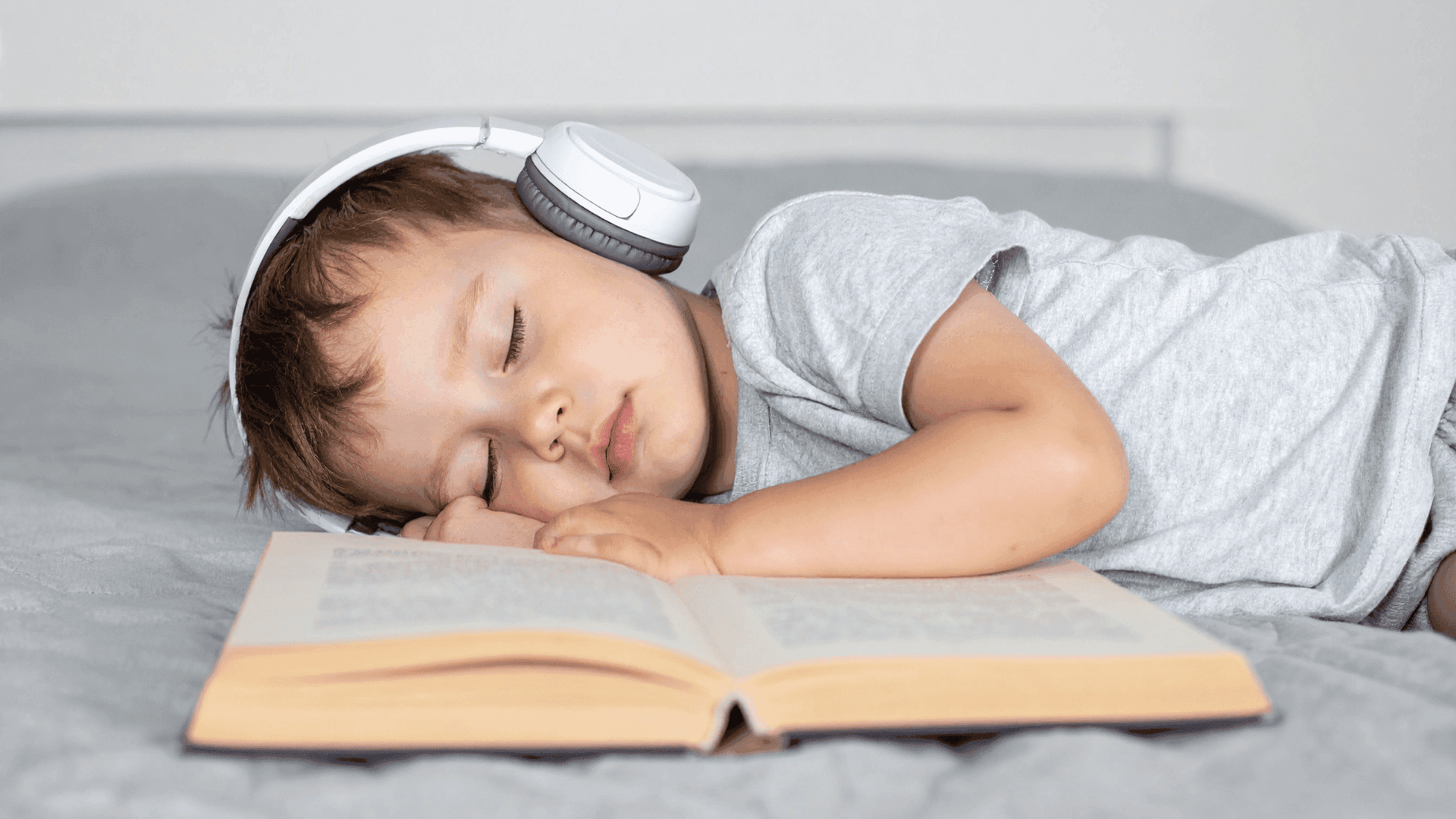
Best Calming Sounds for ADHD Children (Backed by Research)
Best Calming Sounds for ADHD Children (Backed by Research)
You've tried the sounds.
White noise machines. Rain recordings. Those "brown noise" videos that social media promised would fix everything.
Maybe they helped. Or maybe they made things worse. That's the frustrating part.
Here's what nobody told you: not all calming sounds calm ADHD brains.
Some sounds that work brilliantly for neurotypical children can actually increase alertness in ADHD kids. Others cause irritation. A few even trigger meltdowns.
The calming sounds that actually work for ADHD children share specific properties. They match how the ADHD brain processes stimulation. Most generic "sleep sounds" don't.
This isn't guesswork. Two decades of research have been quietly uncovering why certain sounds help ADHD brains settle and why others backfire.
Why Sound Works Differently for ADHD Brains
Before we get into which sounds help, you need to understand why sound matters at all.
If you've read about why your ADHD child won't sleep, you already know the core problem: a brain that won't switch off. When the external world goes quiet at bedtime, the ADHD brain doesn't follow. Instead, it hunts for stimulation and usually finds it in racing thoughts, worries, or random tangents that keep your child awake for hours.
Sound offers something counterintuitive: it gives the brain stimulation so it stops seeking stimulation.
Think of it this way. An ADHD brain in a silent room is like a hungry person in an empty kitchen. It opens every cupboard, checks the fridge, opens the cupboards again. Hunting. Restless. Unable to settle until it finds something.
But give that brain the right kind of input, something steady and calming that requires nothing in return, and the searching stops. The brain has what it needs. It settles.
This explains why the same white noise machine that helps your neurotypical niece sleep might leave your ADHD child wide awake. Their brain has different needs. And once you understand those needs, you can meet them.
What the Research Actually Shows
A major meta-analysis published in the Journal of the American Academy of Child & Adolescent Psychiatry, 2024: Systematic Review and Meta-Analysis: Do White Noise and Pink Noise Help With Task Performance in Youth With ADHD looked at 13 studies involving 335 children and young adults with ADHD. The findings were clear:
White and pink noise produced a small but statistically significant improvement in cognitive performance for those with ADHD.
But here's what made the study particularly interesting: the same sounds had the opposite effect on children without ADHD. For neurotypical children, white and pink noise slightly reduced their performance.
This tells us something important. ADHD brains genuinely respond differently to sound. What helps them can actually hinder others. This isn't about preferences. It's about neurobiology.
The researchers believe this relates to something called the "moderate brain arousal" theory. ADHD brains tend to be under-aroused, which is why they're constantly seeking stimulation. Adding the right amount of external sound brings their arousal to the right level for focus and calm.
The Sounds That Work (And Why)
Let's break down the specific types of sound and what we know about each.
White Noise
White noise contains all frequencies at equal intensity. It sounds like static or a fan running. Think of it as every possible sound playing at once, creating a consistent wash of audio.
What research shows: White noise is the most studied sound for ADHD. Multiple studies confirm it helps with focus, attention, and cognitive performance in children with ADHD.
A 2024 study published in Frontiers in Psychology: Sensory white noise in clinical ADHD: Who benefits from auditory and visual noise? found an important distinction: white noise helped ADHD children with predominantly inattentive traits, but actually made things worse for those with high hyperactivity. This matters because ADHD isn't one thing. Your child's specific profile affects what sounds will help them.
Best for: Children whose main struggle is attention and focus, rather than physical hyperactivity.
Pink Noise
Pink noise is similar to white noise but with reduced higher frequencies. This makes it sound deeper, softer, more like steady rainfall or a waterfall in the distance.
What research shows: Pink noise appears in the same research as white noise, with similar positive effects for ADHD children. Some parents find it less harsh than white noise, which can make it easier to use at bedtime.
Best for: Children who find white noise too harsh or "scratchy." The softer quality of pink noise can feel more natural, especially for sleep.
Brown Noise
Brown noise goes even deeper than pink noise, with even more emphasis on low frequencies. It sounds like rumbling thunder, wind through trees, or ocean waves at a distance.
What research shows: Here's where we need to be honest. Despite its massive popularity on social media (with millions of people claiming it "cures" ADHD symptoms), there are currently no published studies specifically examining brown noise and ADHD.
The 2024 meta-analysis noted: "No studies of brown noise were identified."
This doesn't mean brown noise doesn't work. Conceptually, it operates on similar principles to white and pink noise. Many parents and adults with ADHD report finding it helpful. But we can't point to peer-reviewed research confirming those effects yet.
Best for: Parents can try brown noise based on anecdotal reports, but shouldn't expect guarantees. If white or pink noise feels too "bright" or stimulating, brown noise might be worth testing.
Nature Sounds
Rain, thunderstorms, ocean waves, forest soundscapes. These are what most people think of when they imagine "relaxing sounds."
What research shows: Nature sounds can help with relaxation, but they're not the same as the random noise patterns of white, pink, or brown noise. Nature sounds have patterns, rhythms, and variations that the brain can track and engage with.
For some ADHD children, this engagement is helpful because it gives the brain something predictable to follow. For others, the variations within nature sounds (a thunder crack, a bird call, a wave crescendo) can pull attention and prevent settling.
Best for: Children who find pure noise sounds boring or unsatisfying. Nature sounds offer more variety while still being calming.
ASMR Sounds
ASMR (Autonomous Sensory Meridian Response) sounds include whispering, gentle tapping, brushing sounds, and other soft, close-up audio. These have exploded in popularity, with millions of ASMR videos available online.
What research shows: Research from the University of Sheffield found that ASMR can reduce heart rate and increase feelings of calmness and relaxation in people who respond to it. The key phrase is "in people who respond to it." Not everyone does.
For ADHD children, ASMR presents a paradox. Some children with ADHD have heightened sensory sensitivity that makes them more responsive to ASMR triggers. Others have the same sensitivity but experience these sounds as irritating or overwhelming. This response is closer to misophonia (hatred of certain sounds).
Best for: Children who already enjoy gentle, intimate sounds. Don't force ASMR if your child finds it uncomfortable. Individual response varies hugely here.
Frequencies and Binaural Beats
This category includes specific sound frequencies (like 528 Hz or solfeggio frequencies) and binaural beats, where slightly different tones are played in each ear to create a perceived third tone.
What research shows: Research on frequencies and ADHD is still emerging. One pilot study found that 15 Hz binaural beats improved subjective studying performance in adults with ADHD. Alpha-range frequencies (8-12 Hz) are associated with relaxed alertness, while theta frequencies (4-8 Hz) are linked to meditation and drowsiness.
The evidence isn't as strong as for white/pink noise, but it's promising enough to warrant attention.
Best for: Older children (8+) who can tolerate headphones, which are required for binaural beats to work properly. Younger children may do better with simpler soundscapes.
What Makes Sound Calming for ADHD Specifically?
Not all calming sounds are calming for ADHD brains. Based on the research, sounds that work share these properties:
1. Passive Engagement
The sound requires nothing from your child. No interaction. No choices. No concentration. This matters because active engagement can actually increase alertness. Meditation apps that require following instructions or making choices ask too much of an already-stretched brain at bedtime.
The sounds should just... be there. Background presence that asks nothing.
2. Consistency Without Silence
ADHD brains struggle with sudden changes. That includes sudden silence. Sounds that work tend to be continuous without jarring variations. A consistent rain sound works. Thunder claps that interrupt every few minutes might not.
3. The Right Level of Stimulation
This is individual, but the goal is sounds that are interesting enough to occupy the seeking part of the brain without being so interesting that they capture full attention.
Joel Nigg, lead author of the 2024 meta-analysis and professor at Oregon Health & Science University, explained it this way in Oregon Health & Science University, 2024: White, pink noise improve focus for children with ADHD: "Our priority is identifying new and improved tools to empower each individual to live their healthiest and most productive life."
He noted that while additional research is needed, these results point to "a possible low-cost, low-risk approach that may benefit youths with ADHD."
4. No Demands, No Instructions
This relates to passive engagement but deserves its own mention. Many "calming" resources for children include guided instructions: "Now breathe in... now breathe out... imagine you're on a beach..."
For an ADHD brain at bedtime, instructions are demands. They require processing, following, effort. The brain that's supposed to be winding down is instead working.
The sounds that help are ones where your child can truly do nothing but lie there and listen.
How to Find What Works for Your Child
Given everything we know, here's how to approach finding the right calming sounds for your ADHD child:
Start Simple
Begin with pure white or pink noise. These have the strongest research backing and are easy to find (free on YouTube, Spotify, or any sound app). Play for 15-20 minutes before bed and see how your child responds.
Watch for the Right Signs
Good signs: Your child's body relaxes. Their breathing slows. They stop fidgeting as much. They might say the sound is "boring." That's actually perfect. You want boring.
Warning signs: Increased restlessness. Covering ears. Complaining that the sound is annoying. These suggest the particular sound isn't right (not that sound in general won't work).
Adjust Based on Your Child's Profile
Remember that 2024 study about inattentive versus hyperactive ADHD? If your child is primarily inattentive (daydreamy, easily distracted, but not physically hyperactive), they're more likely to benefit from white noise.
If your child is highly hyperactive, you might need to experiment more carefully. Lower volumes, shorter durations, or different sound types might work better.
Consider Layered Sounds
Some children respond well to sounds that combine elements like rain with underlying bass tones, or ocean waves with a consistent white noise layer underneath. These can provide the consistency of noise with the natural quality that some children prefer.
Don't Force It
If your child genuinely dislikes sound at bedtime, that's important information. Some children with ADHD are sound-sensitive in ways that make added audio uncomfortable. The goal is to help, not to create a new struggle.
Using Sound as Part of the Bigger Picture
Sound isn't a magic solution. For many ADHD children, it addresses one specific problem. The racing brain needs something to focus on, and sound gives it exactly that.
It works best when combined with other elements of an ADHD bedtime routine that works with your child's brain rather than against it.
And for children whose main struggle is racing thoughts at bedtime, sound can be particularly powerful because it gives those thoughts somewhere to land.
A Note on Volume and Safety
One caution from the researchers: volume matters. Playing sounds too loud, especially through headphones, can damage hearing over time. Studies suggest youth often listen to audio at higher volumes than adults would.
Keep sound at a moderate level. It should be audible but not dominant. Your child should be able to hear you speak over it without you raising your voice. If using headphones (for binaural beats), limit duration and keep volume low.
Finding What Works for Your Child
Not every sound works for every brain. That's just the reality of ADHD.
But the research is clear: for many children with ADHD, the right sound genuinely helps. It gives the brain the input it's been seeking, but in a form that leads toward sleep instead of away from it.
And it requires zero effort from you or your child. No new habits to build. No behaviours to track. Just sound.
The Sound Sanctuary from HushAway® is our collection built specifically for sensitive and neurodivergent children. Frequencies. Soundscapes. ASMR content. All designed for passive listening. No interaction required. No engagement needed.
We built it because we needed it too. Nothing else was working for our own kids.
Tonight, pick something. Any sound. Press play and watch how your child responds.
Their reaction will tell you more than any research study. If they settle faster, you've found something worth keeping. If not, try a different sound tomorrow. The collection is free. There's no rush.
The missing piece might not be a new strategy. It might simply be the right sound.
For the full picture of ADHD sleep challenges and solutions, our complete guide to ADHD sleep problems covers everything from the science to practical strategies for every age group.
You've tried the sounds.
White noise machines. Rain recordings. Those "brown noise" videos that social media promised would fix everything.
Maybe they helped. Or maybe they made things worse. That's the frustrating part.
Here's what nobody told you: not all calming sounds calm ADHD brains.
Some sounds that work brilliantly for neurotypical children can actually increase alertness in ADHD kids. Others cause irritation. A few even trigger meltdowns.
The calming sounds that actually work for ADHD children share specific properties. They match how the ADHD brain processes stimulation. Most generic "sleep sounds" don't.
This isn't guesswork. Two decades of research have been quietly uncovering why certain sounds help ADHD brains settle and why others backfire.
Why Sound Works Differently for ADHD Brains
Before we get into which sounds help, you need to understand why sound matters at all.
If you've read about why your ADHD child won't sleep, you already know the core problem: a brain that won't switch off. When the external world goes quiet at bedtime, the ADHD brain doesn't follow. Instead, it hunts for stimulation and usually finds it in racing thoughts, worries, or random tangents that keep your child awake for hours.
Sound offers something counterintuitive: it gives the brain stimulation so it stops seeking stimulation.
Think of it this way. An ADHD brain in a silent room is like a hungry person in an empty kitchen. It opens every cupboard, checks the fridge, opens the cupboards again. Hunting. Restless. Unable to settle until it finds something.
But give that brain the right kind of input, something steady and calming that requires nothing in return, and the searching stops. The brain has what it needs. It settles.
This explains why the same white noise machine that helps your neurotypical niece sleep might leave your ADHD child wide awake. Their brain has different needs. And once you understand those needs, you can meet them.
What the Research Actually Shows
A major meta-analysis published in the Journal of the American Academy of Child & Adolescent Psychiatry, 2024: Systematic Review and Meta-Analysis: Do White Noise and Pink Noise Help With Task Performance in Youth With ADHD looked at 13 studies involving 335 children and young adults with ADHD. The findings were clear:
White and pink noise produced a small but statistically significant improvement in cognitive performance for those with ADHD.
But here's what made the study particularly interesting: the same sounds had the opposite effect on children without ADHD. For neurotypical children, white and pink noise slightly reduced their performance.
This tells us something important. ADHD brains genuinely respond differently to sound. What helps them can actually hinder others. This isn't about preferences. It's about neurobiology.
The researchers believe this relates to something called the "moderate brain arousal" theory. ADHD brains tend to be under-aroused, which is why they're constantly seeking stimulation. Adding the right amount of external sound brings their arousal to the right level for focus and calm.
The Sounds That Work (And Why)
Let's break down the specific types of sound and what we know about each.
White Noise
White noise contains all frequencies at equal intensity. It sounds like static or a fan running. Think of it as every possible sound playing at once, creating a consistent wash of audio.
What research shows: White noise is the most studied sound for ADHD. Multiple studies confirm it helps with focus, attention, and cognitive performance in children with ADHD.
A 2024 study published in Frontiers in Psychology: Sensory white noise in clinical ADHD: Who benefits from auditory and visual noise? found an important distinction: white noise helped ADHD children with predominantly inattentive traits, but actually made things worse for those with high hyperactivity. This matters because ADHD isn't one thing. Your child's specific profile affects what sounds will help them.
Best for: Children whose main struggle is attention and focus, rather than physical hyperactivity.
Pink Noise
Pink noise is similar to white noise but with reduced higher frequencies. This makes it sound deeper, softer, more like steady rainfall or a waterfall in the distance.
What research shows: Pink noise appears in the same research as white noise, with similar positive effects for ADHD children. Some parents find it less harsh than white noise, which can make it easier to use at bedtime.
Best for: Children who find white noise too harsh or "scratchy." The softer quality of pink noise can feel more natural, especially for sleep.
Brown Noise
Brown noise goes even deeper than pink noise, with even more emphasis on low frequencies. It sounds like rumbling thunder, wind through trees, or ocean waves at a distance.
What research shows: Here's where we need to be honest. Despite its massive popularity on social media (with millions of people claiming it "cures" ADHD symptoms), there are currently no published studies specifically examining brown noise and ADHD.
The 2024 meta-analysis noted: "No studies of brown noise were identified."
This doesn't mean brown noise doesn't work. Conceptually, it operates on similar principles to white and pink noise. Many parents and adults with ADHD report finding it helpful. But we can't point to peer-reviewed research confirming those effects yet.
Best for: Parents can try brown noise based on anecdotal reports, but shouldn't expect guarantees. If white or pink noise feels too "bright" or stimulating, brown noise might be worth testing.
Nature Sounds
Rain, thunderstorms, ocean waves, forest soundscapes. These are what most people think of when they imagine "relaxing sounds."
What research shows: Nature sounds can help with relaxation, but they're not the same as the random noise patterns of white, pink, or brown noise. Nature sounds have patterns, rhythms, and variations that the brain can track and engage with.
For some ADHD children, this engagement is helpful because it gives the brain something predictable to follow. For others, the variations within nature sounds (a thunder crack, a bird call, a wave crescendo) can pull attention and prevent settling.
Best for: Children who find pure noise sounds boring or unsatisfying. Nature sounds offer more variety while still being calming.
ASMR Sounds
ASMR (Autonomous Sensory Meridian Response) sounds include whispering, gentle tapping, brushing sounds, and other soft, close-up audio. These have exploded in popularity, with millions of ASMR videos available online.
What research shows: Research from the University of Sheffield found that ASMR can reduce heart rate and increase feelings of calmness and relaxation in people who respond to it. The key phrase is "in people who respond to it." Not everyone does.
For ADHD children, ASMR presents a paradox. Some children with ADHD have heightened sensory sensitivity that makes them more responsive to ASMR triggers. Others have the same sensitivity but experience these sounds as irritating or overwhelming. This response is closer to misophonia (hatred of certain sounds).
Best for: Children who already enjoy gentle, intimate sounds. Don't force ASMR if your child finds it uncomfortable. Individual response varies hugely here.
Frequencies and Binaural Beats
This category includes specific sound frequencies (like 528 Hz or solfeggio frequencies) and binaural beats, where slightly different tones are played in each ear to create a perceived third tone.
What research shows: Research on frequencies and ADHD is still emerging. One pilot study found that 15 Hz binaural beats improved subjective studying performance in adults with ADHD. Alpha-range frequencies (8-12 Hz) are associated with relaxed alertness, while theta frequencies (4-8 Hz) are linked to meditation and drowsiness.
The evidence isn't as strong as for white/pink noise, but it's promising enough to warrant attention.
Best for: Older children (8+) who can tolerate headphones, which are required for binaural beats to work properly. Younger children may do better with simpler soundscapes.
What Makes Sound Calming for ADHD Specifically?
Not all calming sounds are calming for ADHD brains. Based on the research, sounds that work share these properties:
1. Passive Engagement
The sound requires nothing from your child. No interaction. No choices. No concentration. This matters because active engagement can actually increase alertness. Meditation apps that require following instructions or making choices ask too much of an already-stretched brain at bedtime.
The sounds should just... be there. Background presence that asks nothing.
2. Consistency Without Silence
ADHD brains struggle with sudden changes. That includes sudden silence. Sounds that work tend to be continuous without jarring variations. A consistent rain sound works. Thunder claps that interrupt every few minutes might not.
3. The Right Level of Stimulation
This is individual, but the goal is sounds that are interesting enough to occupy the seeking part of the brain without being so interesting that they capture full attention.
Joel Nigg, lead author of the 2024 meta-analysis and professor at Oregon Health & Science University, explained it this way in Oregon Health & Science University, 2024: White, pink noise improve focus for children with ADHD: "Our priority is identifying new and improved tools to empower each individual to live their healthiest and most productive life."
He noted that while additional research is needed, these results point to "a possible low-cost, low-risk approach that may benefit youths with ADHD."
4. No Demands, No Instructions
This relates to passive engagement but deserves its own mention. Many "calming" resources for children include guided instructions: "Now breathe in... now breathe out... imagine you're on a beach..."
For an ADHD brain at bedtime, instructions are demands. They require processing, following, effort. The brain that's supposed to be winding down is instead working.
The sounds that help are ones where your child can truly do nothing but lie there and listen.
How to Find What Works for Your Child
Given everything we know, here's how to approach finding the right calming sounds for your ADHD child:
Start Simple
Begin with pure white or pink noise. These have the strongest research backing and are easy to find (free on YouTube, Spotify, or any sound app). Play for 15-20 minutes before bed and see how your child responds.
Watch for the Right Signs
Good signs: Your child's body relaxes. Their breathing slows. They stop fidgeting as much. They might say the sound is "boring." That's actually perfect. You want boring.
Warning signs: Increased restlessness. Covering ears. Complaining that the sound is annoying. These suggest the particular sound isn't right (not that sound in general won't work).
Adjust Based on Your Child's Profile
Remember that 2024 study about inattentive versus hyperactive ADHD? If your child is primarily inattentive (daydreamy, easily distracted, but not physically hyperactive), they're more likely to benefit from white noise.
If your child is highly hyperactive, you might need to experiment more carefully. Lower volumes, shorter durations, or different sound types might work better.
Consider Layered Sounds
Some children respond well to sounds that combine elements like rain with underlying bass tones, or ocean waves with a consistent white noise layer underneath. These can provide the consistency of noise with the natural quality that some children prefer.
Don't Force It
If your child genuinely dislikes sound at bedtime, that's important information. Some children with ADHD are sound-sensitive in ways that make added audio uncomfortable. The goal is to help, not to create a new struggle.
Using Sound as Part of the Bigger Picture
Sound isn't a magic solution. For many ADHD children, it addresses one specific problem. The racing brain needs something to focus on, and sound gives it exactly that.
It works best when combined with other elements of an ADHD bedtime routine that works with your child's brain rather than against it.
And for children whose main struggle is racing thoughts at bedtime, sound can be particularly powerful because it gives those thoughts somewhere to land.
A Note on Volume and Safety
One caution from the researchers: volume matters. Playing sounds too loud, especially through headphones, can damage hearing over time. Studies suggest youth often listen to audio at higher volumes than adults would.
Keep sound at a moderate level. It should be audible but not dominant. Your child should be able to hear you speak over it without you raising your voice. If using headphones (for binaural beats), limit duration and keep volume low.
Finding What Works for Your Child
Not every sound works for every brain. That's just the reality of ADHD.
But the research is clear: for many children with ADHD, the right sound genuinely helps. It gives the brain the input it's been seeking, but in a form that leads toward sleep instead of away from it.
And it requires zero effort from you or your child. No new habits to build. No behaviours to track. Just sound.
The Sound Sanctuary from HushAway® is our collection built specifically for sensitive and neurodivergent children. Frequencies. Soundscapes. ASMR content. All designed for passive listening. No interaction required. No engagement needed.
We built it because we needed it too. Nothing else was working for our own kids.
Tonight, pick something. Any sound. Press play and watch how your child responds.
Their reaction will tell you more than any research study. If they settle faster, you've found something worth keeping. If not, try a different sound tomorrow. The collection is free. There's no rush.
The missing piece might not be a new strategy. It might simply be the right sound.
For the full picture of ADHD sleep challenges and solutions, our complete guide to ADHD sleep problems covers everything from the science to practical strategies for every age group.
Make tomorrow feel easier
Whether it’s bedtime battles, big emotions or sensory overload, small sound moments can bring your child the reassurance and stability they need.



Make tomorrow feel easier
Whether it’s bedtime battles, big emotions or sensory overload, small sound moments can bring your child the reassurance and stability they need.
Make tomorrow feel easier
Whether it’s bedtime battles, big emotions or sensory overload, small sound moments can bring your child the reassurance and stability they need.
What is the best calming sound for ADHD children?
Research most strongly supports white and pink noise for ADHD children. A 2024 meta-analysis found these sounds produced measurable improvements in focus and cognitive performance specifically in children with ADHD. However, individual responses vary. Some children prefer the softer quality of pink noise, while others respond better to nature sounds or ASMR. The best approach is to try different options and observe your child's response.
Does brown noise actually help ADHD?
Brown noise is extremely popular on social media, with many people reporting it helps their ADHD symptoms. However, there are currently no published scientific studies specifically examining brown noise and ADHD. The 2024 meta-analysis that confirmed benefits of white and pink noise noted that no studies of brown noise were identified. Brown noise may well be helpful because it operates on similar principles. But we can't point to peer-reviewed evidence confirming this yet.
Why does white noise help ADHD but not neurotypical children?
Research shows that the same white noise that helps ADHD children can actually reduce performance in neurotypical children. Scientists believe this relates to differences in brain arousal. ADHD brains tend to be under-aroused and constantly seeking stimulation. Adding moderate external sound brings their arousal to the right level. Neurotypical brains are already at the right arousal level, so adding noise pushes them beyond the helpful range.
How loud should calming sounds be for an ADHD child at bedtime?
Keep the volume moderate. It should be audible but not dominant. You should be able to speak to your child without raising your voice over the sound. Researchers caution that playing sounds too loud, especially through headphones, can damage hearing over time. For bedtime use, think "gentle background presence" rather than "immersive audio experience."
Can ASMR sounds help ADHD children sleep?
ASMR can help some ADHD children but not others. Research shows ASMR can reduce heart rate and increase calmness in people who respond to it. Some children with ADHD have heightened sensory sensitivity that makes them very responsive to ASMR triggers like whispering and tapping. However, the same sensitivity can cause other children to find these sounds irritating or uncomfortable. Pay attention to your child's response. If they find ASMR annoying or agitating, it's not the right choice for them.
What is the best calming sound for ADHD children?
Research most strongly supports white and pink noise for ADHD children. A 2024 meta-analysis found these sounds produced measurable improvements in focus and cognitive performance specifically in children with ADHD. However, individual responses vary. Some children prefer the softer quality of pink noise, while others respond better to nature sounds or ASMR. The best approach is to try different options and observe your child's response.
Does brown noise actually help ADHD?
Brown noise is extremely popular on social media, with many people reporting it helps their ADHD symptoms. However, there are currently no published scientific studies specifically examining brown noise and ADHD. The 2024 meta-analysis that confirmed benefits of white and pink noise noted that no studies of brown noise were identified. Brown noise may well be helpful because it operates on similar principles. But we can't point to peer-reviewed evidence confirming this yet.
Why does white noise help ADHD but not neurotypical children?
Research shows that the same white noise that helps ADHD children can actually reduce performance in neurotypical children. Scientists believe this relates to differences in brain arousal. ADHD brains tend to be under-aroused and constantly seeking stimulation. Adding moderate external sound brings their arousal to the right level. Neurotypical brains are already at the right arousal level, so adding noise pushes them beyond the helpful range.
How loud should calming sounds be for an ADHD child at bedtime?
Keep the volume moderate. It should be audible but not dominant. You should be able to speak to your child without raising your voice over the sound. Researchers caution that playing sounds too loud, especially through headphones, can damage hearing over time. For bedtime use, think "gentle background presence" rather than "immersive audio experience."
Can ASMR sounds help ADHD children sleep?
ASMR can help some ADHD children but not others. Research shows ASMR can reduce heart rate and increase calmness in people who respond to it. Some children with ADHD have heightened sensory sensitivity that makes them very responsive to ASMR triggers like whispering and tapping. However, the same sensitivity can cause other children to find these sounds irritating or uncomfortable. Pay attention to your child's response. If they find ASMR annoying or agitating, it's not the right choice for them.
Founder & Creative Lead - The PeacePath® | Creator of HushAway® Neurodivergent Inclusive Coach | Voice Artist & Storyteller | Sound Therapy Practitioner