✨ Calm support for bedtime, focus and overwhelm, Free for 14 days. No card needed
✨ Calm support for bedtime, focus and overwhelm, Free for 14 days. No card needed
✨ Start your free trial today!

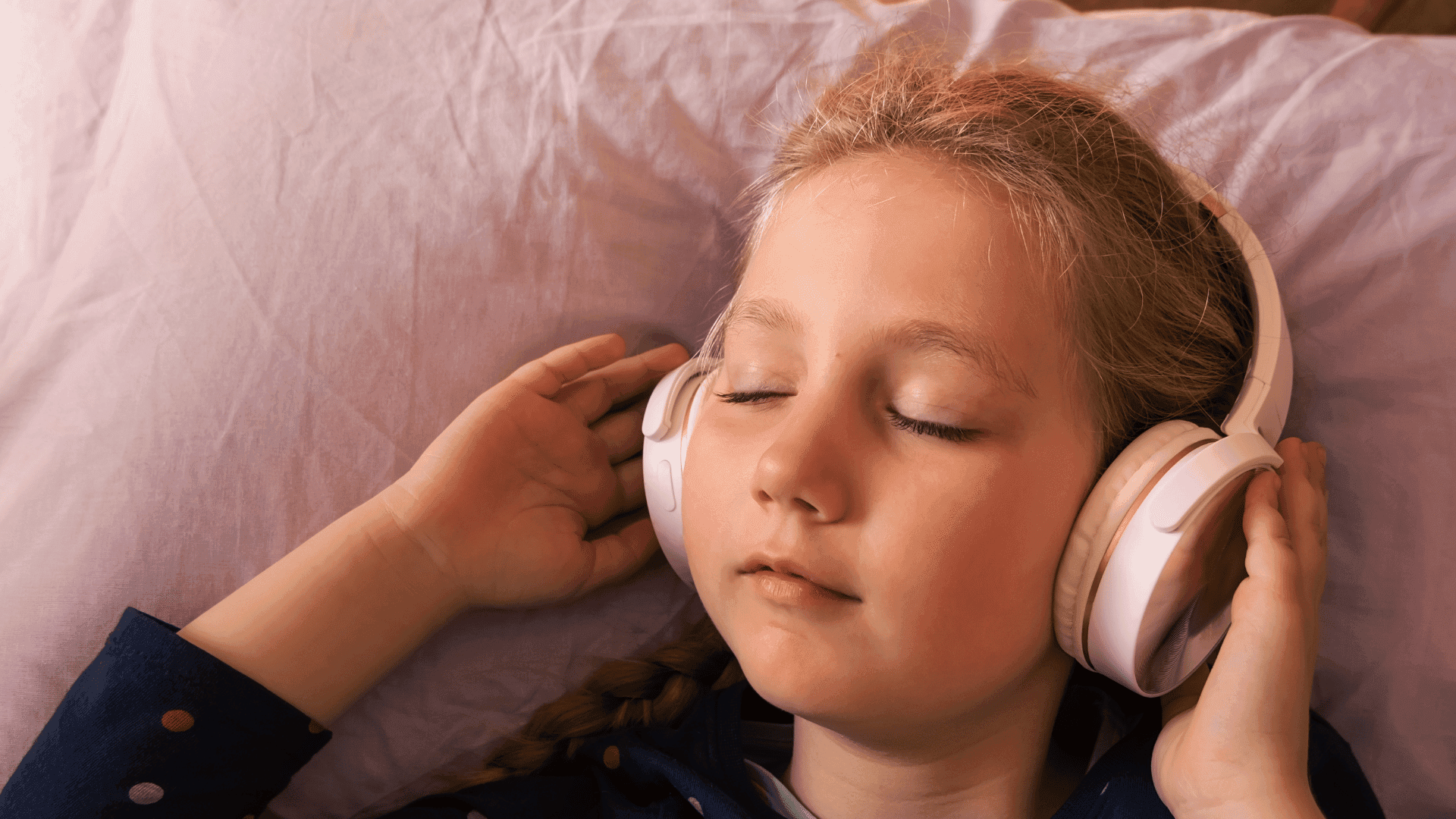
Beyond Melatonin: Non-Medication Sleep Help for ADHD Children
Beyond Melatonin: Non-Medication Sleep Help for ADHD Children
You've done the research. You've tried the consistent bedtime. You've asked the GP about melatonin.
And yet, here you are at 10pm, listening to your child move around in bed, their brain still running at full speed despite the little pink pill you gave them an hour ago.
If that sounds familiar, you're not alone. Melatonin helps many ADHD children feel drowsy. But drowsy and asleep aren't the same thing. And if your child's main problem is a racing brain that won't switch off, melatonin was only ever addressing half the problem.
Here's something that often gets lost in the conversation: melatonin isn't the only option. For many ADHD children, it's not enough on its own.
In the UK, melatonin requires a prescription for children. It's often the first (and sometimes only) thing clinicians suggest for ADHD sleep problems. But research is increasingly clear that non-medication ADHD sleep help deserves more attention than it typically receives.
This guide is for parents who want to understand all their options, not just the pharmaceutical ones.
The Melatonin Reality for Parents
Melatonin works differently here than in other countries. In the US, parents can buy it over the counter at any pharmacy. In the UK, melatonin is a prescription-only medication for children.
This means getting melatonin involves a referral pathway. You typically need to see a specialist, usually a paediatrician, a child psychiatrist, or someone within CAMHS. The specialist initiates the prescription, stabilises the dose, and then may transfer prescribing to your GP.
There's nothing wrong with melatonin as part of a sleep plan. Research shows it can help, particularly for children whose body clock runs late. The hormone can reduce how long it takes to fall asleep and extend total sleep time.
But here's the thing. Researchers at the University of Southampton highlight a significant gap in current practice. According to University Hospital Southampton NHS Foundation Trust, 2022 - Southampton researchers launch new study to help children with ADHD sleep better, melatonin is often prescribed as a "one size fits all" treatment, even though it doesn't always work, can have side effects, and might not be the most effective long-term approach.
Professor Samuele Cortese, leading the research, puts it directly: "This medication works quite well to induce sleep, but ultimately is not the most comprehensive way to address this problem."
The research team found that almost 75% of children with ADHD have sleep problems, yet there's no national guidance for health professionals on treating these problems. Many clinicians default to melatonin because they're unsure what else to recommend.
Why Melatonin Alone Often Isn't Enough
Understanding what melatonin does and doesn't do helps explain why many families find it insufficient.
Melatonin addresses one specific thing: the timing of sleepiness. It helps signal to the body that it's time to wind down. For children with delayed circadian rhythms (common in ADHD), this can genuinely help them feel tired at a reasonable hour.
But melatonin doesn't address several other things that keep ADHD children awake.
It Doesn't Quiet the Racing Brain
We've written about why your ADHD child won't sleep, and one of the core issues is the racing brain that won't switch off. Your child might feel physically tired (melatonin working) but lie awake for hours because their thoughts won't stop.
Think about what that feels like. Heavy eyes. Body relaxed. But the mind? Racing through every thought, every question, every worry. That's the mismatch so many parents describe: "They're exhausted, but they just can't switch off."
Melatonin makes you sleepy. It doesn't make your brain quiet.
For children whose primary struggle is racing thoughts at bedtime, melatonin addresses only part of the problem. They may feel drowsy and still be unable to fall asleep because their mind is generating its own stimulation.
It Doesn't Teach Sleep Skills
The DISCA Sleep Study, a major UK research project, emphasises that parents need to be "actively involved in the management of the sleep problems of their children." According to DISCA Sleep Study / University of Southampton, 2025: Digital Sleep Support for Children with ADHD, face-to-face behavioural sleep approaches are effective for managing insomnia in children with ADHD.
Here's the practical reality: Melatonin is something you take. It's not something that builds lasting sleep habits or addresses the underlying behaviours and environmental factors that contribute to poor sleep. When melatonin is stopped, the sleep problems often return if nothing else has changed.
It Can Stop Working
Some children develop tolerance to melatonin over time. The dose that worked at age six might not work at age eight. NHS guidelines recommend regular "drug holidays" to assess whether melatonin is still needed and to prevent tolerance.
If melatonin is your only strategy, tolerance creates a problem. Non-medication approaches, by contrast, tend to become more effective over time as habits strengthen.
When ADHD Medication Keeps Your Child Awake
There's another medication issue that affects many ADHD families: stimulant medication. If your child takes methylphenidate (Ritalin, Concerta, Equasym) or lisdexamfetamine (Elvanse), the medication itself might be contributing to sleep problems.
Stimulants work by increasing alertness and focus. They're typically designed to wear off by evening, but this doesn't always happen smoothly. Some children metabolise the medication more slowly, meaning it's still active at bedtime. Others experience rebound effects as the medication wears off, which can include restlessness and irritability that interfere with settling.
If you suspect your child's ADHD medication is keeping them awake, this is worth discussing with their prescriber. Timing adjustments, dosage changes, or different formulations can sometimes help. But even with optimised ADHD medication, many children still experience sleep difficulties that require additional support.
This is where non-medication approaches become particularly valuable. You can't simply add more melatonin to counteract stimulant effects. But you can add environmental and behavioural strategies that work alongside (or instead of) medication.
Non-Medication ADHD Sleep Help: What Actually Works
The good news is that several non-medication approaches have genuine evidence behind them. These aren't alternative medicine or wishful thinking. They're strategies backed by research, increasingly recommended alongside or before medication.
Behavioural Sleep Strategies
This term covers various strategies that help children develop better sleep habits. They include:
Consistent bedtime routines: Not just "have a routine" but a routine specifically designed for ADHD brains
Sleep restriction therapy: Temporarily limiting time in bed to build sleep pressure
Stimulus control: Making the bed strongly associated with sleep, not waking activities
Relaxation techniques: Though these need to be ADHD-friendly (passive, not effortful)
The DISCA study is specifically investigating digital behavioural approaches for children with ADHD, recognising that traditional face-to-face sleep programmes are hard to access in a resource-limited NHS.
The challenge with behavioural approaches is that they require effort, initially from parents and eventually from children. For exhausted families, this can feel overwhelming.
Environmental Adjustments
Sometimes the sleep environment itself creates problems:
Temperature: Bedrooms should be cool (around 16-18 degrees Celsius)
Light: Darkness signals melatonin production; blackout blinds can help
Noise: This is where things get interesting for ADHD brains
The standard advice is that bedrooms should be quiet. But for many ADHD children, silence is the problem. A quiet room leaves the brain to generate its own stimulation, which manifests as racing thoughts, questions, and mental restlessness.
Sound as a Non-Medication Sleep Tool
Research increasingly supports the use of specific sounds for ADHD children. A meta-analysis in the Journal of the American Academy of Child & Adolescent Psychiatry, 2024 - Systematic Review and Meta-Analysis: Do White Noise and Pink Noise Help With Task Performance in Youth With ADHD found that white and pink noise produced a small but statistically significant improvement in cognitive function specifically for children with ADHD.
What makes this particularly relevant for sleep is the mechanism involved. ADHD brains tend to be under-aroused, which is why they constantly seek stimulation. At bedtime, when external stimulation drops, the brain creates its own. Passive sound provides just enough external input to satisfy that seeking behaviour without increasing alertness.
We've explored this in detail in our guide to calming sounds for ADHD children. The key is that the sound must be:
Passive: Requiring nothing from your child (no interaction, no concentration)
Consistent: No sudden changes or surprising elements
Calming: Certain frequencies and patterns work better than others
This is why HushAway® content is designed specifically for passive listening. Your child doesn't need to engage with it. They just lie there while the sound gives their brain somewhere calm to focus.
Physical Activity
High-intensity physical activity during the day can help with sleep at night. Research shows this reduces sleep onset time (how long it takes to fall asleep) in children with ADHD.
The timing matters. Vigorous activity right before bed can be stimulating. The goal is sustained activity earlier in the day that helps regulate the body's overall arousal levels.
Light Exposure
Bright light in the morning helps set the circadian clock. Reduced light in the evening helps melatonin production kick in naturally. For children with delayed circadian rhythms (common in ADHD), strategic light exposure can shift sleep timing without medication.
This means:
Bright light exposure soon after waking
Reducing artificial light in the hour before bed
Being particularly careful about screen light in the evening
Building a Non-Medication Sleep Plan
If you want to try non-medication approaches, either alongside melatonin or instead of it, here's a practical framework:
Start With One Change
Don't try to overhaul everything at once. Pick the area that seems most relevant to your child's specific struggle.
If the main problem is racing thoughts: Try passive sound
If the main problem is irregular sleep timing: Focus on consistent wake times and light exposure
If the main problem is bedtime resistance: Work on routine and environment
Give It Time
Behavioural changes take longer than medication to show results. Melatonin works within days. A new bedtime routine might take two to four weeks to become established. Sound-based approaches often show some effect within a week, but the full benefit builds over time.
Layer Strategies
Once one approach is established, you can add others. The most effective sleep plans combine multiple elements: consistent routine, appropriate environment, and something to help the racing brain settle.
Know When Medication Makes Sense
Non-medication approaches aren't about being anti-medication. They're about having a complete toolkit. Some children need melatonin. Some do better without it. Many do best with both medication and non-medication strategies working together.
If sleep problems are severe, if your child is suffering during the day, if family life is severely affected, medication might be the right place to start. You can add non-medication approaches alongside it.
What This Looks Like in Practice
Say you've tried melatonin and it helps a bit, but your child still takes ages to fall asleep. You're not alone. This is one of the most common things we hear from parents.
What you're dealing with right now:
Melatonin given 30 minutes before bed
Child lies awake for 45-60 minutes after lights out
Racing thoughts, questions, finding reasons to get up
Everyone exhausted, nothing seems to fully work
Adding non-medication help:
Keep the melatonin (it's helping with initial drowsiness)
Start passive sound as your child gets into bed, before the racing thoughts take hold
The sound runs continuously through the settling period
The brain has somewhere to focus instead of generating its own content
Many parents find that this combination works better than either approach alone. The melatonin addresses the body clock. The sound addresses the racing brain. Together, they cover more of the problem.
One parent described it as finally giving their child's brain "permission to stop." The melatonin said "it's time to be tired." The sound said "here's somewhere safe for your thoughts to land."
A Note on What Doesn't Work
Some non-medication approaches are less helpful for ADHD children specifically:
Guided meditation requiring concentration: ADHD brains struggle to follow instructions at bedtime. Asking them to concentrate on their breathing or visualise scenes adds cognitive demands to an already-stretched brain.
Apps requiring interaction: Tapping, choosing, or engaging with content keeps the brain active rather than letting it wind down.
Complete silence: As discussed, this often makes things worse for ADHD children.
Rigid rules without support: "Just lie still and be quiet" isn't help. It's just a demand that ignores the underlying neurological reality.
Your Next Step
If you're exploring non-medication ADHD sleep help, you don't need to choose between natural approaches and medication. The most effective strategies often combine both.
What matters is addressing the specific problems your child faces. Is it racing thoughts? Is it delayed sleepiness? Is it both?
For the racing brain issue, passive sound is one of the most accessible, zero-effort approaches you can try. No prescription needed. No complex behavioural programme to implement. No waiting lists. No ongoing appointments.
Here's what that looks like in practice: Tonight, as your child gets into bed, you press play on a calming sound. That's it. No remembering techniques. No charts to fill in. Just sound that gives their brain somewhere to land instead of racing through every thought from the day.
The Sound Sanctuary from HushAway® offers sounds designed for sensitive and neurodivergent children. We built it because we needed it too. Something that works for ADHD brains, requires nothing from exhausted parents, and actually helps.
Try something tonight. No cost, no commitment. Just see if your child's brain responds to having something calm to focus on.
Melatonin might be part of your child's sleep solution. But it doesn't have to be the whole solution. And for many families, the missing piece isn't another medication. It's giving the ADHD brain what it actually needs at bedtime: something calm to think about instead of everything at once.
For the complete picture of ADHD sleep challenges and solutions, our complete guide to ADHD sleep problems brings together everything from the science to practical strategies for every situation.
You've done the research. You've tried the consistent bedtime. You've asked the GP about melatonin.
And yet, here you are at 10pm, listening to your child move around in bed, their brain still running at full speed despite the little pink pill you gave them an hour ago.
If that sounds familiar, you're not alone. Melatonin helps many ADHD children feel drowsy. But drowsy and asleep aren't the same thing. And if your child's main problem is a racing brain that won't switch off, melatonin was only ever addressing half the problem.
Here's something that often gets lost in the conversation: melatonin isn't the only option. For many ADHD children, it's not enough on its own.
In the UK, melatonin requires a prescription for children. It's often the first (and sometimes only) thing clinicians suggest for ADHD sleep problems. But research is increasingly clear that non-medication ADHD sleep help deserves more attention than it typically receives.
This guide is for parents who want to understand all their options, not just the pharmaceutical ones.
The Melatonin Reality for Parents
Melatonin works differently here than in other countries. In the US, parents can buy it over the counter at any pharmacy. In the UK, melatonin is a prescription-only medication for children.
This means getting melatonin involves a referral pathway. You typically need to see a specialist, usually a paediatrician, a child psychiatrist, or someone within CAMHS. The specialist initiates the prescription, stabilises the dose, and then may transfer prescribing to your GP.
There's nothing wrong with melatonin as part of a sleep plan. Research shows it can help, particularly for children whose body clock runs late. The hormone can reduce how long it takes to fall asleep and extend total sleep time.
But here's the thing. Researchers at the University of Southampton highlight a significant gap in current practice. According to University Hospital Southampton NHS Foundation Trust, 2022 - Southampton researchers launch new study to help children with ADHD sleep better, melatonin is often prescribed as a "one size fits all" treatment, even though it doesn't always work, can have side effects, and might not be the most effective long-term approach.
Professor Samuele Cortese, leading the research, puts it directly: "This medication works quite well to induce sleep, but ultimately is not the most comprehensive way to address this problem."
The research team found that almost 75% of children with ADHD have sleep problems, yet there's no national guidance for health professionals on treating these problems. Many clinicians default to melatonin because they're unsure what else to recommend.
Why Melatonin Alone Often Isn't Enough
Understanding what melatonin does and doesn't do helps explain why many families find it insufficient.
Melatonin addresses one specific thing: the timing of sleepiness. It helps signal to the body that it's time to wind down. For children with delayed circadian rhythms (common in ADHD), this can genuinely help them feel tired at a reasonable hour.
But melatonin doesn't address several other things that keep ADHD children awake.
It Doesn't Quiet the Racing Brain
We've written about why your ADHD child won't sleep, and one of the core issues is the racing brain that won't switch off. Your child might feel physically tired (melatonin working) but lie awake for hours because their thoughts won't stop.
Think about what that feels like. Heavy eyes. Body relaxed. But the mind? Racing through every thought, every question, every worry. That's the mismatch so many parents describe: "They're exhausted, but they just can't switch off."
Melatonin makes you sleepy. It doesn't make your brain quiet.
For children whose primary struggle is racing thoughts at bedtime, melatonin addresses only part of the problem. They may feel drowsy and still be unable to fall asleep because their mind is generating its own stimulation.
It Doesn't Teach Sleep Skills
The DISCA Sleep Study, a major UK research project, emphasises that parents need to be "actively involved in the management of the sleep problems of their children." According to DISCA Sleep Study / University of Southampton, 2025: Digital Sleep Support for Children with ADHD, face-to-face behavioural sleep approaches are effective for managing insomnia in children with ADHD.
Here's the practical reality: Melatonin is something you take. It's not something that builds lasting sleep habits or addresses the underlying behaviours and environmental factors that contribute to poor sleep. When melatonin is stopped, the sleep problems often return if nothing else has changed.
It Can Stop Working
Some children develop tolerance to melatonin over time. The dose that worked at age six might not work at age eight. NHS guidelines recommend regular "drug holidays" to assess whether melatonin is still needed and to prevent tolerance.
If melatonin is your only strategy, tolerance creates a problem. Non-medication approaches, by contrast, tend to become more effective over time as habits strengthen.
When ADHD Medication Keeps Your Child Awake
There's another medication issue that affects many ADHD families: stimulant medication. If your child takes methylphenidate (Ritalin, Concerta, Equasym) or lisdexamfetamine (Elvanse), the medication itself might be contributing to sleep problems.
Stimulants work by increasing alertness and focus. They're typically designed to wear off by evening, but this doesn't always happen smoothly. Some children metabolise the medication more slowly, meaning it's still active at bedtime. Others experience rebound effects as the medication wears off, which can include restlessness and irritability that interfere with settling.
If you suspect your child's ADHD medication is keeping them awake, this is worth discussing with their prescriber. Timing adjustments, dosage changes, or different formulations can sometimes help. But even with optimised ADHD medication, many children still experience sleep difficulties that require additional support.
This is where non-medication approaches become particularly valuable. You can't simply add more melatonin to counteract stimulant effects. But you can add environmental and behavioural strategies that work alongside (or instead of) medication.
Non-Medication ADHD Sleep Help: What Actually Works
The good news is that several non-medication approaches have genuine evidence behind them. These aren't alternative medicine or wishful thinking. They're strategies backed by research, increasingly recommended alongside or before medication.
Behavioural Sleep Strategies
This term covers various strategies that help children develop better sleep habits. They include:
Consistent bedtime routines: Not just "have a routine" but a routine specifically designed for ADHD brains
Sleep restriction therapy: Temporarily limiting time in bed to build sleep pressure
Stimulus control: Making the bed strongly associated with sleep, not waking activities
Relaxation techniques: Though these need to be ADHD-friendly (passive, not effortful)
The DISCA study is specifically investigating digital behavioural approaches for children with ADHD, recognising that traditional face-to-face sleep programmes are hard to access in a resource-limited NHS.
The challenge with behavioural approaches is that they require effort, initially from parents and eventually from children. For exhausted families, this can feel overwhelming.
Environmental Adjustments
Sometimes the sleep environment itself creates problems:
Temperature: Bedrooms should be cool (around 16-18 degrees Celsius)
Light: Darkness signals melatonin production; blackout blinds can help
Noise: This is where things get interesting for ADHD brains
The standard advice is that bedrooms should be quiet. But for many ADHD children, silence is the problem. A quiet room leaves the brain to generate its own stimulation, which manifests as racing thoughts, questions, and mental restlessness.
Sound as a Non-Medication Sleep Tool
Research increasingly supports the use of specific sounds for ADHD children. A meta-analysis in the Journal of the American Academy of Child & Adolescent Psychiatry, 2024 - Systematic Review and Meta-Analysis: Do White Noise and Pink Noise Help With Task Performance in Youth With ADHD found that white and pink noise produced a small but statistically significant improvement in cognitive function specifically for children with ADHD.
What makes this particularly relevant for sleep is the mechanism involved. ADHD brains tend to be under-aroused, which is why they constantly seek stimulation. At bedtime, when external stimulation drops, the brain creates its own. Passive sound provides just enough external input to satisfy that seeking behaviour without increasing alertness.
We've explored this in detail in our guide to calming sounds for ADHD children. The key is that the sound must be:
Passive: Requiring nothing from your child (no interaction, no concentration)
Consistent: No sudden changes or surprising elements
Calming: Certain frequencies and patterns work better than others
This is why HushAway® content is designed specifically for passive listening. Your child doesn't need to engage with it. They just lie there while the sound gives their brain somewhere calm to focus.
Physical Activity
High-intensity physical activity during the day can help with sleep at night. Research shows this reduces sleep onset time (how long it takes to fall asleep) in children with ADHD.
The timing matters. Vigorous activity right before bed can be stimulating. The goal is sustained activity earlier in the day that helps regulate the body's overall arousal levels.
Light Exposure
Bright light in the morning helps set the circadian clock. Reduced light in the evening helps melatonin production kick in naturally. For children with delayed circadian rhythms (common in ADHD), strategic light exposure can shift sleep timing without medication.
This means:
Bright light exposure soon after waking
Reducing artificial light in the hour before bed
Being particularly careful about screen light in the evening
Building a Non-Medication Sleep Plan
If you want to try non-medication approaches, either alongside melatonin or instead of it, here's a practical framework:
Start With One Change
Don't try to overhaul everything at once. Pick the area that seems most relevant to your child's specific struggle.
If the main problem is racing thoughts: Try passive sound
If the main problem is irregular sleep timing: Focus on consistent wake times and light exposure
If the main problem is bedtime resistance: Work on routine and environment
Give It Time
Behavioural changes take longer than medication to show results. Melatonin works within days. A new bedtime routine might take two to four weeks to become established. Sound-based approaches often show some effect within a week, but the full benefit builds over time.
Layer Strategies
Once one approach is established, you can add others. The most effective sleep plans combine multiple elements: consistent routine, appropriate environment, and something to help the racing brain settle.
Know When Medication Makes Sense
Non-medication approaches aren't about being anti-medication. They're about having a complete toolkit. Some children need melatonin. Some do better without it. Many do best with both medication and non-medication strategies working together.
If sleep problems are severe, if your child is suffering during the day, if family life is severely affected, medication might be the right place to start. You can add non-medication approaches alongside it.
What This Looks Like in Practice
Say you've tried melatonin and it helps a bit, but your child still takes ages to fall asleep. You're not alone. This is one of the most common things we hear from parents.
What you're dealing with right now:
Melatonin given 30 minutes before bed
Child lies awake for 45-60 minutes after lights out
Racing thoughts, questions, finding reasons to get up
Everyone exhausted, nothing seems to fully work
Adding non-medication help:
Keep the melatonin (it's helping with initial drowsiness)
Start passive sound as your child gets into bed, before the racing thoughts take hold
The sound runs continuously through the settling period
The brain has somewhere to focus instead of generating its own content
Many parents find that this combination works better than either approach alone. The melatonin addresses the body clock. The sound addresses the racing brain. Together, they cover more of the problem.
One parent described it as finally giving their child's brain "permission to stop." The melatonin said "it's time to be tired." The sound said "here's somewhere safe for your thoughts to land."
A Note on What Doesn't Work
Some non-medication approaches are less helpful for ADHD children specifically:
Guided meditation requiring concentration: ADHD brains struggle to follow instructions at bedtime. Asking them to concentrate on their breathing or visualise scenes adds cognitive demands to an already-stretched brain.
Apps requiring interaction: Tapping, choosing, or engaging with content keeps the brain active rather than letting it wind down.
Complete silence: As discussed, this often makes things worse for ADHD children.
Rigid rules without support: "Just lie still and be quiet" isn't help. It's just a demand that ignores the underlying neurological reality.
Your Next Step
If you're exploring non-medication ADHD sleep help, you don't need to choose between natural approaches and medication. The most effective strategies often combine both.
What matters is addressing the specific problems your child faces. Is it racing thoughts? Is it delayed sleepiness? Is it both?
For the racing brain issue, passive sound is one of the most accessible, zero-effort approaches you can try. No prescription needed. No complex behavioural programme to implement. No waiting lists. No ongoing appointments.
Here's what that looks like in practice: Tonight, as your child gets into bed, you press play on a calming sound. That's it. No remembering techniques. No charts to fill in. Just sound that gives their brain somewhere to land instead of racing through every thought from the day.
The Sound Sanctuary from HushAway® offers sounds designed for sensitive and neurodivergent children. We built it because we needed it too. Something that works for ADHD brains, requires nothing from exhausted parents, and actually helps.
Try something tonight. No cost, no commitment. Just see if your child's brain responds to having something calm to focus on.
Melatonin might be part of your child's sleep solution. But it doesn't have to be the whole solution. And for many families, the missing piece isn't another medication. It's giving the ADHD brain what it actually needs at bedtime: something calm to think about instead of everything at once.
For the complete picture of ADHD sleep challenges and solutions, our complete guide to ADHD sleep problems brings together everything from the science to practical strategies for every situation.
Make tomorrow feel easier
Whether it’s bedtime battles, big emotions or sensory overload, small sound moments can bring your child the reassurance and stability they need.



Make tomorrow feel easier
Whether it’s bedtime battles, big emotions or sensory overload, small sound moments can bring your child the reassurance and stability they need.
Make tomorrow feel easier
Whether it’s bedtime battles, big emotions or sensory overload, small sound moments can bring your child the reassurance and stability they need.
Can you buy melatonin over the counter for children in the UK?
No. In the UK, melatonin is a prescription-only medication for children. Unlike the US and some other countries where it's available as an over-the-counter supplement, UK parents need a prescription from a specialist (usually a paediatrician or child psychiatrist) before melatonin can be dispensed. This means accessing melatonin involves a referral pathway and specialist assessment.
Is melatonin safe for ADHD children long-term?
Melatonin is generally considered to have a favourable side-effect profile, and it's been used in children with neurodevelopmental conditions for many years. However, long-term data is still limited. NHS guidelines typically recommend regular "drug holidays" (usually every six months) to assess whether melatonin is still needed and to prevent tolerance developing. Your prescriber should review the ongoing need for melatonin at regular intervals.
What if ADHD medication is keeping my child awake?
If you suspect your child's ADHD medication (stimulants like methylphenidate or lisdexamfetamine) is affecting their sleep, discuss this with their prescriber. Options might include adjusting the timing of doses, trying a different formulation, or adjusting the dose itself. Don't change medication without professional guidance. In the meantime, non-medication sleep strategies can help address sleep problems regardless of their cause.
Do natural sleep remedies work for ADHD children?
The term "natural" covers many things. Some approaches have research support for ADHD specifically, including white and pink noise, behavioural sleep strategies, physical activity, and light exposure management. Others, like herbal supplements, have much less evidence, particularly for ADHD children. Focus on approaches with research backing rather than anything marketed simply as "natural."
Can my child come off melatonin if we use non-medication approaches?
Possibly, but this should be done in consultation with their prescriber. NHS guidelines recommend regular breaks from melatonin to assess ongoing need. If non-medication approaches are working well, your child might need less melatonin or might manage without it. Any reduction should be gradual and monitored. Some children continue to benefit from melatonin alongside non-medication strategies.
Why doesn't melatonin work for all ADHD children?
Melatonin addresses one specific aspect of sleep: the timing of drowsiness. It doesn't address racing thoughts, anxiety, hyperarousal, or other factors that keep ADHD children awake. If your child's main problem is their brain won't switch off (rather than not feeling sleepy), melatonin alone won't solve it. This is why combining melatonin with approaches that address the racing brain often works better than melatonin alone.
Can you buy melatonin over the counter for children in the UK?
No. In the UK, melatonin is a prescription-only medication for children. Unlike the US and some other countries where it's available as an over-the-counter supplement, UK parents need a prescription from a specialist (usually a paediatrician or child psychiatrist) before melatonin can be dispensed. This means accessing melatonin involves a referral pathway and specialist assessment.
Is melatonin safe for ADHD children long-term?
Melatonin is generally considered to have a favourable side-effect profile, and it's been used in children with neurodevelopmental conditions for many years. However, long-term data is still limited. NHS guidelines typically recommend regular "drug holidays" (usually every six months) to assess whether melatonin is still needed and to prevent tolerance developing. Your prescriber should review the ongoing need for melatonin at regular intervals.
What if ADHD medication is keeping my child awake?
If you suspect your child's ADHD medication (stimulants like methylphenidate or lisdexamfetamine) is affecting their sleep, discuss this with their prescriber. Options might include adjusting the timing of doses, trying a different formulation, or adjusting the dose itself. Don't change medication without professional guidance. In the meantime, non-medication sleep strategies can help address sleep problems regardless of their cause.
Do natural sleep remedies work for ADHD children?
The term "natural" covers many things. Some approaches have research support for ADHD specifically, including white and pink noise, behavioural sleep strategies, physical activity, and light exposure management. Others, like herbal supplements, have much less evidence, particularly for ADHD children. Focus on approaches with research backing rather than anything marketed simply as "natural."
Can my child come off melatonin if we use non-medication approaches?
Possibly, but this should be done in consultation with their prescriber. NHS guidelines recommend regular breaks from melatonin to assess ongoing need. If non-medication approaches are working well, your child might need less melatonin or might manage without it. Any reduction should be gradual and monitored. Some children continue to benefit from melatonin alongside non-medication strategies.
Why doesn't melatonin work for all ADHD children?
Melatonin addresses one specific aspect of sleep: the timing of drowsiness. It doesn't address racing thoughts, anxiety, hyperarousal, or other factors that keep ADHD children awake. If your child's main problem is their brain won't switch off (rather than not feeling sleepy), melatonin alone won't solve it. This is why combining melatonin with approaches that address the racing brain often works better than melatonin alone.
Founder & Creative Lead - The PeacePath® | Creator of HushAway® Neurodivergent Inclusive Coach | Voice Artist & Storyteller | Sound Therapy Practitioner