✨ Calm support for bedtime, focus and overwhelm, Free for 14 days. No card needed
✨ Calm support for bedtime, focus and overwhelm, Free for 14 days. No card needed
✨ Start your free trial today!

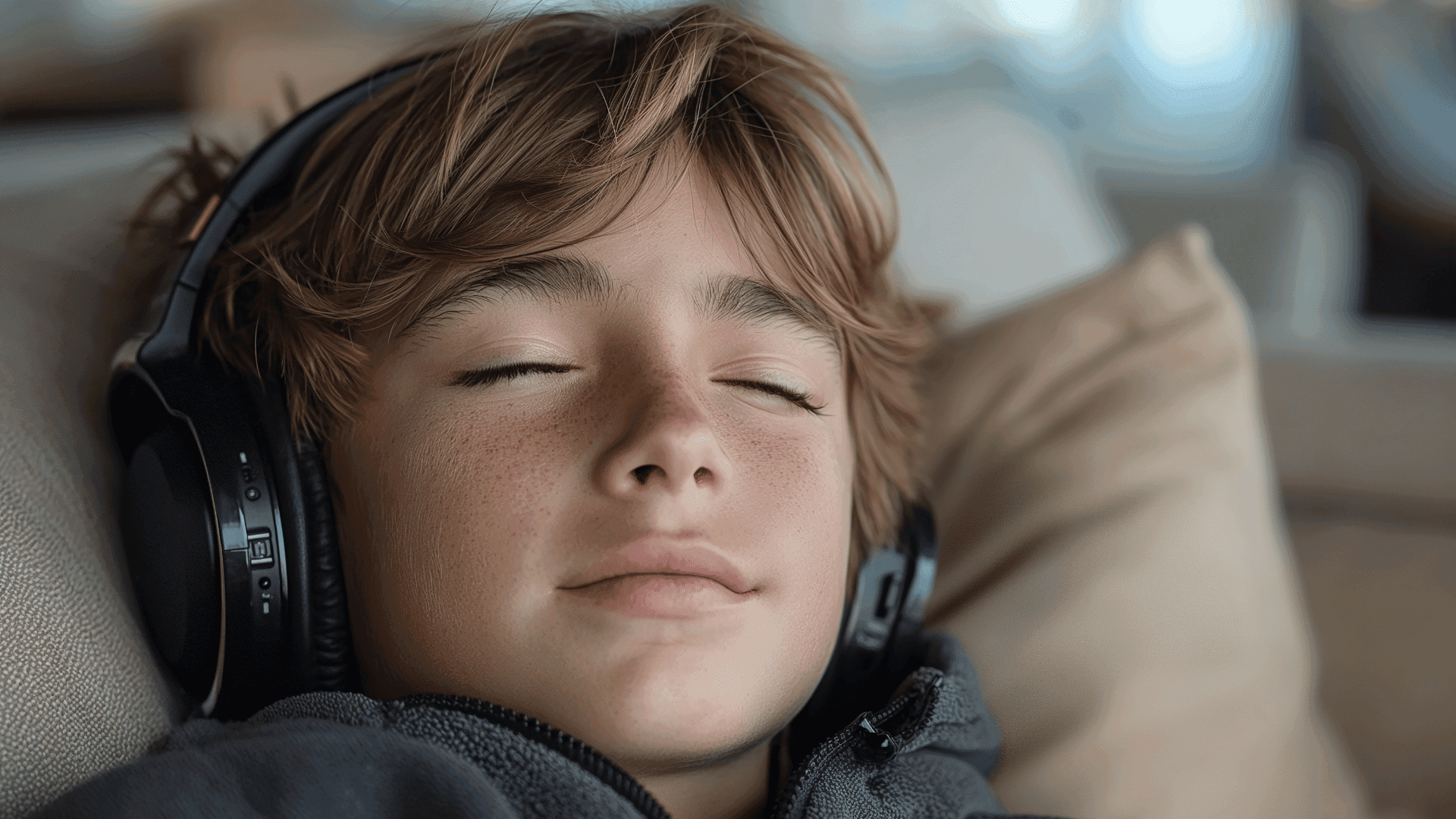
Sleep Sounds for Children: How to Match the Right Sound to Your Child's Sleep Problem
Sleep Sounds for Children: How to Match the Right Sound to Your Child's Sleep Problem
It's 9pm. Your fourth app. Third playlist. Second meltdown.
You've tried the white noise. The rain sounds. Every "relaxing bedtime sounds" option the app store threw at you. And your child is still wide awake, staring at the ceiling, or worse, getting more wound up by the minute.
Sound familiar? You're not alone. And here's what nobody tells you about sleep sounds for children: there's no universal "best" sound. The sound that finally works is the one that matches your child's specific sleep problem. Not their friend's problem. Not the average child's problem. Their actual, specific barrier to sleep.
A racing brain needs different audio than sensory sensitivity. Transition anxiety requires something different again. Once you understand the match, bedtime sounds kids actually respond to become possible to find.
This isn't about trying more apps. It's about trying the right type of sound for the right problem. And that changes everything.
Why "Try White Noise" Isn't Helpful Advice
You've heard it a hundred times. From your mum. From the health visitor. From that well-meaning friend whose child sleeps twelve hours straight.
"Have you tried white noise?"
The assumption behind this advice is that all children struggle with sleep for the same reason, and all of them will respond to the same solution. Neither is true.
Research from the Journal of Clinical Sleep Medicine found that sleep difficulties in children have multiple distinct causes, including sensory processing differences, anxiety, and circadian rhythm variations (Mindell et al., 2018). A child lying awake because their brain won't stop racing has a completely different challenge than a child who can't tolerate the silence of their bedroom.
White noise might mask environmental sounds. But it does nothing for internal noise. Rain sounds might feel calming to some nervous systems. But they might be actively irritating to others.
Generic "try this sound" advice treats sleep problems as interchangeable. They're not. And that's precisely why the same night time sounds child after child responds to differently.
The Four Sleep Problems That Need Different Sounds
After working with hundreds of families of sensitive and neurodivergent children, we've seen clear patterns. Most sleep difficulties fall into one of four categories. Each one responds to a different type of audio.
Understanding which category fits your child changes everything about which sounds you should try. So let's look at each one.
Problem One: The Racing Brain
You know this child. You probably live with them.
They lie in bed replaying the day. Worrying about tomorrow. Thinking about that thing someone said at school three weeks ago. Their body is tired, but their brain refuses to stop.
For many children with ADHD, this is the nightly reality. The Sleep Foundation notes that 25-50% of children with attention difficulties struggle with the transition from waking activity to sleep, as their minds continue processing at full speed (Sleep Foundation, 2024).
What works: Sounds that give the brain something else to do. Not demanding sounds that require attention or following along. But sounds with enough texture and gentle variation to occupy the racing thoughts without adding cognitive load.
Think layered ambient soundscapes. Gentle frequencies. Audio with subtle movement that draws attention without demanding it. The brain needs something to hook onto, something that says "follow me" instead of "think about your problems."
What doesn't work: Complete silence gives the brain nothing but its own thoughts. Simple static sounds like basic white noise aren't engaging enough to redirect racing thoughts. And guided meditations that require following instructions? They add cognitive demand to an already overworked brain.
Problem Two: Sensory Sensitivity
This child covers their ears at sounds others barely notice. They can hear the fridge humming two rooms away. Certain frequencies make them physically uncomfortable, and they may not be able to explain which ones or why.
We've been there. It's exhausting for everyone.
For autistic children and those with sensory processing differences, sound sensitivity and sleep problems frequently overlap. Research published in the Journal of Autism and Developmental Disorders found that sleep disturbances and sensory sensitivities co-occur in up to 80% of autistic children, with auditory sensitivity being particularly common (Mazurek & Sohl, 2020).
What works: Carefully calibrated sounds with controlled frequency ranges. Audio specifically designed to avoid the frequencies that commonly trigger sensory discomfort. Sounds that are steady and predictable, without sudden changes in volume or texture.
This is where adapted for vs designed for really matters. Generic sleep sounds aren't created with auditory hypersensitivity in mind. They might include frequency combinations that feel neutral to most ears but land as sharp or intrusive to sensitive processing.
What doesn't work: Most mainstream sleep sounds weren't calibrated for sensitive ears. Sounds with dynamic range or volume variations can trigger discomfort. And audio that includes harsh frequencies known to affect sensitive listeners often makes things worse, not better.
Problem Three: Transition Anxiety
Bedtime isn't just about sleep. It's about leaving the day behind. Separating from parents. Being alone in the dark. Facing the uncertainty of what happens when consciousness ends.
For anxious children, these transitions are genuinely frightening. Not "being difficult." Not "attention-seeking." Genuinely frightening. The problem isn't that they won't sleep. It's that sleep requires them to let go, and letting go feels unsafe.
What works: Gentle, continuous audio that bridges the gap. Sounds that don't have clear endings or beginnings, so there's no moment of "now it's over, now you're alone." Low, steady tones that create a sense of being held or surrounded.
For some children, soft spoken content without demands can help too. Not "close your eyes and imagine," but simply a calm voice existing in the space with them. Presence without expectation.
What doesn't work: Sounds that stop suddenly create a moment of "now I'm alone." Tracks with clear endings signal "now you're on your own." High-frequency sounds feel activating rather than grounding.
Problem Four: Environmental Sensitivity
This child can't settle because of what they hear around them. Traffic. Neighbours. A parent watching television downstairs. Siblings in another room. The sounds of the house settling.
Unlike internal racing thoughts or deep sensory sensitivity, this problem is about external intrusion. The environment keeps breaking through, and every sound resets the settling process.
What works: Masking sounds that cover environmental noise without creating their own sensory challenges. Consistent, enveloping audio that fills the space and reduces the contrast between silence and sudden sounds.
This is where white noise and similar options can actually help, as long as the specific white noise isn't itself a sensory trigger. Brown noise or pink noise often work better than true white noise for children, as the lower frequencies feel less harsh.
What doesn't work: Complete silence makes every environmental sound more noticeable. Sounds with gaps or quiet passages let external sounds break through. And masking sounds that are themselves uncomfortable create a new problem while trying to solve the original one.
Matching Sound to Problem: A Practical Guide
Most parents have been cycling through sounds at random, hoping something sticks. That approach can work eventually, but it's exhausting. And discouraging when app after app fails.
There's a better way. Here's how to match sound to problem, step by step.
Step One: Identify the Primary Barrier
Tonight, watch your child at bedtime. Really watch. Listen to what they say. Notice what happens.
Racing brain clues: They mention worries or thoughts. They ask questions when they should be settling. They seem tired but their eyes stay alert. They toss and turn not from discomfort but from mental activity.
Sensory sensitivity clues: They react to specific sounds. They complain about noises you barely notice. Certain sounds make them visibly uncomfortable. They prefer silence but can't achieve it.
Transition anxiety clues: They want you to stay. They delay bedtime with requests. They seem frightened rather than wakeful. They struggle most in the moments right before sleep.
Environmental sensitivity clues: They react to household sounds. They comment on noises from outside. They settle better on quieter nights. Background sounds affect them noticeably.
Most children have elements of more than one barrier. That's completely normal. Identify the primary one first, then address secondary barriers later.
Step Two: Choose Your Sound Category
Based on the primary barrier:
Primary Barrier | Sound Category | Examples |
|---|---|---|
Racing brain | Engaging but passive audio | Layered soundscapes, gentle frequencies, subtle ambient variation |
Sensory sensitivity | Calibrated, controlled sounds | ND-designed frequencies, sensory-safe ASMR, carefully controlled ambient |
Transition anxiety | Continuous, enveloping audio | Looping soundscapes, low steady tones, soft continuous presence |
Environmental sensitivity | Masking sounds | Brown noise, pink noise, nature sounds with consistent presence |
Step Three: Test Thoughtfully
This is where most parents go wrong. They try a new sound for one night and move on when it doesn't work immediately.
Give each sound type at least three consecutive nights before deciding. Your child's nervous system needs time to recognise the sound as safe and associated with sleep. One night isn't enough data.
If something seems to make things worse, stop immediately. Not all sounds work for all children, and some will be actively unhelpful. That's information, not failure.
If something seems neutral, continue for the full three nights. Neutral on night one sometimes becomes helpful by night three once the association builds. We've seen this happen over and over with families.
When Sleep Sounds Don't Work Alone
Sounds are one part of the sleep puzzle. They're a powerful part for many children, but they're rarely the only piece.
If you've matched sounds to your child's specific barrier and you're still struggling, consider what else might be happening. Because sleep is rarely just one thing.
Timing matters. The same child who can't settle at 8pm might settle easily at 9pm, or vice versa. Circadian rhythms vary, especially in neurodivergent children.
Environment matters. Light, temperature, bedding textures, room arrangement. Sounds can't override an environment that's working against sleep.
Routine matters. Sounds are most effective as part of a predictable sequence. When the sound comes on, the body starts recognising: this means sleep is coming.
The day matters. A day full of overwhelm doesn't reset at bedtime. Sometimes the child who can't sleep tonight is processing something that happened hours ago.
Sounds to help child sleep work best when they're part of a thoughtful whole. They're not magic. They're a tool. And like any tool, they work when they match the problem and sit within a context that supports sleep.
Finding Sounds Designed for Your Child
Understanding why generic calming sounds don't work is the first step. Finding sounds that were actually designed for sensitive and neurodivergent children is the next.
Most sleep sounds weren't created with sensory differences in mind. They weren't designed considering how an ADHD brain processes audio differently. They weren't calibrated for ears that hear frequencies others miss.
That's not a criticism of those sounds. They work for many children. But if your child isn't one of them, and you've tried app after app without success, you need sounds designed for neurodivergent children. Not sounds adapted from something created for someone else.
The Sound Sanctuary at HushAway® was built specifically for this. Every sound created from the ground up for sensitive ears, racing brains, and anxious bedtimes. No interaction required. No choices to make at 10pm when everyone's exhausted.
Just press play. That's it. Sounds matched to how your child's brain actually works.
Tonight's First Step
You don't need to overhaul bedtime tonight. You just need to make one change with intention.
Look at your child's primary sleep barrier. Pick one sound type that matches. Try it for three nights before judging.
If you've been cycling through generic sounds wondering what's wrong with your child, consider this: maybe nothing is wrong with your child. Maybe the sounds have just been designed for someone else's brain.
Your child's sleep problem has a shape. The right sound matches that shape. Finding the match takes observation and patience, but it exists. We've seen it happen for families who had tried everything.
For sounds designed specifically for sensitive and neurodivergent children, explore The Sound Sanctuary. For a deeper understanding of which sounds work and why, see our complete guide to calming sounds for children.
Because the goal isn't finding the best sleep sounds for children. The goal is finding the right sleep sounds for your child. And that's a match worth finding.
It's 9pm. Your fourth app. Third playlist. Second meltdown.
You've tried the white noise. The rain sounds. Every "relaxing bedtime sounds" option the app store threw at you. And your child is still wide awake, staring at the ceiling, or worse, getting more wound up by the minute.
Sound familiar? You're not alone. And here's what nobody tells you about sleep sounds for children: there's no universal "best" sound. The sound that finally works is the one that matches your child's specific sleep problem. Not their friend's problem. Not the average child's problem. Their actual, specific barrier to sleep.
A racing brain needs different audio than sensory sensitivity. Transition anxiety requires something different again. Once you understand the match, bedtime sounds kids actually respond to become possible to find.
This isn't about trying more apps. It's about trying the right type of sound for the right problem. And that changes everything.
Why "Try White Noise" Isn't Helpful Advice
You've heard it a hundred times. From your mum. From the health visitor. From that well-meaning friend whose child sleeps twelve hours straight.
"Have you tried white noise?"
The assumption behind this advice is that all children struggle with sleep for the same reason, and all of them will respond to the same solution. Neither is true.
Research from the Journal of Clinical Sleep Medicine found that sleep difficulties in children have multiple distinct causes, including sensory processing differences, anxiety, and circadian rhythm variations (Mindell et al., 2018). A child lying awake because their brain won't stop racing has a completely different challenge than a child who can't tolerate the silence of their bedroom.
White noise might mask environmental sounds. But it does nothing for internal noise. Rain sounds might feel calming to some nervous systems. But they might be actively irritating to others.
Generic "try this sound" advice treats sleep problems as interchangeable. They're not. And that's precisely why the same night time sounds child after child responds to differently.
The Four Sleep Problems That Need Different Sounds
After working with hundreds of families of sensitive and neurodivergent children, we've seen clear patterns. Most sleep difficulties fall into one of four categories. Each one responds to a different type of audio.
Understanding which category fits your child changes everything about which sounds you should try. So let's look at each one.
Problem One: The Racing Brain
You know this child. You probably live with them.
They lie in bed replaying the day. Worrying about tomorrow. Thinking about that thing someone said at school three weeks ago. Their body is tired, but their brain refuses to stop.
For many children with ADHD, this is the nightly reality. The Sleep Foundation notes that 25-50% of children with attention difficulties struggle with the transition from waking activity to sleep, as their minds continue processing at full speed (Sleep Foundation, 2024).
What works: Sounds that give the brain something else to do. Not demanding sounds that require attention or following along. But sounds with enough texture and gentle variation to occupy the racing thoughts without adding cognitive load.
Think layered ambient soundscapes. Gentle frequencies. Audio with subtle movement that draws attention without demanding it. The brain needs something to hook onto, something that says "follow me" instead of "think about your problems."
What doesn't work: Complete silence gives the brain nothing but its own thoughts. Simple static sounds like basic white noise aren't engaging enough to redirect racing thoughts. And guided meditations that require following instructions? They add cognitive demand to an already overworked brain.
Problem Two: Sensory Sensitivity
This child covers their ears at sounds others barely notice. They can hear the fridge humming two rooms away. Certain frequencies make them physically uncomfortable, and they may not be able to explain which ones or why.
We've been there. It's exhausting for everyone.
For autistic children and those with sensory processing differences, sound sensitivity and sleep problems frequently overlap. Research published in the Journal of Autism and Developmental Disorders found that sleep disturbances and sensory sensitivities co-occur in up to 80% of autistic children, with auditory sensitivity being particularly common (Mazurek & Sohl, 2020).
What works: Carefully calibrated sounds with controlled frequency ranges. Audio specifically designed to avoid the frequencies that commonly trigger sensory discomfort. Sounds that are steady and predictable, without sudden changes in volume or texture.
This is where adapted for vs designed for really matters. Generic sleep sounds aren't created with auditory hypersensitivity in mind. They might include frequency combinations that feel neutral to most ears but land as sharp or intrusive to sensitive processing.
What doesn't work: Most mainstream sleep sounds weren't calibrated for sensitive ears. Sounds with dynamic range or volume variations can trigger discomfort. And audio that includes harsh frequencies known to affect sensitive listeners often makes things worse, not better.
Problem Three: Transition Anxiety
Bedtime isn't just about sleep. It's about leaving the day behind. Separating from parents. Being alone in the dark. Facing the uncertainty of what happens when consciousness ends.
For anxious children, these transitions are genuinely frightening. Not "being difficult." Not "attention-seeking." Genuinely frightening. The problem isn't that they won't sleep. It's that sleep requires them to let go, and letting go feels unsafe.
What works: Gentle, continuous audio that bridges the gap. Sounds that don't have clear endings or beginnings, so there's no moment of "now it's over, now you're alone." Low, steady tones that create a sense of being held or surrounded.
For some children, soft spoken content without demands can help too. Not "close your eyes and imagine," but simply a calm voice existing in the space with them. Presence without expectation.
What doesn't work: Sounds that stop suddenly create a moment of "now I'm alone." Tracks with clear endings signal "now you're on your own." High-frequency sounds feel activating rather than grounding.
Problem Four: Environmental Sensitivity
This child can't settle because of what they hear around them. Traffic. Neighbours. A parent watching television downstairs. Siblings in another room. The sounds of the house settling.
Unlike internal racing thoughts or deep sensory sensitivity, this problem is about external intrusion. The environment keeps breaking through, and every sound resets the settling process.
What works: Masking sounds that cover environmental noise without creating their own sensory challenges. Consistent, enveloping audio that fills the space and reduces the contrast between silence and sudden sounds.
This is where white noise and similar options can actually help, as long as the specific white noise isn't itself a sensory trigger. Brown noise or pink noise often work better than true white noise for children, as the lower frequencies feel less harsh.
What doesn't work: Complete silence makes every environmental sound more noticeable. Sounds with gaps or quiet passages let external sounds break through. And masking sounds that are themselves uncomfortable create a new problem while trying to solve the original one.
Matching Sound to Problem: A Practical Guide
Most parents have been cycling through sounds at random, hoping something sticks. That approach can work eventually, but it's exhausting. And discouraging when app after app fails.
There's a better way. Here's how to match sound to problem, step by step.
Step One: Identify the Primary Barrier
Tonight, watch your child at bedtime. Really watch. Listen to what they say. Notice what happens.
Racing brain clues: They mention worries or thoughts. They ask questions when they should be settling. They seem tired but their eyes stay alert. They toss and turn not from discomfort but from mental activity.
Sensory sensitivity clues: They react to specific sounds. They complain about noises you barely notice. Certain sounds make them visibly uncomfortable. They prefer silence but can't achieve it.
Transition anxiety clues: They want you to stay. They delay bedtime with requests. They seem frightened rather than wakeful. They struggle most in the moments right before sleep.
Environmental sensitivity clues: They react to household sounds. They comment on noises from outside. They settle better on quieter nights. Background sounds affect them noticeably.
Most children have elements of more than one barrier. That's completely normal. Identify the primary one first, then address secondary barriers later.
Step Two: Choose Your Sound Category
Based on the primary barrier:
Primary Barrier | Sound Category | Examples |
|---|---|---|
Racing brain | Engaging but passive audio | Layered soundscapes, gentle frequencies, subtle ambient variation |
Sensory sensitivity | Calibrated, controlled sounds | ND-designed frequencies, sensory-safe ASMR, carefully controlled ambient |
Transition anxiety | Continuous, enveloping audio | Looping soundscapes, low steady tones, soft continuous presence |
Environmental sensitivity | Masking sounds | Brown noise, pink noise, nature sounds with consistent presence |
Step Three: Test Thoughtfully
This is where most parents go wrong. They try a new sound for one night and move on when it doesn't work immediately.
Give each sound type at least three consecutive nights before deciding. Your child's nervous system needs time to recognise the sound as safe and associated with sleep. One night isn't enough data.
If something seems to make things worse, stop immediately. Not all sounds work for all children, and some will be actively unhelpful. That's information, not failure.
If something seems neutral, continue for the full three nights. Neutral on night one sometimes becomes helpful by night three once the association builds. We've seen this happen over and over with families.
When Sleep Sounds Don't Work Alone
Sounds are one part of the sleep puzzle. They're a powerful part for many children, but they're rarely the only piece.
If you've matched sounds to your child's specific barrier and you're still struggling, consider what else might be happening. Because sleep is rarely just one thing.
Timing matters. The same child who can't settle at 8pm might settle easily at 9pm, or vice versa. Circadian rhythms vary, especially in neurodivergent children.
Environment matters. Light, temperature, bedding textures, room arrangement. Sounds can't override an environment that's working against sleep.
Routine matters. Sounds are most effective as part of a predictable sequence. When the sound comes on, the body starts recognising: this means sleep is coming.
The day matters. A day full of overwhelm doesn't reset at bedtime. Sometimes the child who can't sleep tonight is processing something that happened hours ago.
Sounds to help child sleep work best when they're part of a thoughtful whole. They're not magic. They're a tool. And like any tool, they work when they match the problem and sit within a context that supports sleep.
Finding Sounds Designed for Your Child
Understanding why generic calming sounds don't work is the first step. Finding sounds that were actually designed for sensitive and neurodivergent children is the next.
Most sleep sounds weren't created with sensory differences in mind. They weren't designed considering how an ADHD brain processes audio differently. They weren't calibrated for ears that hear frequencies others miss.
That's not a criticism of those sounds. They work for many children. But if your child isn't one of them, and you've tried app after app without success, you need sounds designed for neurodivergent children. Not sounds adapted from something created for someone else.
The Sound Sanctuary at HushAway® was built specifically for this. Every sound created from the ground up for sensitive ears, racing brains, and anxious bedtimes. No interaction required. No choices to make at 10pm when everyone's exhausted.
Just press play. That's it. Sounds matched to how your child's brain actually works.
Tonight's First Step
You don't need to overhaul bedtime tonight. You just need to make one change with intention.
Look at your child's primary sleep barrier. Pick one sound type that matches. Try it for three nights before judging.
If you've been cycling through generic sounds wondering what's wrong with your child, consider this: maybe nothing is wrong with your child. Maybe the sounds have just been designed for someone else's brain.
Your child's sleep problem has a shape. The right sound matches that shape. Finding the match takes observation and patience, but it exists. We've seen it happen for families who had tried everything.
For sounds designed specifically for sensitive and neurodivergent children, explore The Sound Sanctuary. For a deeper understanding of which sounds work and why, see our complete guide to calming sounds for children.
Because the goal isn't finding the best sleep sounds for children. The goal is finding the right sleep sounds for your child. And that's a match worth finding.
Make tomorrow feel easier
Whether it’s bedtime battles, big emotions or sensory overload, small sound moments can bring your child the reassurance and stability they need.



Make tomorrow feel easier
Whether it’s bedtime battles, big emotions or sensory overload, small sound moments can bring your child the reassurance and stability they need.
Make tomorrow feel easier
Whether it’s bedtime battles, big emotions or sensory overload, small sound moments can bring your child the reassurance and stability they need.
What type of sleep sound is best for children with ADHD?
Children with ADHD often have racing brains that need something to engage with, but without adding cognitive demand. Layered soundscapes, gentle frequencies, and ambient audio with subtle variation tend to work better than static sounds like basic white noise. The sound should give their brain something to follow without requiring attention or decisions. Many families find the right match transforms bedtime within the first week.
Should I use white noise or pink noise for my child?
Pink noise and brown noise often work better than true white noise for children, especially those with sensory sensitivities. White noise contains higher frequencies that can feel harsh to sensitive ears. Pink and brown noise emphasise lower frequencies that tend to feel more comfortable. Try both and observe your child's response over several nights.
How loud should bedtime sounds be?
Quiet enough that it doesn't require adjustment to speak over, but present enough to fill the space. A good test: can you have a normal conversation in the room? If you need to raise your voice, it's too loud. If the sound disappears into silence, it may be too quiet to serve its purpose. Start quieter and adjust based on your child's response.
How long should I leave sleep sounds playing?
For most children, leaving sounds on throughout the night works best, especially initially. Sounds that stop once the child is asleep can cause waking if the child stirs and notices the change. Many parents set sounds to play for the full night or on a long loop. Your child can also develop a preference over time.
What if my child says they don't like any sleep sounds?
This often means they haven't found the right match yet, or previous sounds have created a negative association. Try a completely different category than what you've used before. A child who hated white noise might respond well to gentle frequencies. A child who found nature sounds annoying might settle with ambient soundscapes. And some children genuinely prefer silence, which is absolutely valid if sleep is actually happening.
What type of sleep sound is best for children with ADHD?
Children with ADHD often have racing brains that need something to engage with, but without adding cognitive demand. Layered soundscapes, gentle frequencies, and ambient audio with subtle variation tend to work better than static sounds like basic white noise. The sound should give their brain something to follow without requiring attention or decisions. Many families find the right match transforms bedtime within the first week.
Should I use white noise or pink noise for my child?
Pink noise and brown noise often work better than true white noise for children, especially those with sensory sensitivities. White noise contains higher frequencies that can feel harsh to sensitive ears. Pink and brown noise emphasise lower frequencies that tend to feel more comfortable. Try both and observe your child's response over several nights.
How loud should bedtime sounds be?
Quiet enough that it doesn't require adjustment to speak over, but present enough to fill the space. A good test: can you have a normal conversation in the room? If you need to raise your voice, it's too loud. If the sound disappears into silence, it may be too quiet to serve its purpose. Start quieter and adjust based on your child's response.
How long should I leave sleep sounds playing?
For most children, leaving sounds on throughout the night works best, especially initially. Sounds that stop once the child is asleep can cause waking if the child stirs and notices the change. Many parents set sounds to play for the full night or on a long loop. Your child can also develop a preference over time.
What if my child says they don't like any sleep sounds?
This often means they haven't found the right match yet, or previous sounds have created a negative association. Try a completely different category than what you've used before. A child who hated white noise might respond well to gentle frequencies. A child who found nature sounds annoying might settle with ambient soundscapes. And some children genuinely prefer silence, which is absolutely valid if sleep is actually happening.
Founder & Creative Lead - The PeacePath® | Creator of HushAway® Neurodivergent Inclusive Coach | Voice Artist & Storyteller | Sound Therapy Practitioner