✨ Calm support for bedtime, focus and overwhelm, Free for 14 days. No card needed
✨ Calm support for bedtime, focus and overwhelm, Free for 14 days. No card needed
✨ Start your free trial today!

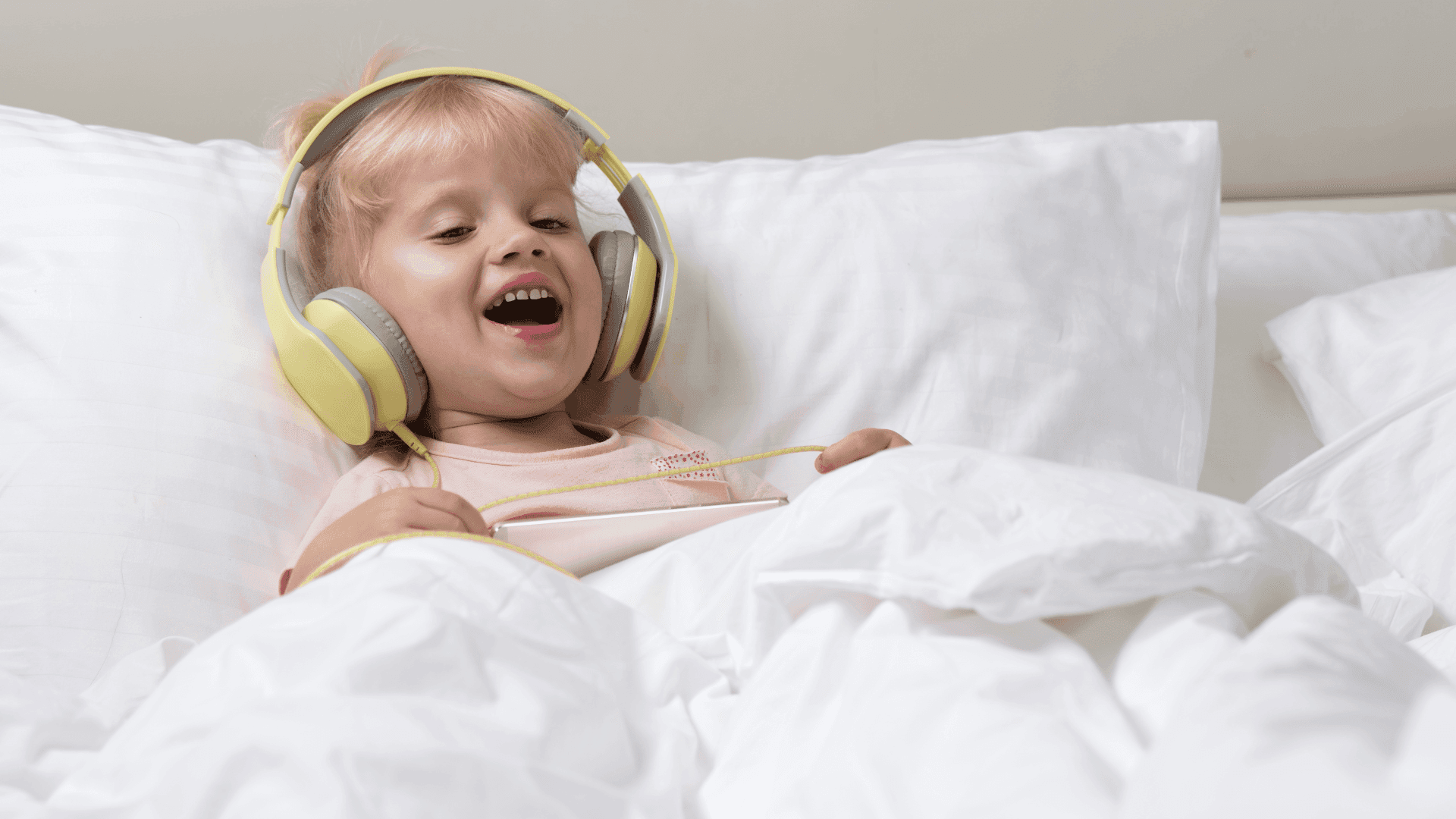
ADHD Sleep vs Autism Sleep: A Parent's Guide to the Differences
ADHD Sleep vs Autism Sleep: A Parent's Guide to the Differences
You've tried the calming routine. The weighted blanket. The melatonin. Nothing quite works.
And maybe you've noticed something: the advice for "neurodivergent sleep" treats all neurodivergent children as though they're the same. But you know your child, and you know that ADHD and autism are different. So why would the sleep problems be identical?
They're not.
ADHD sleep vs autism sleep are not the same problem. They look similar on the surface. Your child won't sleep. But the reasons behind the difficulties are often quite different. And when your child has both ADHD and autism, things get even more complicated.
Understanding these differences isn't just academic. It's practical. When you know which sleep challenges your child actually faces, you can stop trying solutions designed for a different brain and start using approaches that actually fit.
Why This Distinction Matters
The numbers are staggering. According to Nottinghamshire NHS, 2024: Sleeping Well with Autism and ADHD, up to 86% of autistic people experience sleep difficulties, and children with ADHD are at higher risk of developing sleep disorders across all subtypes.
But here's what those statistics don't tell you: the sleep problems look different.
When parents search for "neurodivergent sleep" solutions, they often find generic advice that might work for one condition but not the other. A strategy perfect for an autistic child's sensory needs might completely miss the racing-brain problem an ADHD child faces. And vice versa.
Getting this right matters because the wrong approach doesn't just fail. It can make bedtime harder for everyone. You end up frustrated. Your child ends up frustrated. And sleep feels further away than ever.
How ADHD Affects Sleep
If you've read our guide on why your ADHD child won't sleep, you'll know the core issue: the ADHD brain doesn't have an easy "off switch."
The Racing Brain Problem
ADHD children often lie awake because their minds won't stop. The moment external stimulation drops (lights off, room quiet), the internal activity increases. Thoughts race. Ideas pop up. They replay conversations from the day or worry about tomorrow.
Nottinghamshire NHS notes that "the quietness associated with night-time can be difficult for an ADHD brain to manage" because "there is nothing to occupy your brain." The result is racing thoughts that keep children awake.
This isn't defiance. It's neurobiology.
Circadian Rhythm Delays
ADHD children often have a naturally later body clock. Their melatonin kicks in later than neurotypical children, which means putting them to bed at a "normal" time can feel like forcing sleep when their brain genuinely isn't ready.
Research published in European Child & Adolescent Psychiatry, 2018: Sleep, chronotype, and sleep hygiene in children with ADHD and ASD found that children with ADHD showed a stronger evening orientation compared to controls, with later sleep onset times across the board.
Sleep Pattern Variability
One distinctive marker of ADHD is night-to-night inconsistency. Your child might fall asleep at 9pm one night and be wide awake until midnight the next. Same routine, completely different result. This variability itself is characteristic of ADHD sleep patterns.
ADHD Subtype Differences
The type of ADHD matters too:
Inattentive subtype: Tend to have later bedtimes and struggle getting to sleep
Hyperactive subtype: Often experience insomnia more frequently
Combined type: May struggle with both falling asleep AND staying asleep
How Autism Affects Sleep
Autistic children can experience equally significant sleep problems, but the underlying drivers are often different.
Sensory Sensitivities
The National Autistic Society, 2024: Sleep - a guide for parents of autistic children highlights that sensory differences are a major factor in autism sleep difficulties. These can include:
Increased sensitivity to light (including blue light from screens)
Sensitivity to sounds that others might not notice
Discomfort from textures of bedding or nightclothes
Temperature regulation difficulties
For autistic children, the environment itself can prevent sleep. The problem isn't a racing brain. It's a sensory system on high alert.
Difficulty with Transitions
Autistic children often struggle with the transition from waking to sleeping. This isn't the same as the ADHD "can't switch off" problem. It's more about the change itself being difficult. Moving from one state (awake) to another (asleep) requires a shift that can feel unsettling.
The NHS guidance notes that autistic children may have "difficulty settling, winding down and going to sleep" partly due to these transition challenges.
Routine Disruption Anxiety
While both ADHD and autistic children benefit from routine, the stakes feel different. For autistic children, unexpected changes to bedtime routine can cause genuine distress. Not just resistance, but real anxiety about things being "wrong."
This can work both ways, too. Research shows that during periods of major change (like lockdowns), autistic children actually maintained more stable sleep patterns than ADHD children precisely because of their preference for sameness.
Melatonin Production Differences
Like ADHD, autism is associated with melatonin irregularities. The pattern, however, can differ. Autistic children may have irregular melatonin secretion rather than simply delayed production. The National Autistic Society notes that some autistic individuals have "atypical circadian rhythms" that don't follow typical patterns.
Social Cueing Differences
Some autistic children don't naturally pick up on social cues about bedtime. They may not make the connection between family members going to bed and their own need to sleep. This isn't present in the same way with ADHD.
ADHD Sleep vs Autism Sleep: Key Differences at a Glance
Factor | ADHD Sleep | Autism Sleep |
|---|---|---|
Main Challenge | Brain won't stop thinking | Sensory system won't calm |
Bedtime resistance | Often wants stimulation | Often resists transition |
Routine | Helpful but often inconsistent | Essential; disruption causes distress |
Environment | Less critical (brain is the issue) | Critical (sensory factors dominate) |
Sleep patterns | Variable night-to-night | More consistent once established |
What helps racing thoughts | Giving brain something calm to focus on | Reducing sensory input |
What helps settling | Passive input (sound, story) | Predictable sequence + sensory comfort |
When Your Child Has Both ADHD and Autism
Here's where it gets complicated. Many children have both conditions. Studies suggest 50-70% of autistic children also have ADHD symptoms.
Research published in Autism Research, 2024: Sleep problems in children with ASD and ADHD: A comparative study found that children with ADHD actually showed more total sleep problems than children with autism alone, including more sleep breathing disorders and night sweating.
When both conditions are present, your child might experience:
Racing thoughts AND sensory sensitivities
Circadian delays AND routine-dependent settling
Variable sleep patterns AND distress when patterns change
What This Means for Solutions
Children with both conditions need a layered approach:
Address sensory needs first. Get the environment right (this helps both conditions)
Establish predictable routine. This matters even more with dual diagnosis
Give the racing brain somewhere to go. Sound can help here see our guide on calming sounds for ADHD children
Expect some variability. Even with perfect routines, ADHD adds unpredictability
The research is clear: children with both ADHD and autism have greater sleep challenges than either condition alone. This isn't your fault, and it's not your child's fault. It's the reality of managing two different types of brain wiring.
Finding Solutions That Fit
Understanding the difference between ADHD sleep vs autism sleep helps you choose the right strategies.
For ADHD-Dominant Sleep Problems
The racing brain needs input to settle. Not silence. Complete quiet often makes things worse. Consider:
Passive sound (audio that requires no interaction)
Something calm for the brain to focus on
Working with (not against) their natural body clock
We've written extensively about this in our complete guide to ADHD sleep problems.
For Autism-Dominant Sleep Problems
The sensory environment matters most. Focus on:
Eliminating sensory irritants (light, sound, texture, temperature)
Building predictable, consistent routines
Preparing for transitions with visual schedules or verbal previews
Addressing any underlying anxiety about bedtime
For Children with Both Conditions
You'll need both approaches working together:
Create a sensory-safe environment (autism need)
Add passive auditory input (ADHD need)
Maintain consistent routine (benefits both)
Accept that some night-to-night variation is normal (ADHD reality)
The Sound Solution: Why It Works for Both
Here's something we've noticed at HushAway®: passive listening can help children with ADHD, autism, or both. The reasons, though, are different.
For ADHD children, sound gives the racing brain somewhere calm to land. It occupies the part of the brain that would otherwise be generating endless thoughts. Instead of fighting to focus on nothing, they can rest on something.
For autistic children, the right sounds can create sensory predictability. Consistent, calming audio becomes part of the routine. It becomes something reliable that signals "this is sleep time." When the same gentle sounds play each night, the transition from awake to asleep becomes less jarring.
For children with both conditions, passive sound serves double duty: it addresses the racing brain while providing sensory consistency. Two problems, one solution.
The key word here is "passive." Active engagement (apps that require choices, games, even some meditation programmes) can actually increase alertness in both ADHD and autistic children. Passive listening allows the brain and sensory system to settle naturally. It asks nothing from your child except presence.
No tapping. No choosing. Just press play and let it work.
Your Next Step
If your child has ADHD, autism, or both, and sleep is a struggle, start by identifying which challenges are most present:
Primarily racing thoughts? Focus on giving the brain calming input
Primarily sensory overwhelm? Focus on environment and routine
Both? Layer your approach. You'll need to address both, and that's okay
Here's the good news: you don't have to figure this out alone. And you don't need a complicated programme to start.
The Sound Sanctuary from HushAway® offers sounds designed for neurodivergent children. It doesn't matter whether the challenge is ADHD, autism, or both. We built this collection specifically because one-size-fits-all approaches weren't working for our families.
Tonight, you could try something from the collection and see which sounds help your child settle.
Because understanding the difference between ADHD sleep vs autism sleep isn't just about labels. It's about finding what actually works for your child's unique brain. And that's worth the effort.
You've tried the calming routine. The weighted blanket. The melatonin. Nothing quite works.
And maybe you've noticed something: the advice for "neurodivergent sleep" treats all neurodivergent children as though they're the same. But you know your child, and you know that ADHD and autism are different. So why would the sleep problems be identical?
They're not.
ADHD sleep vs autism sleep are not the same problem. They look similar on the surface. Your child won't sleep. But the reasons behind the difficulties are often quite different. And when your child has both ADHD and autism, things get even more complicated.
Understanding these differences isn't just academic. It's practical. When you know which sleep challenges your child actually faces, you can stop trying solutions designed for a different brain and start using approaches that actually fit.
Why This Distinction Matters
The numbers are staggering. According to Nottinghamshire NHS, 2024: Sleeping Well with Autism and ADHD, up to 86% of autistic people experience sleep difficulties, and children with ADHD are at higher risk of developing sleep disorders across all subtypes.
But here's what those statistics don't tell you: the sleep problems look different.
When parents search for "neurodivergent sleep" solutions, they often find generic advice that might work for one condition but not the other. A strategy perfect for an autistic child's sensory needs might completely miss the racing-brain problem an ADHD child faces. And vice versa.
Getting this right matters because the wrong approach doesn't just fail. It can make bedtime harder for everyone. You end up frustrated. Your child ends up frustrated. And sleep feels further away than ever.
How ADHD Affects Sleep
If you've read our guide on why your ADHD child won't sleep, you'll know the core issue: the ADHD brain doesn't have an easy "off switch."
The Racing Brain Problem
ADHD children often lie awake because their minds won't stop. The moment external stimulation drops (lights off, room quiet), the internal activity increases. Thoughts race. Ideas pop up. They replay conversations from the day or worry about tomorrow.
Nottinghamshire NHS notes that "the quietness associated with night-time can be difficult for an ADHD brain to manage" because "there is nothing to occupy your brain." The result is racing thoughts that keep children awake.
This isn't defiance. It's neurobiology.
Circadian Rhythm Delays
ADHD children often have a naturally later body clock. Their melatonin kicks in later than neurotypical children, which means putting them to bed at a "normal" time can feel like forcing sleep when their brain genuinely isn't ready.
Research published in European Child & Adolescent Psychiatry, 2018: Sleep, chronotype, and sleep hygiene in children with ADHD and ASD found that children with ADHD showed a stronger evening orientation compared to controls, with later sleep onset times across the board.
Sleep Pattern Variability
One distinctive marker of ADHD is night-to-night inconsistency. Your child might fall asleep at 9pm one night and be wide awake until midnight the next. Same routine, completely different result. This variability itself is characteristic of ADHD sleep patterns.
ADHD Subtype Differences
The type of ADHD matters too:
Inattentive subtype: Tend to have later bedtimes and struggle getting to sleep
Hyperactive subtype: Often experience insomnia more frequently
Combined type: May struggle with both falling asleep AND staying asleep
How Autism Affects Sleep
Autistic children can experience equally significant sleep problems, but the underlying drivers are often different.
Sensory Sensitivities
The National Autistic Society, 2024: Sleep - a guide for parents of autistic children highlights that sensory differences are a major factor in autism sleep difficulties. These can include:
Increased sensitivity to light (including blue light from screens)
Sensitivity to sounds that others might not notice
Discomfort from textures of bedding or nightclothes
Temperature regulation difficulties
For autistic children, the environment itself can prevent sleep. The problem isn't a racing brain. It's a sensory system on high alert.
Difficulty with Transitions
Autistic children often struggle with the transition from waking to sleeping. This isn't the same as the ADHD "can't switch off" problem. It's more about the change itself being difficult. Moving from one state (awake) to another (asleep) requires a shift that can feel unsettling.
The NHS guidance notes that autistic children may have "difficulty settling, winding down and going to sleep" partly due to these transition challenges.
Routine Disruption Anxiety
While both ADHD and autistic children benefit from routine, the stakes feel different. For autistic children, unexpected changes to bedtime routine can cause genuine distress. Not just resistance, but real anxiety about things being "wrong."
This can work both ways, too. Research shows that during periods of major change (like lockdowns), autistic children actually maintained more stable sleep patterns than ADHD children precisely because of their preference for sameness.
Melatonin Production Differences
Like ADHD, autism is associated with melatonin irregularities. The pattern, however, can differ. Autistic children may have irregular melatonin secretion rather than simply delayed production. The National Autistic Society notes that some autistic individuals have "atypical circadian rhythms" that don't follow typical patterns.
Social Cueing Differences
Some autistic children don't naturally pick up on social cues about bedtime. They may not make the connection between family members going to bed and their own need to sleep. This isn't present in the same way with ADHD.
ADHD Sleep vs Autism Sleep: Key Differences at a Glance
Factor | ADHD Sleep | Autism Sleep |
|---|---|---|
Main Challenge | Brain won't stop thinking | Sensory system won't calm |
Bedtime resistance | Often wants stimulation | Often resists transition |
Routine | Helpful but often inconsistent | Essential; disruption causes distress |
Environment | Less critical (brain is the issue) | Critical (sensory factors dominate) |
Sleep patterns | Variable night-to-night | More consistent once established |
What helps racing thoughts | Giving brain something calm to focus on | Reducing sensory input |
What helps settling | Passive input (sound, story) | Predictable sequence + sensory comfort |
When Your Child Has Both ADHD and Autism
Here's where it gets complicated. Many children have both conditions. Studies suggest 50-70% of autistic children also have ADHD symptoms.
Research published in Autism Research, 2024: Sleep problems in children with ASD and ADHD: A comparative study found that children with ADHD actually showed more total sleep problems than children with autism alone, including more sleep breathing disorders and night sweating.
When both conditions are present, your child might experience:
Racing thoughts AND sensory sensitivities
Circadian delays AND routine-dependent settling
Variable sleep patterns AND distress when patterns change
What This Means for Solutions
Children with both conditions need a layered approach:
Address sensory needs first. Get the environment right (this helps both conditions)
Establish predictable routine. This matters even more with dual diagnosis
Give the racing brain somewhere to go. Sound can help here see our guide on calming sounds for ADHD children
Expect some variability. Even with perfect routines, ADHD adds unpredictability
The research is clear: children with both ADHD and autism have greater sleep challenges than either condition alone. This isn't your fault, and it's not your child's fault. It's the reality of managing two different types of brain wiring.
Finding Solutions That Fit
Understanding the difference between ADHD sleep vs autism sleep helps you choose the right strategies.
For ADHD-Dominant Sleep Problems
The racing brain needs input to settle. Not silence. Complete quiet often makes things worse. Consider:
Passive sound (audio that requires no interaction)
Something calm for the brain to focus on
Working with (not against) their natural body clock
We've written extensively about this in our complete guide to ADHD sleep problems.
For Autism-Dominant Sleep Problems
The sensory environment matters most. Focus on:
Eliminating sensory irritants (light, sound, texture, temperature)
Building predictable, consistent routines
Preparing for transitions with visual schedules or verbal previews
Addressing any underlying anxiety about bedtime
For Children with Both Conditions
You'll need both approaches working together:
Create a sensory-safe environment (autism need)
Add passive auditory input (ADHD need)
Maintain consistent routine (benefits both)
Accept that some night-to-night variation is normal (ADHD reality)
The Sound Solution: Why It Works for Both
Here's something we've noticed at HushAway®: passive listening can help children with ADHD, autism, or both. The reasons, though, are different.
For ADHD children, sound gives the racing brain somewhere calm to land. It occupies the part of the brain that would otherwise be generating endless thoughts. Instead of fighting to focus on nothing, they can rest on something.
For autistic children, the right sounds can create sensory predictability. Consistent, calming audio becomes part of the routine. It becomes something reliable that signals "this is sleep time." When the same gentle sounds play each night, the transition from awake to asleep becomes less jarring.
For children with both conditions, passive sound serves double duty: it addresses the racing brain while providing sensory consistency. Two problems, one solution.
The key word here is "passive." Active engagement (apps that require choices, games, even some meditation programmes) can actually increase alertness in both ADHD and autistic children. Passive listening allows the brain and sensory system to settle naturally. It asks nothing from your child except presence.
No tapping. No choosing. Just press play and let it work.
Your Next Step
If your child has ADHD, autism, or both, and sleep is a struggle, start by identifying which challenges are most present:
Primarily racing thoughts? Focus on giving the brain calming input
Primarily sensory overwhelm? Focus on environment and routine
Both? Layer your approach. You'll need to address both, and that's okay
Here's the good news: you don't have to figure this out alone. And you don't need a complicated programme to start.
The Sound Sanctuary from HushAway® offers sounds designed for neurodivergent children. It doesn't matter whether the challenge is ADHD, autism, or both. We built this collection specifically because one-size-fits-all approaches weren't working for our families.
Tonight, you could try something from the collection and see which sounds help your child settle.
Because understanding the difference between ADHD sleep vs autism sleep isn't just about labels. It's about finding what actually works for your child's unique brain. And that's worth the effort.
Make tomorrow feel easier
Whether it’s bedtime battles, big emotions or sensory overload, small sound moments can bring your child the reassurance and stability they need.



Make tomorrow feel easier
Whether it’s bedtime battles, big emotions or sensory overload, small sound moments can bring your child the reassurance and stability they need.
Make tomorrow feel easier
Whether it’s bedtime battles, big emotions or sensory overload, small sound moments can bring your child the reassurance and stability they need.
Are ADHD sleep problems worse than autism sleep problems?
Research suggests that ADHD may be associated with more total sleep problems overall, but this doesn't mean one is "worse" than the other. A 2024 study found that children with ADHD showed more sleep breathing disorders and higher rates of sleep difficulties compared to children with autism alone. However, autistic children often experience more sensory-driven sleep problems that can be equally disruptive. The experience varies significantly between individuals.
Can my child have both ADHD and autism sleep problems?
Yes. Studies suggest that 50-70% of autistic children also have ADHD symptoms, and these children often experience more severe sleep difficulties than those with either condition alone. If your child has both diagnoses (or traits of both), they may experience racing thoughts, sensory sensitivities, circadian rhythm delays, and routine-dependent settling all at once.
Should I use the same sleep strategies for ADHD and autism?
Some strategies overlap (like consistent bedtimes and reducing screen time before bed), but others need to be tailored. ADHD children often benefit from having calming input to occupy the racing brain, while autistic children need more focus on sensory environment and predictable routines. If your child has both conditions, you'll need to address both aspects.
Why does my neurodivergent child sleep well some nights and terribly others?
Night-to-night variability is particularly common in ADHD. Children with ADHD often show inconsistent sleep patterns even with the same routine. This inconsistency is actually considered a distinctive marker of the condition. Autistic children tend to be more consistent once a routine is established, unless that routine is disrupted. If your child has both conditions, expect some variability despite your best efforts.
Does melatonin work differently for ADHD vs autism?
Both conditions involve melatonin irregularities, but the patterns differ. ADHD is associated with delayed melatonin onset (it kicks in later than usual), while autism may involve irregular production that doesn't follow typical patterns. Melatonin supplements can help both conditions, but they address timing rather than the underlying brain activity or sensory challenges that keep children awake.
Are ADHD sleep problems worse than autism sleep problems?
Research suggests that ADHD may be associated with more total sleep problems overall, but this doesn't mean one is "worse" than the other. A 2024 study found that children with ADHD showed more sleep breathing disorders and higher rates of sleep difficulties compared to children with autism alone. However, autistic children often experience more sensory-driven sleep problems that can be equally disruptive. The experience varies significantly between individuals.
Can my child have both ADHD and autism sleep problems?
Yes. Studies suggest that 50-70% of autistic children also have ADHD symptoms, and these children often experience more severe sleep difficulties than those with either condition alone. If your child has both diagnoses (or traits of both), they may experience racing thoughts, sensory sensitivities, circadian rhythm delays, and routine-dependent settling all at once.
Should I use the same sleep strategies for ADHD and autism?
Some strategies overlap (like consistent bedtimes and reducing screen time before bed), but others need to be tailored. ADHD children often benefit from having calming input to occupy the racing brain, while autistic children need more focus on sensory environment and predictable routines. If your child has both conditions, you'll need to address both aspects.
Why does my neurodivergent child sleep well some nights and terribly others?
Night-to-night variability is particularly common in ADHD. Children with ADHD often show inconsistent sleep patterns even with the same routine. This inconsistency is actually considered a distinctive marker of the condition. Autistic children tend to be more consistent once a routine is established, unless that routine is disrupted. If your child has both conditions, expect some variability despite your best efforts.
Does melatonin work differently for ADHD vs autism?
Both conditions involve melatonin irregularities, but the patterns differ. ADHD is associated with delayed melatonin onset (it kicks in later than usual), while autism may involve irregular production that doesn't follow typical patterns. Melatonin supplements can help both conditions, but they address timing rather than the underlying brain activity or sensory challenges that keep children awake.
Founder & Creative Lead - The PeacePath® | Creator of HushAway® Neurodivergent Inclusive Coach | Voice Artist & Storyteller | Sound Therapy Practitioner