✨ Calm support for bedtime, focus and overwhelm, Free for 14 days. No card needed
✨ Calm support for bedtime, focus and overwhelm, Free for 14 days. No card needed
✨ Start your free trial today!

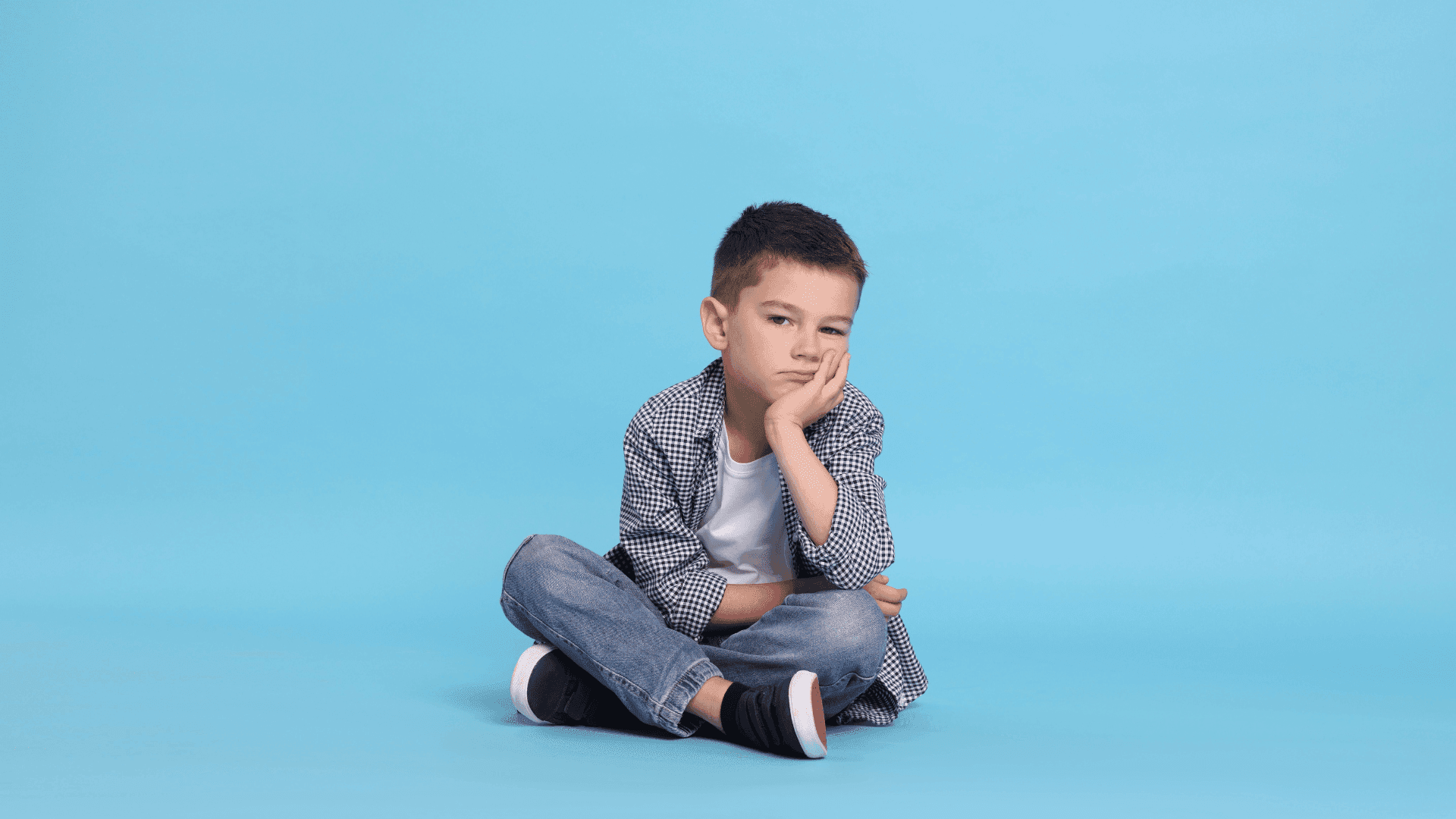
Emotional Regulation for ADHD Children: Tools That Work WITH the ADHD Brain
Emotional Regulation for ADHD Children: Tools That Work WITH the ADHD Brain
You've tried the deep breathing. You've bought the calm-down jars. You've read the parenting books that promised to help with "big emotions."
None of it works with your ADHD child. And you're exhausted.
Here's what nobody told you: emotional regulation for an ADHD child isn't the same as for other children. Not slower to develop. Fundamentally different. The strategies that work for neurotypical kids often make things worse for your child because they fight against how the ADHD brain actually processes feelings.
This isn't a discipline problem. It's neurology. And once you understand that, everything changes.
The tools that actually help must work WITH the ADHD brain, not against it. That's what we're covering here: why emotional regulation for an ADHD child is genuinely harder, what's actually happening in their brain during big feelings, and which approaches work when the usual advice falls flat.
Why Emotional Regulation Is Harder for ADHD Children
If you've read our guide to emotional regulation in children, you know that all children develop this capacity gradually. But for children with ADHD, it's not just developing slowly. It's developing differently.
Shaw, Philip et al., 2014: Emotion Dysregulation in Attention Deficit Hyperactivity Disorder found that emotional overwhelm is a core feature of ADHD, not a side effect. The research shows that the same brain differences affecting attention also affect emotional control.
What does this mean in your home? Your ADHD child experiences emotions more intensely, more quickly, and with less ability to pause before reacting. That meltdown over the "wrong" breakfast cereal? It's not manipulation. It's a brain that can't dial down the intensity.
Think of neurotypical emotional regulation like a dimmer switch. The feeling rises gradually, and there's time to turn it down before it gets too bright.
ADHD emotional regulation is more like a light switch that someone else controls. Feelings flip to full intensity instantly, and your child has no hand on the switch.
This isn't a lack of willpower. It's brain wiring.
What ADHD Emotional Outbursts Actually Look Like
ADHD big feelings don't always match what you'd expect. Yes, there are explosive moments. But there's also:
Zero-to-sixty reactions that seem disproportionate to the trigger
Difficulty letting go of perceived unfairness, even hours later
Intense excitement that tips into overwhelm or tears
Sudden withdrawal when they feel misunderstood
Physical restlessness during emotional intensity (they can't sit still while upset)
Apparent "overreaction" to criticism or correction
Mood shifts that seem to come from nowhere
The last one often catches parents off guard. Your child was fine. Then suddenly they weren't. You're left wondering what you missed.
You probably didn't miss anything. ADHD brains can flip emotional states without obvious triggers. The internal experience of your child may have been building for hours, but their external behaviour didn't show it until the breaking point. One parent described it as "a volcano that gives no warning before it erupts."
## The Role of Rejection Sensitive Dysphoria
There's a particular type of emotional pain that many ADHD children experience: rejection sensitive dysphoria (RSD). It's not a formal diagnosis, but it's widely recognised among ADHD specialists.
Dodson, William MD, 2023: Rejection Sensitive Dysphoria: The ADHD Experience of Emotional Pain describes RSD as an intense emotional response to real or perceived rejection, criticism, or failure.
For your child, this might show up as:
Devastating reactions to gentle correction ("You seemed upset about what happened" triggers a meltdown)
Avoiding activities where they might not succeed
Interpreting neutral feedback as criticism
Intense people-pleasing to avoid any possibility of disapproval
Seeming "too sensitive" compared to siblings or peers
RSD helps explain why your ADHD child might fall apart over something that barely registers for other children. Their brain processes social feedback differently. What feels like minor correction to you can feel like crushing rejection to them.
Knowing this doesn't fix it. But it changes everything about how you respond.
Your child isn't being dramatic. They're experiencing genuine emotional pain that feels as intense to them as physical pain. Once you understand that, you stop trying to reason them out of it and start helping them through it.
Why Standard Advice Often Backfires
This is where most parenting advice fails ADHD families.
Most emotional regulation strategies assume a child can:
Notice they're becoming overwhelmed (before the explosion)
Remember a coping strategy in the moment
Execute that strategy with enough focus to make it work
Wait for the strategy to take effect
ADHD challenges every single one of these steps.
Noticing early signs: ADHD affects interoception, the ability to sense what's happening inside your body. Your child may genuinely not notice they're getting overwhelmed until they're already past the point of no return.
Remembering strategies: Working memory is impaired in ADHD. The breathing exercise they practised yesterday? Gone when they need it. Not because they didn't try, but because ADHD brains don't reliably retrieve information under stress.
Executing with focus: Coping strategies require sustained attention. Deep breathing needs focus. Counting to ten needs focus. The very thing ADHD disrupts is the thing these strategies demand.
Waiting for results: ADHD brains need immediate feedback. A strategy that takes 30 seconds to work might as well take 30 years. By the time it would help, they've already moved on (or melted down).
This is why telling an ADHD child to "take a deep breath" during a meltdown rarely works. You're asking them to use the exact brain functions that are offline.
So what does work?
Tools That Work WITH the ADHD Brain
Tools that accommodate how ADHD actually works, not how we wish it worked:
Immediate Sensory Input
ADHD brains respond to immediate stimulation. Instead of strategies that require internal processing, offer external sensory input:
Cold water on wrists or face (immediate sensation)
Proprioceptive input like wall pushes or carrying something heavy
Strong flavours (sour sweets, mint)
Sound that enters the environment without requiring attention
The NHS, 2024: Attention Deficit Hyperactivity Disorder ADHD acknowledges that ADHD affects the ability to self-regulate and recommends external supports and environmental modifications alongside any other interventions.
Passive Sound
This is where many parents find unexpected success. Sound doesn't require your child to do anything. They don't need to remember a technique, make a choice, or focus on following instructions.
When you press play on calming audio, you're providing immediate sensory input that their nervous system can respond to automatically. No attention required.
Our article on calming sounds for ADHD covers this in detail for sleep contexts, but the principle applies to emotional regulation too. Predictable, gentle sound gives the ADHD brain something to anchor to without adding demands.
Want to try this tonight? The Sound Sanctuary has sounds designed specifically for neurodivergent children. No decisions, no setup, no asking your child to do anything. Just press play and let the sound do the work while you both catch your breath.
Movement Before Regulation
Trying to calm an ADHD child while they're physically activated often fails. Their body needs to discharge energy before their brain can settle.
This doesn't mean a full workout. It might mean:
Jumping on the spot for 30 seconds
Running to the garden and back
Pushing against a wall as hard as they can
Carrying something heavy across the room
Stomping feet in an exaggerated walk
Movement helps discharge the adrenaline that's flooding their system. Once the physical intensity reduces, emotional regulation becomes possible.
The key: don't ask them to calm down and then move. Move first. Calm follows.
Fewer Words, More Presence
During ADHD emotional outbursts, language processing becomes difficult. Long explanations or questions ("Can you tell me what's wrong?") add cognitive load they can't handle.
Reduce your words to the minimum:
"I'm here."
"You're safe."
"I'll wait."
Then stop talking. Really. Your calm presence does more than your words ever could. Stay nearby without demanding eye contact or conversation. Let them know you're there without adding pressure.
This connects to co-regulation, which we cover in depth in our co-regulation through sound guide. Your regulated nervous system helps regulate theirs, but only if you're not adding verbal demands they can't process.
External Cues Over Internal Awareness
Since ADHD impairs noticing internal states, use external cues to support regulation:
Visual timers showing how long until a transition
Colour-coded zones on a chart (green/yellow/red) that YOU identify, not them
A specific sound that signals "regulation time" consistently
Physical objects that serve as regulation anchors (a weighted blanket, a specific cushion)
The pattern: if a strategy relies on your child noticing what's happening inside them, it probably won't work when they're overwhelmed. Strategies that provide external structure work better.
The Connection Between Sleep and Emotional Regulation
This one catches many parents by surprise.
We can't talk about ADHD emotional control without mentioning sleep. If your child isn't sleeping well, their emotional regulation capacity is reduced before their day even starts.
ADHD sleep struggles are incredibly common. Racing thoughts, difficulty transitioning to rest, and delayed sleep onset all mean your child may be running on empty. Our guide to racing thoughts at bedtime covers specific strategies for that particular challenge.
A tired ADHD brain has even less capacity for emotional regulation. If daytime meltdowns are frequent, improving sleep might be the single most effective thing you can do.
This doesn't mean sleep fixes everything. But it creates the foundation for other strategies to work. Without that foundation, you're fighting uphill every day.
What to Do Right Now (Tonight, This Week)
You don't need a complete plan. Start with one or two changes:
Tonight: Put on calming sounds in the background during any high-risk transition (after school, before bed). Don't announce it or make it a big deal. Just let it play. The Sound Sanctuary is a good place to start.
This week: When you see a meltdown building, try movement before conversation. "Let's do wall pushes together" before "Let's talk about what's wrong."
Ongoing: Reduce your words during emotional intensity. Practice saying less. Your presence matters more than your explanations.
And the most important change of all? Stop blaming yourself or your child for struggles that are rooted in neurology. ADHD emotional intensity isn't a discipline failure. It's a different brain experiencing the world differently. You're not doing it wrong. You're just using tools that weren't designed for your child's brain.
What Comes Next
Emotional regulation for ADHD children is one piece of a larger picture. In this pillar, we're also covering
For the complete picture, see our Complete Guide to Emotional Regulation for Children.
Your child's ADHD makes emotional regulation harder. That's the reality. But harder doesn't mean impossible. It just means the tools that work look different from what the standard parenting books suggest.
Find the strategies that work WITH your child's brain. Let go of the ones that don't, no matter how many experts recommend them. And give yourself grace on the hard days. You're learning a whole new way of parenting that nobody taught you.
One quiet moment can change a whole day for a child. Sometimes it starts with just pressing play.
You've tried the deep breathing. You've bought the calm-down jars. You've read the parenting books that promised to help with "big emotions."
None of it works with your ADHD child. And you're exhausted.
Here's what nobody told you: emotional regulation for an ADHD child isn't the same as for other children. Not slower to develop. Fundamentally different. The strategies that work for neurotypical kids often make things worse for your child because they fight against how the ADHD brain actually processes feelings.
This isn't a discipline problem. It's neurology. And once you understand that, everything changes.
The tools that actually help must work WITH the ADHD brain, not against it. That's what we're covering here: why emotional regulation for an ADHD child is genuinely harder, what's actually happening in their brain during big feelings, and which approaches work when the usual advice falls flat.
Why Emotional Regulation Is Harder for ADHD Children
If you've read our guide to emotional regulation in children, you know that all children develop this capacity gradually. But for children with ADHD, it's not just developing slowly. It's developing differently.
Shaw, Philip et al., 2014: Emotion Dysregulation in Attention Deficit Hyperactivity Disorder found that emotional overwhelm is a core feature of ADHD, not a side effect. The research shows that the same brain differences affecting attention also affect emotional control.
What does this mean in your home? Your ADHD child experiences emotions more intensely, more quickly, and with less ability to pause before reacting. That meltdown over the "wrong" breakfast cereal? It's not manipulation. It's a brain that can't dial down the intensity.
Think of neurotypical emotional regulation like a dimmer switch. The feeling rises gradually, and there's time to turn it down before it gets too bright.
ADHD emotional regulation is more like a light switch that someone else controls. Feelings flip to full intensity instantly, and your child has no hand on the switch.
This isn't a lack of willpower. It's brain wiring.
What ADHD Emotional Outbursts Actually Look Like
ADHD big feelings don't always match what you'd expect. Yes, there are explosive moments. But there's also:
Zero-to-sixty reactions that seem disproportionate to the trigger
Difficulty letting go of perceived unfairness, even hours later
Intense excitement that tips into overwhelm or tears
Sudden withdrawal when they feel misunderstood
Physical restlessness during emotional intensity (they can't sit still while upset)
Apparent "overreaction" to criticism or correction
Mood shifts that seem to come from nowhere
The last one often catches parents off guard. Your child was fine. Then suddenly they weren't. You're left wondering what you missed.
You probably didn't miss anything. ADHD brains can flip emotional states without obvious triggers. The internal experience of your child may have been building for hours, but their external behaviour didn't show it until the breaking point. One parent described it as "a volcano that gives no warning before it erupts."
## The Role of Rejection Sensitive Dysphoria
There's a particular type of emotional pain that many ADHD children experience: rejection sensitive dysphoria (RSD). It's not a formal diagnosis, but it's widely recognised among ADHD specialists.
Dodson, William MD, 2023: Rejection Sensitive Dysphoria: The ADHD Experience of Emotional Pain describes RSD as an intense emotional response to real or perceived rejection, criticism, or failure.
For your child, this might show up as:
Devastating reactions to gentle correction ("You seemed upset about what happened" triggers a meltdown)
Avoiding activities where they might not succeed
Interpreting neutral feedback as criticism
Intense people-pleasing to avoid any possibility of disapproval
Seeming "too sensitive" compared to siblings or peers
RSD helps explain why your ADHD child might fall apart over something that barely registers for other children. Their brain processes social feedback differently. What feels like minor correction to you can feel like crushing rejection to them.
Knowing this doesn't fix it. But it changes everything about how you respond.
Your child isn't being dramatic. They're experiencing genuine emotional pain that feels as intense to them as physical pain. Once you understand that, you stop trying to reason them out of it and start helping them through it.
Why Standard Advice Often Backfires
This is where most parenting advice fails ADHD families.
Most emotional regulation strategies assume a child can:
Notice they're becoming overwhelmed (before the explosion)
Remember a coping strategy in the moment
Execute that strategy with enough focus to make it work
Wait for the strategy to take effect
ADHD challenges every single one of these steps.
Noticing early signs: ADHD affects interoception, the ability to sense what's happening inside your body. Your child may genuinely not notice they're getting overwhelmed until they're already past the point of no return.
Remembering strategies: Working memory is impaired in ADHD. The breathing exercise they practised yesterday? Gone when they need it. Not because they didn't try, but because ADHD brains don't reliably retrieve information under stress.
Executing with focus: Coping strategies require sustained attention. Deep breathing needs focus. Counting to ten needs focus. The very thing ADHD disrupts is the thing these strategies demand.
Waiting for results: ADHD brains need immediate feedback. A strategy that takes 30 seconds to work might as well take 30 years. By the time it would help, they've already moved on (or melted down).
This is why telling an ADHD child to "take a deep breath" during a meltdown rarely works. You're asking them to use the exact brain functions that are offline.
So what does work?
Tools That Work WITH the ADHD Brain
Tools that accommodate how ADHD actually works, not how we wish it worked:
Immediate Sensory Input
ADHD brains respond to immediate stimulation. Instead of strategies that require internal processing, offer external sensory input:
Cold water on wrists or face (immediate sensation)
Proprioceptive input like wall pushes or carrying something heavy
Strong flavours (sour sweets, mint)
Sound that enters the environment without requiring attention
The NHS, 2024: Attention Deficit Hyperactivity Disorder ADHD acknowledges that ADHD affects the ability to self-regulate and recommends external supports and environmental modifications alongside any other interventions.
Passive Sound
This is where many parents find unexpected success. Sound doesn't require your child to do anything. They don't need to remember a technique, make a choice, or focus on following instructions.
When you press play on calming audio, you're providing immediate sensory input that their nervous system can respond to automatically. No attention required.
Our article on calming sounds for ADHD covers this in detail for sleep contexts, but the principle applies to emotional regulation too. Predictable, gentle sound gives the ADHD brain something to anchor to without adding demands.
Want to try this tonight? The Sound Sanctuary has sounds designed specifically for neurodivergent children. No decisions, no setup, no asking your child to do anything. Just press play and let the sound do the work while you both catch your breath.
Movement Before Regulation
Trying to calm an ADHD child while they're physically activated often fails. Their body needs to discharge energy before their brain can settle.
This doesn't mean a full workout. It might mean:
Jumping on the spot for 30 seconds
Running to the garden and back
Pushing against a wall as hard as they can
Carrying something heavy across the room
Stomping feet in an exaggerated walk
Movement helps discharge the adrenaline that's flooding their system. Once the physical intensity reduces, emotional regulation becomes possible.
The key: don't ask them to calm down and then move. Move first. Calm follows.
Fewer Words, More Presence
During ADHD emotional outbursts, language processing becomes difficult. Long explanations or questions ("Can you tell me what's wrong?") add cognitive load they can't handle.
Reduce your words to the minimum:
"I'm here."
"You're safe."
"I'll wait."
Then stop talking. Really. Your calm presence does more than your words ever could. Stay nearby without demanding eye contact or conversation. Let them know you're there without adding pressure.
This connects to co-regulation, which we cover in depth in our co-regulation through sound guide. Your regulated nervous system helps regulate theirs, but only if you're not adding verbal demands they can't process.
External Cues Over Internal Awareness
Since ADHD impairs noticing internal states, use external cues to support regulation:
Visual timers showing how long until a transition
Colour-coded zones on a chart (green/yellow/red) that YOU identify, not them
A specific sound that signals "regulation time" consistently
Physical objects that serve as regulation anchors (a weighted blanket, a specific cushion)
The pattern: if a strategy relies on your child noticing what's happening inside them, it probably won't work when they're overwhelmed. Strategies that provide external structure work better.
The Connection Between Sleep and Emotional Regulation
This one catches many parents by surprise.
We can't talk about ADHD emotional control without mentioning sleep. If your child isn't sleeping well, their emotional regulation capacity is reduced before their day even starts.
ADHD sleep struggles are incredibly common. Racing thoughts, difficulty transitioning to rest, and delayed sleep onset all mean your child may be running on empty. Our guide to racing thoughts at bedtime covers specific strategies for that particular challenge.
A tired ADHD brain has even less capacity for emotional regulation. If daytime meltdowns are frequent, improving sleep might be the single most effective thing you can do.
This doesn't mean sleep fixes everything. But it creates the foundation for other strategies to work. Without that foundation, you're fighting uphill every day.
What to Do Right Now (Tonight, This Week)
You don't need a complete plan. Start with one or two changes:
Tonight: Put on calming sounds in the background during any high-risk transition (after school, before bed). Don't announce it or make it a big deal. Just let it play. The Sound Sanctuary is a good place to start.
This week: When you see a meltdown building, try movement before conversation. "Let's do wall pushes together" before "Let's talk about what's wrong."
Ongoing: Reduce your words during emotional intensity. Practice saying less. Your presence matters more than your explanations.
And the most important change of all? Stop blaming yourself or your child for struggles that are rooted in neurology. ADHD emotional intensity isn't a discipline failure. It's a different brain experiencing the world differently. You're not doing it wrong. You're just using tools that weren't designed for your child's brain.
What Comes Next
Emotional regulation for ADHD children is one piece of a larger picture. In this pillar, we're also covering
For the complete picture, see our Complete Guide to Emotional Regulation for Children.
Your child's ADHD makes emotional regulation harder. That's the reality. But harder doesn't mean impossible. It just means the tools that work look different from what the standard parenting books suggest.
Find the strategies that work WITH your child's brain. Let go of the ones that don't, no matter how many experts recommend them. And give yourself grace on the hard days. You're learning a whole new way of parenting that nobody taught you.
One quiet moment can change a whole day for a child. Sometimes it starts with just pressing play.
Make tomorrow feel easier
Whether it’s bedtime battles, big emotions or sensory overload, small sound moments can bring your child the reassurance and stability they need.



Make tomorrow feel easier
Whether it’s bedtime battles, big emotions or sensory overload, small sound moments can bring your child the reassurance and stability they need.
Make tomorrow feel easier
Whether it’s bedtime battles, big emotions or sensory overload, small sound moments can bring your child the reassurance and stability they need.
Why does my ADHD child have such big emotional reactions?
ADHD affects the brain's ability to regulate emotional intensity. Feelings arrive faster, stronger, and with less natural braking than in neurotypical children. This isn't a choice or a behaviour problem. It's how ADHD brains process emotion. The same differences affecting attention also affect emotional control.
What is rejection sensitive dysphoria?
Rejection sensitive dysphoria (RSD) is an intense emotional response to real or perceived rejection, criticism, or failure. It's commonly experienced by people with ADHD. For children, this might look like devastating reactions to gentle correction or avoiding activities where they might not succeed perfectly.
Why don't breathing exercises work for my ADHD child?
Breathing exercises require sustained attention, working memory (remembering to do them), and the ability to wait for delayed results. ADHD impairs all three. During emotional overwhelm, asking your child to use these cognitive functions often fails because those exact functions are offline.
What helps ADHD emotional outbursts in the moment?
Tools that don't require your child to think, remember, or focus work best. Immediate sensory input (cold water, movement, passive sound), reduced verbal demands, and your calm presence help more than strategies requiring cognitive engagement. Movement before conversation is particularly effective for ADHD children.
How does sleep affect ADHD emotional regulation?
Poor sleep significantly reduces emotional regulation capacity. Since ADHD children often have sleep difficulties, they may start each day with less capacity to manage emotions. Improving sleep can create a foundation that makes other emotional regulation strategies more effective.
When should I seek professional support for ADHD emotional regulation?
Consider seeking support if your child's emotional reactions are causing significant distress for them or the family, affecting friendships or school performance, or if you're exhausted from managing constant intensity. Your GP can refer to CAMHS (Child and Adolescent Mental Health Services) or recommend appropriate support services.
Why does my ADHD child have such big emotional reactions?
ADHD affects the brain's ability to regulate emotional intensity. Feelings arrive faster, stronger, and with less natural braking than in neurotypical children. This isn't a choice or a behaviour problem. It's how ADHD brains process emotion. The same differences affecting attention also affect emotional control.
What is rejection sensitive dysphoria?
Rejection sensitive dysphoria (RSD) is an intense emotional response to real or perceived rejection, criticism, or failure. It's commonly experienced by people with ADHD. For children, this might look like devastating reactions to gentle correction or avoiding activities where they might not succeed perfectly.
Why don't breathing exercises work for my ADHD child?
Breathing exercises require sustained attention, working memory (remembering to do them), and the ability to wait for delayed results. ADHD impairs all three. During emotional overwhelm, asking your child to use these cognitive functions often fails because those exact functions are offline.
What helps ADHD emotional outbursts in the moment?
Tools that don't require your child to think, remember, or focus work best. Immediate sensory input (cold water, movement, passive sound), reduced verbal demands, and your calm presence help more than strategies requiring cognitive engagement. Movement before conversation is particularly effective for ADHD children.
How does sleep affect ADHD emotional regulation?
Poor sleep significantly reduces emotional regulation capacity. Since ADHD children often have sleep difficulties, they may start each day with less capacity to manage emotions. Improving sleep can create a foundation that makes other emotional regulation strategies more effective.
When should I seek professional support for ADHD emotional regulation?
Consider seeking support if your child's emotional reactions are causing significant distress for them or the family, affecting friendships or school performance, or if you're exhausted from managing constant intensity. Your GP can refer to CAMHS (Child and Adolescent Mental Health Services) or recommend appropriate support services.
Founder & Creative Lead - The PeacePath® | Creator of HushAway® Neurodivergent Inclusive Coach | Voice Artist & Storyteller | Sound Therapy Practitioner