✨ Calm support for bedtime, focus and overwhelm, Free for 14 days. No card needed
✨ Calm support for bedtime, focus and overwhelm, Free for 14 days. No card needed
✨ Start your free trial today!

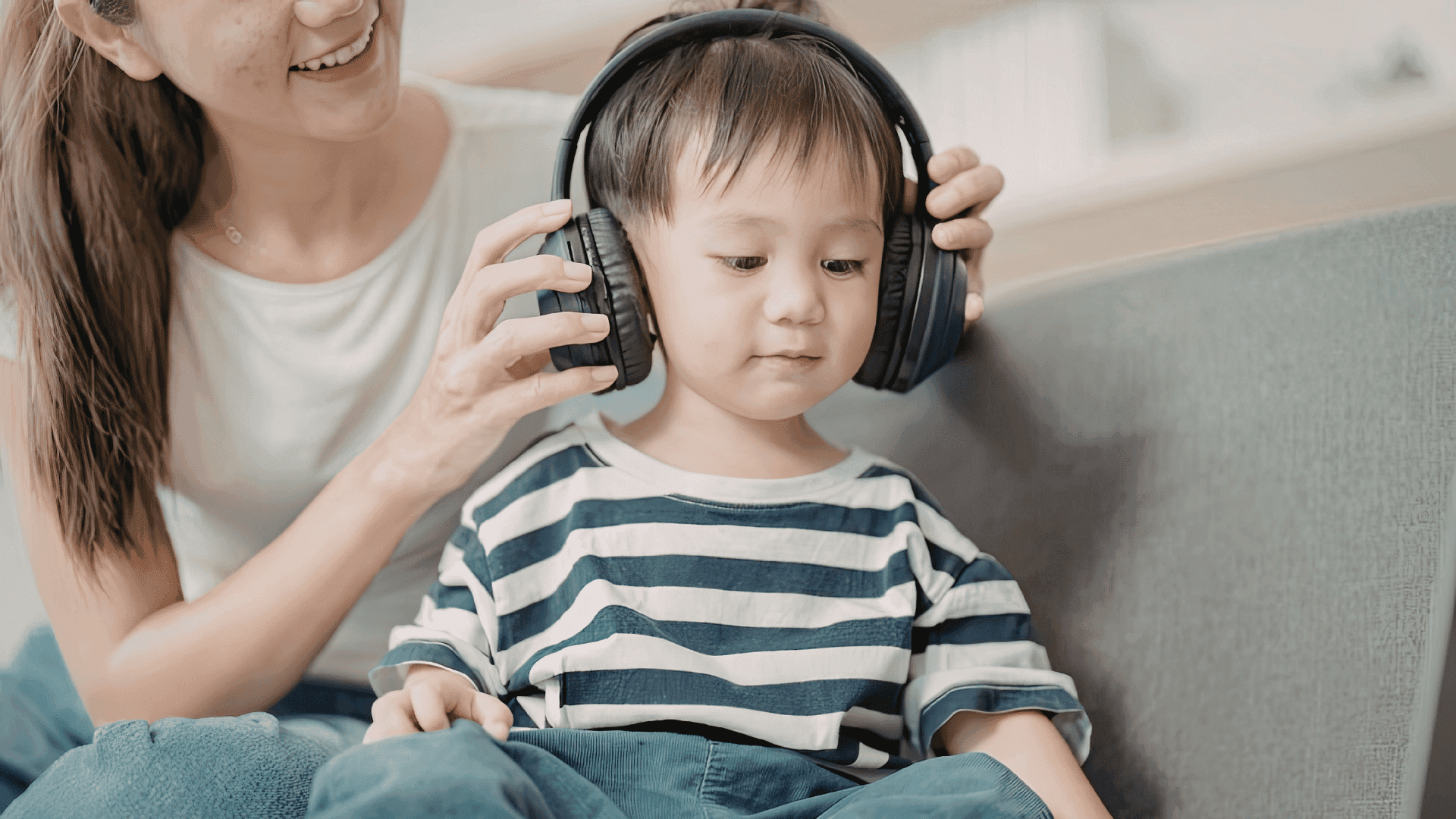
Emotional Regulation for Children: Why Sound Is the Missing Tool in Everything You've Tried
Emotional Regulation for Children: Why Sound Is the Missing Tool in Everything You've Tried
You've tried everything.
The breathing exercises. The fidget toys. The calm corner with the weighted blanket and the feelings chart. The Zones of Regulation framework the school recommended. The meditation app someone promised would finally work.
You've bought the books. Watched the videos. Printed the worksheets. Read articles just like this one at 11pm, hoping this would be the one that actually helped.
And still. When your child is overwhelmed, when the big feelings hit, when the meltdown arrives, none of it works.
Not because you're doing it wrong.
Not because your child is difficult.
But because every single one of those tools assumes your child can DO something. Follow a breathing pattern. Choose a fidget. Walk to the calm corner. Use their words.
And in that moment of complete overwhelm? Your child can't do anything at all.
Here's what nobody tells you: there's a tool that works precisely because it requires nothing. No following instructions. No making choices. No effort from a child who has nothing left to give.
That tool is sound.
Think about it. Every calm corner guide tells you what objects to include. None tell you what to play. Every regulation article recommends strategies your child practises during calm moments but can't access during crisis.
Sound works differently. It enters through the ears and reaches the nervous system without requiring any participation. Your child doesn't need to engage. They just need to be in the room.
This guide brings together everything we know about emotional regulation in children. Why some children struggle more than others. What actually happens in the brain during overwhelm. And why sound might be the missing piece that makes everything else in your toolkit actually usable.
We'll cover the science. The practical applications. The specific approaches that work for neurodivergent children when standard advice falls flat.
Because you deserve more than "try breathing exercises." You deserve to understand why those exercises fail during crisis.
And you deserve a tool that works precisely because it asks nothing.
The Gap in Every Regulation Guide
Search "emotional regulation child" and you'll find hundreds of resources. NHS pages. YoungMinds guides. School handouts. Therapy worksheets.
They all recommend the same toolkit:
Breathing exercises (belly breathing, square breathing, dragon breaths)
Physical tools (fidget spinners, stress balls, weighted blankets)
Visual supports (emotion charts, calm-down cards, traffic light systems)
Movement activities (jumping, stretching, wall push-ups)
Verbal techniques (naming feelings, talking through problems)
Solid advice. Evidence-informed. Recommended by professionals everywhere.
And yet. When your child is in the middle of a meltdown, none of it seems to work.
Here's the gap nobody talks about: every single one of these strategies requires active participation from your child.
Breathing exercises need them to follow instructions. Fidget tools need them to make a choice and coordinate their hands. Visual supports need them to look, process, and respond. Movement needs body awareness and motor planning. Talking needs language access and emotional vocabulary.
When your child is genuinely overwhelmed, their thinking brain has gone offline. Thompson, Ross A., 2014: Stress and Child Development confirms what you've observed at home: during high stress, the prefrontal cortex essentially shuts down. The skills your child knows and practises during calm moments become temporarily inaccessible.
So what's left?
Sound.
The only input that enters through the ears without requiring anything in return. The only regulation tool that works when your child can't do anything at all.
This isn't fringe thinking. It's a gap that's been hiding in plain sight.
Every Zones of Regulation classroom has sounds playing. Every therapy room has background audio. We instinctively use sound for regulation. Lullabies for babies. Music during homework. Nature sounds for sleep.
We already know sound helps. We've just never put it at the centre of the regulation toolkit where it belongs.
Understanding Emotional Regulation: The Neurological Reality
Before we go further, let's get clear on what emotional regulation actually means. And what it isn't.
Emotional regulation is your nervous system's ability to manage feelings, process stress, and return to a calm baseline. It's not about suppressing emotions. It's not about never getting upset. It's not about being "good."
It's about recovery. The bounce-back. How quickly and smoothly your child can return to baseline after something knocks them off course.
For a more detailed exploration, our foundation article on why emotional regulation is neurological covers this in depth. But here's the key insight:
Emotional regulation isn't primarily a skill you teach. It's a capacity that develops based on your child's unique nervous system, their early experiences, and their neurological wiring.
Some children have nervous systems that naturally regulate well. Minor frustrations roll off them. Disappointments sting briefly and fade. They follow calming strategies easily because their baseline state gives them room to think.
Other children have nervous systems that run hot.
Everything feels bigger. Faster. More intense.
Disappointment feels like devastation. Frustration triggers a full alarm response. By the time you notice they're struggling, they're already past the point where thinking strategies can help.
This isn't a character issue. It isn't a parenting failure. It's neurology.
The NHS, 2024: Talking to Your Child About Feelings offers helpful general guidance, but much of it assumes a child who can engage with verbal and cognitive strategies during distress. For many children, especially neurodivergent children, that assumption doesn't hold.
Understanding this changes everything. It means we need tools that work at the level of the nervous system, not tools that require the thinking brain. And that's exactly what passive sound provides.
Why Traditional Tools Fail When Your Child Needs Them Most
You've watched this happen.
Your child knows the breathing exercises. They've practised them at school. They've done them calmly in the living room with you. They can explain them perfectly.
And then a meltdown hits. You suggest the breathing. They can't do it. You show them the calm-down card. They push it away. You offer their favourite fidget. They throw it.
The tools they know so well have completely vanished.
Here's what's happening: It's like learning to drive. In a quiet car park, your child remembers all the rules. Mirror, signal, manoeuvre. Put them on a busy motorway in rush hour? The rules vanish. They know them. They just can't access them under pressure.
This is exactly what happens during emotional overwhelm.
Your child might practise breathing exercises beautifully during calm moments. But when they're flooded with feeling? Those exercises might as well not exist. The brain pathways that connect "I feel upset" to "I should try breathing" have temporarily disconnected.
This isn't defiance. It isn't laziness. It isn't them choosing not to use their tools.
The tools are simply unavailable.
Let's break down why each traditional tool fails at the peak of overwhelm:
Breathing exercises require: Following multi-step verbal instructions. Motor planning for breath control. Sustained attention. Working memory to hold the pattern.
Fidget toys require: Making a choice between options. Reaching for an object. Coordinating fine motor movements. Sustained attention to the activity.
Calm boxes and corners require: Walking to a location. Making choices about which item to use. Executive function to self-select a strategy.
Movement activities require: Body awareness. Motor planning. Space to move safely. Following instructions about what movement to do.
Talking strategies require: Language processing. Emotional vocabulary retrieval. The ability to articulate internal states. Receptive language to understand questions.
Every single item on this list depends on the prefrontal cortex.
And during overwhelm, the prefrontal cortex has essentially gone dark.
This isn't about your child being difficult. It isn't about them refusing to use strategies. Their brain literally cannot access these skills in that moment.
Telling them to "use their words" when their language centre is offline is like asking them to walk on a broken leg. The instruction makes sense. The execution is impossible.
For a practical guide to what works in those critical first moments, see our article on big feelings and overwhelm. It covers the specific window when other tools fail and what you can do instead.
Emotional Regulation for Neurodivergent Children
If traditional strategies fail typical children during peak distress, they fail neurodivergent children even more dramatically.
The nervous system differences that characterise autism and ADHD don't just make regulation harder. They make standard approaches genuinely unsuitable. Strategies designed for neurotypical nervous systems often backfire completely for neurodivergent children.
Autistic Children
For autistic children, Mazefsky, C.A. & White, S.W., 2019: Emotion Regulation: Concepts and Practice in Autism Spectrum Disorder found that emotions often arrive more intensely and with fewer automatic coping strategies available.
What does this mean practically?
Emotions arrive faster and bigger. What causes mild frustration in neurotypical children might trigger genuine distress in autistic children. Same event, vastly different emotional magnitude.
Recovery takes longer. Once an autistic nervous system activates, it doesn't settle quickly. The stress hormones linger. Tools designed for quick recovery don't account for this extended timeline.
Sensory input compounds everything. The nervous system is already working overtime to process environmental sensory input. There's no spare capacity for managing emotions on top.
Demands make things worse. Every instruction, question, or choice adds cognitive load. During overwhelm, that load becomes unbearable. Even well-meaning questions like "What do you need?" can feel like impossible demands.
Our detailed guide to emotional regulation for autistic children explains why generic strategies fail and what autism-specific approaches actually help.
For autistic children, the link between emotional overwhelm and autistic meltdowns is direct. A meltdown isn't a tantrum or a choice. It's what happens when the nervous system is completely overwhelmed. Understanding this reframes which tools make sense.
ADHD Children
For ADHD children, the picture is different but equally challenging. Shaw, Philip et al., 2014: Emotion Dysregulation in Attention Deficit Hyperactivity Disorder found that emotional overwhelm is a core feature of ADHD, not a side effect. The same brain differences affecting attention also affect emotional control.
Emotions are instant. There's no gradual build-up, no warning phase. Feelings flip to full intensity immediately.
The pause button is broken. Neurotypical children have a brief gap between feeling and reaction. ADHD children often don't. The emotion and the response happen simultaneously.
Intensity doesn't match the trigger. A minor frustration can provoke a major reaction. Not because of poor discipline, but because the brain can't modulate the response.
Rejection hits harder. Rejection Sensitive Dysphoria (RSD) means perceived criticism or rejection creates emotional pain that's genuinely devastating. Not disappointing. Devastating.
Our guide to emotional regulation for ADHD children covers these differences and explains why tools must work WITH the ADHD brain instead of fighting against it.
The connection between ADHD emotional intensity and ADHD sleep struggles is worth noting. An overwhelming day often leads to a difficult night. And sleep deprivation makes emotional regulation even harder the next day. Breaking this cycle requires tools that don't add cognitive demands.
Why Passive Tools Matter for Neurodivergent Children
For both autistic and ADHD children, the common thread is this: their nervous systems are already working harder than typical. Processing sensory input. Managing attention. Filtering stimuli. Responding to a world that wasn't designed for their neurology.
When regulation strategies require active participation, they add load to a system that's already overloaded.
Sound is different.
Sound enters the ears and reaches the nervous system without requiring any cognitive processing. It doesn't add demands. It doesn't require choices. It doesn't ask anything at all.
It meets the nervous system exactly where it is.
This is why passive listening works when active strategies fail. Not because it's magic. Because it's the only tool designed for a nervous system that has nothing left to give.
Sound: The Zero-Demand Regulation Tool
Every regulation tool we've discussed requires something from your child.
Sound is the exception.
Think about what happens when you press play and sound enters a room:
Your child doesn't need to notice it consciously
They don't need to make any choices
They don't need to follow any instructions
They don't need to coordinate any movements
They don't need to use language or process information
The sound simply exists. And the nervous system responds.
This isn't wishful thinking. It's neuroscience.
Porges, Stephen W., 2011: The Polyvagal Theory explains how the auditory system has direct connections to the parts of the brain that regulate our physiological state. Certain sound characteristics (predictable rhythms, certain frequencies, gentle transitions) signal safety to the nervous system without requiring conscious processing.
Your child's thinking brain doesn't need to engage. The sound bypasses it entirely and speaks directly to the survival brain that's running the show during overwhelm.
We call this the "zero-demand tool." Sound works precisely because it asks nothing.
Here's how different sounds affect the nervous system:
Predictable, rhythmic sounds signal safety and stability. The nervous system stops scanning for threats when it registers a consistent, expected pattern.
Lower frequencies tend to feel grounding and settling. They're processed differently than high frequencies, which can feel alerting or stimulating.
Gradual transitions allow the nervous system to adjust without jolts. Sudden changes activate the startle response. Smooth transitions don't.
Familiar sounds provide comfort through recognition. The brain doesn't need to work to identify them. They're already categorised as safe.
This is why calming sounds designed for neurodivergent children work differently than generic "relaxing music." Generic sounds often have unpredictable elements, complex harmonies, or sudden transitions that require active processing.
Purpose-designed sounds work with the nervous system, not against it. They're predictable enough to feel safe, consistent enough to allow settling, and gentle enough to not add sensory load.
Practical Applications: Using Sound for Regulation
Understanding why sound works is helpful. Knowing what to actually do is better.
Here's how to use sound practically for emotional regulation.
Sound in Your Calm Corner
If you've built a calm corner (and if you haven't, this is your sign), sound should be the foundation. Not an optional extra. Not something you add later. The foundation.
Our guide to calm corner sounds covers this in detail, but here's the core principle: every emotional state has sounds that help.
Green Zone (calm, focused): Background ambient sounds support maintaining regulation. Think gentle soundscapes, soft nature sounds.
Yellow Zone (frustrated, anxious, silly): Specific sounds can help prevent escalation. Steady rhythms, predictable patterns.
Red Zone (overwhelmed, panicked, meltdown): This is where passive sound matters most. Simple, steady, undemanding audio that doesn't require engagement.
Blue Zone (sad, tired, withdrawn): Gently lifting sounds can support the transition back toward regulation without forcing energy.
The key insight: don't wait until your child is in Red Zone to introduce sound.
Build it into the calm corner routine during Green Zone moments. Let familiarity become part of the safety signal. Then when crisis comes, the sound already carries associations of calm.
Sound for Different Situations
Emotional overwhelm doesn't only happen in meltdowns. It shows up throughout the day:
Morning transitions: When the day feels overwhelming before it's begun, steady ambient sound can provide an anchoring backdrop.
After school: The sensory overload of a school day often means children arrive home with empty tanks. Sound can support the decompress without requiring anything from them.
Homework time: Regulation struggles often surface during demanding tasks. Background audio can support focus without adding cognitive load.
Bedtime: An unsettled day doesn't magically resolve at lights-out. Sound can bridge the gap between daytime overwhelm and sleep.
Recovery after meltdowns: The meltdown itself is traumatic for the nervous system. Sound can support the slow return to baseline without rushing the process.
Matching Sound to Your Child
Not all calming sounds work for all children. What soothes one child's nervous system might activate another's.
Some children find:
Nature sounds calming (rain, ocean, wind)
Others find them unpredictable and alerting
Some prefer complete regularity (steady tones, consistent rhythms)
Others need slight variation to stay engaged enough to work
Some respond to human voice elements (gentle narration, humming)
Others need voice-free options
The only way to know is experimentation. But here's what matters: experiment during calm times.
Don't introduce new sounds during crisis. Build the familiarity first. Let your child's nervous system learn that these sounds mean safety.
Then, when crisis comes, the sound carries that safety signal with it. You're not asking your child to try something new in their hardest moment. You're offering something their nervous system already recognises as safe.
Co-Regulation: When Sound Helps Both of You
Here's what nobody tells you: regulation advice for parents is just as demanding as regulation advice for children.
"Stay calm."
"Be the anchor."
"Regulate yourself first."
Easy to say. Nearly impossible to do when your own nervous system is activated right alongside your child's.
Because that's what happens. Your child's distress doesn't stay contained in their body. Porges' Polyvagal Theory shows that our nervous systems are designed to respond to distress signals from those we're bonded with. When your child's alarm system fires, yours receives the message.
This is called neuroception. It happens automatically, below conscious awareness. By the time you've decided to stay calm, your body is already responding to the threat.
So how do you regulate yourself while simultaneously supporting your overwhelmed child?
Most advice suggests you go first. Breathe deeply. Ground yourself. Find your calm. Then extend that calm to your child.
In theory, beautiful.
In practice? Nearly impossible when you're exhausted. When this is the fifth meltdown today. When you haven't slept properly in weeks. When your own reserves are completely empty.
This is where sound becomes extraordinary.
It regulates BOTH of you at once.
Our detailed guide to co-regulation through sound explains the mechanism fully. But here's the essence: passive sound enters both nervous systems simultaneously. Neither of you needs to go first. Neither of you needs to do anything except exist in the same auditory space.
You don't need to fake calm while your body screams stress. You don't need to white-knuckle through your own activation while trying to project peace. The sound does the work for both of you.
This isn't about sound replacing your presence. Your presence matters enormously.
But sound allows your presence to be calm without requiring superhuman emotional labour. You don't have to manufacture calm from nothing. The sound provides it. You just have to be there.
When you're both settling together, rather than one of you pretending while the other struggles, genuine co-regulation becomes possible.
Building Emotional Regulation Over Time
Everything we've discussed so far focuses on the crisis moment. Sound as the tool for when nothing else works.
But emotional regulation isn't only about surviving meltdowns.
It's about building capacity over time. So that meltdowns become less frequent. Less intense. Easier to recover from.
Sound plays a role here too.
Predictable Sound Routines
Children's nervous systems thrive on predictability. When certain sounds always accompany certain activities, the sounds themselves become cues for the appropriate regulation state.
Morning sounds that signal "time to wake up gently."
Transition sounds that mean "something is about to change, but you're safe."
Wind-down sounds that communicate "the day is ending, time to settle."
Sleep sounds that have always meant "rest is coming."
Over time, these associations become automatic. The sound arrives, and the nervous system begins adjusting before your child consciously registers what's happening.
This is regulation building, not just regulation crisis management.
The Role of Safe Sound Experiences
For neurodivergent children especially, the world is often acoustically hostile. Loud, unpredictable, overwhelming. Many children develop defensive responses to sound because so much sound has been painful.
Offering consistently safe, pleasant, predictable sound experiences can help rebuild the relationship between your child and their auditory environment.
They learn that sound doesn't only overwhelm. Sound can also soothe. This learning happens through repeated positive experiences, not through reasoning or explanation.
Sound and Sleep
The connection between emotional regulation and sleep is bidirectional. Poor regulation makes sleep harder. Poor sleep makes regulation harder. Breaking this cycle is essential.
Sound is one of the few tools that works effectively for both. It can support settling at bedtime. It can provide continuity through the night. It can ease morning wake-ups.
For children with ADHD, whose ADHD sleep struggles often compound emotional overwhelm, sound offers a non-demanding support that doesn't require the already-exhausted brain to do more work.
Long-Term Regulation Development
Passive sound isn't the end point. It's a foundation.
When your child has a tool that works during crisis, something shifts. Meltdowns become less traumatic. Recovery happens faster. There's more room for other skills to develop.
Breathing exercises can be practised during calm moments without the pressure of needing them to work RIGHT NOW.
Emotional vocabulary can be built when the brain isn't in alarm mode.
Coping strategies can be explored when there's actually cognitive capacity to explore.
Sound doesn't replace the other regulation skills. It creates the conditions where those skills can actually be learned.
And eventually? Those skills become accessible. Not because you forced them during crisis. But because you gave your child a foundation of safety to build from.
When to Seek Additional Support
Sound is a tool, not a treatment. It works alongside other supports, not instead of them.
We want to be clear about this. Sound can help with day-to-day regulation, crisis moments, and building capacity over time. It's not a replacement for professional support when that support is needed.
Consider seeking additional professional input if:
Emotional overwhelm is severely impacting your child's daily functioning at school, home, or socially
Meltdowns are becoming more frequent or more intense over time despite consistent strategies
Your child is at risk of harming themselves or others during episodes
You suspect underlying conditions (autism, ADHD, anxiety, sensory processing differences) that haven't been assessed
You're experiencing significant parental burnout or mental health impacts from supporting your child
In the UK, routes for support include:
Your child's GP (can refer to CAMHS or paediatrics)
School SENCO (for educational support and potential referrals)
Local authority SEND services (for children with identified needs)
Private assessment services (often shorter waiting lists but with associated costs)
Sound-based regulation is compatible with and complementary to:
Occupational therapy (especially sensory-focused OT)
Speech and language therapy
Psychological support and counselling
Medication management (where appropriate)
Educational accommodations
The goal isn't to replace professional support. It's to have tools that help your family today, during the often lengthy wait for formal assessment and intervention.
Because waiting lists are long. And your child needs help now.
The Missing Tool: What Sound Changes
You've read about emotional regulation before. Probably many times.
You've tried the strategies. Built the calm corner. Bought the fidgets. Printed the charts.
And you're still here, looking for something that actually works when your child is beyond reach.
Here's what makes sound different from everything else you've tried:
Every other tool assumes your child can participate in their own regulation. Breathe with me. Choose a strategy. Use your tools. Talk about your feelings.
Sound assumes nothing.
It meets your child exactly where they are.
Overwhelmed and unreachable? Sound still works.
Unable to process instructions? Sound doesn't need processing.
Incapable of making choices? Sound requires no choices.
This isn't about sound being better than other strategies. In calm moments, breathing exercises are wonderful. Fidget toys have their place. Visual supports help many children.
But in the moment when everything else fails? When your child is beyond the reach of instructions? When you're both exhausted and desperate and nothing is working?
Sound is the tool that works precisely because it demands nothing.
Every regulation guide tells you what to try.
Now you know what to play.
You've tried everything.
The breathing exercises. The fidget toys. The calm corner with the weighted blanket and the feelings chart. The Zones of Regulation framework the school recommended. The meditation app someone promised would finally work.
You've bought the books. Watched the videos. Printed the worksheets. Read articles just like this one at 11pm, hoping this would be the one that actually helped.
And still. When your child is overwhelmed, when the big feelings hit, when the meltdown arrives, none of it works.
Not because you're doing it wrong.
Not because your child is difficult.
But because every single one of those tools assumes your child can DO something. Follow a breathing pattern. Choose a fidget. Walk to the calm corner. Use their words.
And in that moment of complete overwhelm? Your child can't do anything at all.
Here's what nobody tells you: there's a tool that works precisely because it requires nothing. No following instructions. No making choices. No effort from a child who has nothing left to give.
That tool is sound.
Think about it. Every calm corner guide tells you what objects to include. None tell you what to play. Every regulation article recommends strategies your child practises during calm moments but can't access during crisis.
Sound works differently. It enters through the ears and reaches the nervous system without requiring any participation. Your child doesn't need to engage. They just need to be in the room.
This guide brings together everything we know about emotional regulation in children. Why some children struggle more than others. What actually happens in the brain during overwhelm. And why sound might be the missing piece that makes everything else in your toolkit actually usable.
We'll cover the science. The practical applications. The specific approaches that work for neurodivergent children when standard advice falls flat.
Because you deserve more than "try breathing exercises." You deserve to understand why those exercises fail during crisis.
And you deserve a tool that works precisely because it asks nothing.
The Gap in Every Regulation Guide
Search "emotional regulation child" and you'll find hundreds of resources. NHS pages. YoungMinds guides. School handouts. Therapy worksheets.
They all recommend the same toolkit:
Breathing exercises (belly breathing, square breathing, dragon breaths)
Physical tools (fidget spinners, stress balls, weighted blankets)
Visual supports (emotion charts, calm-down cards, traffic light systems)
Movement activities (jumping, stretching, wall push-ups)
Verbal techniques (naming feelings, talking through problems)
Solid advice. Evidence-informed. Recommended by professionals everywhere.
And yet. When your child is in the middle of a meltdown, none of it seems to work.
Here's the gap nobody talks about: every single one of these strategies requires active participation from your child.
Breathing exercises need them to follow instructions. Fidget tools need them to make a choice and coordinate their hands. Visual supports need them to look, process, and respond. Movement needs body awareness and motor planning. Talking needs language access and emotional vocabulary.
When your child is genuinely overwhelmed, their thinking brain has gone offline. Thompson, Ross A., 2014: Stress and Child Development confirms what you've observed at home: during high stress, the prefrontal cortex essentially shuts down. The skills your child knows and practises during calm moments become temporarily inaccessible.
So what's left?
Sound.
The only input that enters through the ears without requiring anything in return. The only regulation tool that works when your child can't do anything at all.
This isn't fringe thinking. It's a gap that's been hiding in plain sight.
Every Zones of Regulation classroom has sounds playing. Every therapy room has background audio. We instinctively use sound for regulation. Lullabies for babies. Music during homework. Nature sounds for sleep.
We already know sound helps. We've just never put it at the centre of the regulation toolkit where it belongs.
Understanding Emotional Regulation: The Neurological Reality
Before we go further, let's get clear on what emotional regulation actually means. And what it isn't.
Emotional regulation is your nervous system's ability to manage feelings, process stress, and return to a calm baseline. It's not about suppressing emotions. It's not about never getting upset. It's not about being "good."
It's about recovery. The bounce-back. How quickly and smoothly your child can return to baseline after something knocks them off course.
For a more detailed exploration, our foundation article on why emotional regulation is neurological covers this in depth. But here's the key insight:
Emotional regulation isn't primarily a skill you teach. It's a capacity that develops based on your child's unique nervous system, their early experiences, and their neurological wiring.
Some children have nervous systems that naturally regulate well. Minor frustrations roll off them. Disappointments sting briefly and fade. They follow calming strategies easily because their baseline state gives them room to think.
Other children have nervous systems that run hot.
Everything feels bigger. Faster. More intense.
Disappointment feels like devastation. Frustration triggers a full alarm response. By the time you notice they're struggling, they're already past the point where thinking strategies can help.
This isn't a character issue. It isn't a parenting failure. It's neurology.
The NHS, 2024: Talking to Your Child About Feelings offers helpful general guidance, but much of it assumes a child who can engage with verbal and cognitive strategies during distress. For many children, especially neurodivergent children, that assumption doesn't hold.
Understanding this changes everything. It means we need tools that work at the level of the nervous system, not tools that require the thinking brain. And that's exactly what passive sound provides.
Why Traditional Tools Fail When Your Child Needs Them Most
You've watched this happen.
Your child knows the breathing exercises. They've practised them at school. They've done them calmly in the living room with you. They can explain them perfectly.
And then a meltdown hits. You suggest the breathing. They can't do it. You show them the calm-down card. They push it away. You offer their favourite fidget. They throw it.
The tools they know so well have completely vanished.
Here's what's happening: It's like learning to drive. In a quiet car park, your child remembers all the rules. Mirror, signal, manoeuvre. Put them on a busy motorway in rush hour? The rules vanish. They know them. They just can't access them under pressure.
This is exactly what happens during emotional overwhelm.
Your child might practise breathing exercises beautifully during calm moments. But when they're flooded with feeling? Those exercises might as well not exist. The brain pathways that connect "I feel upset" to "I should try breathing" have temporarily disconnected.
This isn't defiance. It isn't laziness. It isn't them choosing not to use their tools.
The tools are simply unavailable.
Let's break down why each traditional tool fails at the peak of overwhelm:
Breathing exercises require: Following multi-step verbal instructions. Motor planning for breath control. Sustained attention. Working memory to hold the pattern.
Fidget toys require: Making a choice between options. Reaching for an object. Coordinating fine motor movements. Sustained attention to the activity.
Calm boxes and corners require: Walking to a location. Making choices about which item to use. Executive function to self-select a strategy.
Movement activities require: Body awareness. Motor planning. Space to move safely. Following instructions about what movement to do.
Talking strategies require: Language processing. Emotional vocabulary retrieval. The ability to articulate internal states. Receptive language to understand questions.
Every single item on this list depends on the prefrontal cortex.
And during overwhelm, the prefrontal cortex has essentially gone dark.
This isn't about your child being difficult. It isn't about them refusing to use strategies. Their brain literally cannot access these skills in that moment.
Telling them to "use their words" when their language centre is offline is like asking them to walk on a broken leg. The instruction makes sense. The execution is impossible.
For a practical guide to what works in those critical first moments, see our article on big feelings and overwhelm. It covers the specific window when other tools fail and what you can do instead.
Emotional Regulation for Neurodivergent Children
If traditional strategies fail typical children during peak distress, they fail neurodivergent children even more dramatically.
The nervous system differences that characterise autism and ADHD don't just make regulation harder. They make standard approaches genuinely unsuitable. Strategies designed for neurotypical nervous systems often backfire completely for neurodivergent children.
Autistic Children
For autistic children, Mazefsky, C.A. & White, S.W., 2019: Emotion Regulation: Concepts and Practice in Autism Spectrum Disorder found that emotions often arrive more intensely and with fewer automatic coping strategies available.
What does this mean practically?
Emotions arrive faster and bigger. What causes mild frustration in neurotypical children might trigger genuine distress in autistic children. Same event, vastly different emotional magnitude.
Recovery takes longer. Once an autistic nervous system activates, it doesn't settle quickly. The stress hormones linger. Tools designed for quick recovery don't account for this extended timeline.
Sensory input compounds everything. The nervous system is already working overtime to process environmental sensory input. There's no spare capacity for managing emotions on top.
Demands make things worse. Every instruction, question, or choice adds cognitive load. During overwhelm, that load becomes unbearable. Even well-meaning questions like "What do you need?" can feel like impossible demands.
Our detailed guide to emotional regulation for autistic children explains why generic strategies fail and what autism-specific approaches actually help.
For autistic children, the link between emotional overwhelm and autistic meltdowns is direct. A meltdown isn't a tantrum or a choice. It's what happens when the nervous system is completely overwhelmed. Understanding this reframes which tools make sense.
ADHD Children
For ADHD children, the picture is different but equally challenging. Shaw, Philip et al., 2014: Emotion Dysregulation in Attention Deficit Hyperactivity Disorder found that emotional overwhelm is a core feature of ADHD, not a side effect. The same brain differences affecting attention also affect emotional control.
Emotions are instant. There's no gradual build-up, no warning phase. Feelings flip to full intensity immediately.
The pause button is broken. Neurotypical children have a brief gap between feeling and reaction. ADHD children often don't. The emotion and the response happen simultaneously.
Intensity doesn't match the trigger. A minor frustration can provoke a major reaction. Not because of poor discipline, but because the brain can't modulate the response.
Rejection hits harder. Rejection Sensitive Dysphoria (RSD) means perceived criticism or rejection creates emotional pain that's genuinely devastating. Not disappointing. Devastating.
Our guide to emotional regulation for ADHD children covers these differences and explains why tools must work WITH the ADHD brain instead of fighting against it.
The connection between ADHD emotional intensity and ADHD sleep struggles is worth noting. An overwhelming day often leads to a difficult night. And sleep deprivation makes emotional regulation even harder the next day. Breaking this cycle requires tools that don't add cognitive demands.
Why Passive Tools Matter for Neurodivergent Children
For both autistic and ADHD children, the common thread is this: their nervous systems are already working harder than typical. Processing sensory input. Managing attention. Filtering stimuli. Responding to a world that wasn't designed for their neurology.
When regulation strategies require active participation, they add load to a system that's already overloaded.
Sound is different.
Sound enters the ears and reaches the nervous system without requiring any cognitive processing. It doesn't add demands. It doesn't require choices. It doesn't ask anything at all.
It meets the nervous system exactly where it is.
This is why passive listening works when active strategies fail. Not because it's magic. Because it's the only tool designed for a nervous system that has nothing left to give.
Sound: The Zero-Demand Regulation Tool
Every regulation tool we've discussed requires something from your child.
Sound is the exception.
Think about what happens when you press play and sound enters a room:
Your child doesn't need to notice it consciously
They don't need to make any choices
They don't need to follow any instructions
They don't need to coordinate any movements
They don't need to use language or process information
The sound simply exists. And the nervous system responds.
This isn't wishful thinking. It's neuroscience.
Porges, Stephen W., 2011: The Polyvagal Theory explains how the auditory system has direct connections to the parts of the brain that regulate our physiological state. Certain sound characteristics (predictable rhythms, certain frequencies, gentle transitions) signal safety to the nervous system without requiring conscious processing.
Your child's thinking brain doesn't need to engage. The sound bypasses it entirely and speaks directly to the survival brain that's running the show during overwhelm.
We call this the "zero-demand tool." Sound works precisely because it asks nothing.
Here's how different sounds affect the nervous system:
Predictable, rhythmic sounds signal safety and stability. The nervous system stops scanning for threats when it registers a consistent, expected pattern.
Lower frequencies tend to feel grounding and settling. They're processed differently than high frequencies, which can feel alerting or stimulating.
Gradual transitions allow the nervous system to adjust without jolts. Sudden changes activate the startle response. Smooth transitions don't.
Familiar sounds provide comfort through recognition. The brain doesn't need to work to identify them. They're already categorised as safe.
This is why calming sounds designed for neurodivergent children work differently than generic "relaxing music." Generic sounds often have unpredictable elements, complex harmonies, or sudden transitions that require active processing.
Purpose-designed sounds work with the nervous system, not against it. They're predictable enough to feel safe, consistent enough to allow settling, and gentle enough to not add sensory load.
Practical Applications: Using Sound for Regulation
Understanding why sound works is helpful. Knowing what to actually do is better.
Here's how to use sound practically for emotional regulation.
Sound in Your Calm Corner
If you've built a calm corner (and if you haven't, this is your sign), sound should be the foundation. Not an optional extra. Not something you add later. The foundation.
Our guide to calm corner sounds covers this in detail, but here's the core principle: every emotional state has sounds that help.
Green Zone (calm, focused): Background ambient sounds support maintaining regulation. Think gentle soundscapes, soft nature sounds.
Yellow Zone (frustrated, anxious, silly): Specific sounds can help prevent escalation. Steady rhythms, predictable patterns.
Red Zone (overwhelmed, panicked, meltdown): This is where passive sound matters most. Simple, steady, undemanding audio that doesn't require engagement.
Blue Zone (sad, tired, withdrawn): Gently lifting sounds can support the transition back toward regulation without forcing energy.
The key insight: don't wait until your child is in Red Zone to introduce sound.
Build it into the calm corner routine during Green Zone moments. Let familiarity become part of the safety signal. Then when crisis comes, the sound already carries associations of calm.
Sound for Different Situations
Emotional overwhelm doesn't only happen in meltdowns. It shows up throughout the day:
Morning transitions: When the day feels overwhelming before it's begun, steady ambient sound can provide an anchoring backdrop.
After school: The sensory overload of a school day often means children arrive home with empty tanks. Sound can support the decompress without requiring anything from them.
Homework time: Regulation struggles often surface during demanding tasks. Background audio can support focus without adding cognitive load.
Bedtime: An unsettled day doesn't magically resolve at lights-out. Sound can bridge the gap between daytime overwhelm and sleep.
Recovery after meltdowns: The meltdown itself is traumatic for the nervous system. Sound can support the slow return to baseline without rushing the process.
Matching Sound to Your Child
Not all calming sounds work for all children. What soothes one child's nervous system might activate another's.
Some children find:
Nature sounds calming (rain, ocean, wind)
Others find them unpredictable and alerting
Some prefer complete regularity (steady tones, consistent rhythms)
Others need slight variation to stay engaged enough to work
Some respond to human voice elements (gentle narration, humming)
Others need voice-free options
The only way to know is experimentation. But here's what matters: experiment during calm times.
Don't introduce new sounds during crisis. Build the familiarity first. Let your child's nervous system learn that these sounds mean safety.
Then, when crisis comes, the sound carries that safety signal with it. You're not asking your child to try something new in their hardest moment. You're offering something their nervous system already recognises as safe.
Co-Regulation: When Sound Helps Both of You
Here's what nobody tells you: regulation advice for parents is just as demanding as regulation advice for children.
"Stay calm."
"Be the anchor."
"Regulate yourself first."
Easy to say. Nearly impossible to do when your own nervous system is activated right alongside your child's.
Because that's what happens. Your child's distress doesn't stay contained in their body. Porges' Polyvagal Theory shows that our nervous systems are designed to respond to distress signals from those we're bonded with. When your child's alarm system fires, yours receives the message.
This is called neuroception. It happens automatically, below conscious awareness. By the time you've decided to stay calm, your body is already responding to the threat.
So how do you regulate yourself while simultaneously supporting your overwhelmed child?
Most advice suggests you go first. Breathe deeply. Ground yourself. Find your calm. Then extend that calm to your child.
In theory, beautiful.
In practice? Nearly impossible when you're exhausted. When this is the fifth meltdown today. When you haven't slept properly in weeks. When your own reserves are completely empty.
This is where sound becomes extraordinary.
It regulates BOTH of you at once.
Our detailed guide to co-regulation through sound explains the mechanism fully. But here's the essence: passive sound enters both nervous systems simultaneously. Neither of you needs to go first. Neither of you needs to do anything except exist in the same auditory space.
You don't need to fake calm while your body screams stress. You don't need to white-knuckle through your own activation while trying to project peace. The sound does the work for both of you.
This isn't about sound replacing your presence. Your presence matters enormously.
But sound allows your presence to be calm without requiring superhuman emotional labour. You don't have to manufacture calm from nothing. The sound provides it. You just have to be there.
When you're both settling together, rather than one of you pretending while the other struggles, genuine co-regulation becomes possible.
Building Emotional Regulation Over Time
Everything we've discussed so far focuses on the crisis moment. Sound as the tool for when nothing else works.
But emotional regulation isn't only about surviving meltdowns.
It's about building capacity over time. So that meltdowns become less frequent. Less intense. Easier to recover from.
Sound plays a role here too.
Predictable Sound Routines
Children's nervous systems thrive on predictability. When certain sounds always accompany certain activities, the sounds themselves become cues for the appropriate regulation state.
Morning sounds that signal "time to wake up gently."
Transition sounds that mean "something is about to change, but you're safe."
Wind-down sounds that communicate "the day is ending, time to settle."
Sleep sounds that have always meant "rest is coming."
Over time, these associations become automatic. The sound arrives, and the nervous system begins adjusting before your child consciously registers what's happening.
This is regulation building, not just regulation crisis management.
The Role of Safe Sound Experiences
For neurodivergent children especially, the world is often acoustically hostile. Loud, unpredictable, overwhelming. Many children develop defensive responses to sound because so much sound has been painful.
Offering consistently safe, pleasant, predictable sound experiences can help rebuild the relationship between your child and their auditory environment.
They learn that sound doesn't only overwhelm. Sound can also soothe. This learning happens through repeated positive experiences, not through reasoning or explanation.
Sound and Sleep
The connection between emotional regulation and sleep is bidirectional. Poor regulation makes sleep harder. Poor sleep makes regulation harder. Breaking this cycle is essential.
Sound is one of the few tools that works effectively for both. It can support settling at bedtime. It can provide continuity through the night. It can ease morning wake-ups.
For children with ADHD, whose ADHD sleep struggles often compound emotional overwhelm, sound offers a non-demanding support that doesn't require the already-exhausted brain to do more work.
Long-Term Regulation Development
Passive sound isn't the end point. It's a foundation.
When your child has a tool that works during crisis, something shifts. Meltdowns become less traumatic. Recovery happens faster. There's more room for other skills to develop.
Breathing exercises can be practised during calm moments without the pressure of needing them to work RIGHT NOW.
Emotional vocabulary can be built when the brain isn't in alarm mode.
Coping strategies can be explored when there's actually cognitive capacity to explore.
Sound doesn't replace the other regulation skills. It creates the conditions where those skills can actually be learned.
And eventually? Those skills become accessible. Not because you forced them during crisis. But because you gave your child a foundation of safety to build from.
When to Seek Additional Support
Sound is a tool, not a treatment. It works alongside other supports, not instead of them.
We want to be clear about this. Sound can help with day-to-day regulation, crisis moments, and building capacity over time. It's not a replacement for professional support when that support is needed.
Consider seeking additional professional input if:
Emotional overwhelm is severely impacting your child's daily functioning at school, home, or socially
Meltdowns are becoming more frequent or more intense over time despite consistent strategies
Your child is at risk of harming themselves or others during episodes
You suspect underlying conditions (autism, ADHD, anxiety, sensory processing differences) that haven't been assessed
You're experiencing significant parental burnout or mental health impacts from supporting your child
In the UK, routes for support include:
Your child's GP (can refer to CAMHS or paediatrics)
School SENCO (for educational support and potential referrals)
Local authority SEND services (for children with identified needs)
Private assessment services (often shorter waiting lists but with associated costs)
Sound-based regulation is compatible with and complementary to:
Occupational therapy (especially sensory-focused OT)
Speech and language therapy
Psychological support and counselling
Medication management (where appropriate)
Educational accommodations
The goal isn't to replace professional support. It's to have tools that help your family today, during the often lengthy wait for formal assessment and intervention.
Because waiting lists are long. And your child needs help now.
The Missing Tool: What Sound Changes
You've read about emotional regulation before. Probably many times.
You've tried the strategies. Built the calm corner. Bought the fidgets. Printed the charts.
And you're still here, looking for something that actually works when your child is beyond reach.
Here's what makes sound different from everything else you've tried:
Every other tool assumes your child can participate in their own regulation. Breathe with me. Choose a strategy. Use your tools. Talk about your feelings.
Sound assumes nothing.
It meets your child exactly where they are.
Overwhelmed and unreachable? Sound still works.
Unable to process instructions? Sound doesn't need processing.
Incapable of making choices? Sound requires no choices.
This isn't about sound being better than other strategies. In calm moments, breathing exercises are wonderful. Fidget toys have their place. Visual supports help many children.
But in the moment when everything else fails? When your child is beyond the reach of instructions? When you're both exhausted and desperate and nothing is working?
Sound is the tool that works precisely because it demands nothing.
Every regulation guide tells you what to try.
Now you know what to play.
Make tomorrow feel easier
Whether it’s bedtime battles, big emotions or sensory overload, small sound moments can bring your child the reassurance and stability they need.



Make tomorrow feel easier
Whether it’s bedtime battles, big emotions or sensory overload, small sound moments can bring your child the reassurance and stability they need.
Make tomorrow feel easier
Whether it’s bedtime battles, big emotions or sensory overload, small sound moments can bring your child the reassurance and stability they need.
What types of sounds are best for emotional regulation?
Sounds that support emotional regulation typically share certain qualities: predictability (consistent rhythm, no sudden changes), gentleness (moderate volume, soft transitions), and appropriate complexity (enough interest to engage the nervous system without overwhelming it). Nature sounds, ambient soundscapes, certain frequencies, and carefully designed audio can all work. The key is matching the sound to your individual child and the specific situation. What calms one child may not work for another.
How is sound different from "just playing music"?
Generic music often contains unpredictable elements: tempo changes, dynamic shifts, unexpected instruments, complex lyrics. These elements require active processing and can inadvertently increase nervous system activation. Purpose-designed calming sounds are created specifically to support regulation: predictable, consistent, and requiring no cognitive engagement. The difference is between asking the brain to process entertainment versus offering the nervous system something it can simply absorb.
Can sound help during a full meltdown?
Yes, and this is specifically where sound excels. During a full meltdown, your child cannot follow instructions, make choices, or engage with active strategies. Sound requires none of these. It enters the auditory system passively and can begin supporting nervous system settling even when your child appears completely unreachable. It won't stop a meltdown instantly, but it can support faster recovery.
How do I introduce calming sounds to my child?
Start during calm moments, not during crisis. Play sounds during enjoyable activities, quiet time, or as part of existing routines. Let your child become familiar with specific sounds so that the sounds themselves begin to carry associations of safety and calm. Once that familiarity is established, the sounds can be introduced during challenging moments and will bring their safety signals with them.
Will my child become dependent on sound to regulate?
Dependence implies something problematic. But consider: we all use environmental supports for regulation. Adults choose coffee shops for focus. We play music while working. We create sleep environments with darkness and quiet. These aren't dependencies; they're appropriate use of our environment to support our nervous systems. Children learning to use sound as a regulation tool are developing a healthy relationship with their auditory environment. Over time, they'll naturally expand their toolkit. Sound gives them a foundation.
What if my child is sound-sensitive?
Sound sensitivity is common in neurodivergent children and requires careful navigation. Start with very quiet volumes. Choose sounds without any elements that trigger your child's specific sensitivities (certain frequencies, voices, particular sound types). Offer control by letting them adjust volume or stop sounds whenever they want. For some highly sound-sensitive children, the goal might initially be developing tolerance for any environmental sound before using sound actively for regulation. Work with your child's sensory profile, not against it.
How does sound work alongside other regulation strategies?
Sound isn't meant to replace your existing strategies. It's meant to fill the gap when those strategies can't work. During calm moments, continue practising breathing, using visual supports, building emotional vocabulary. Use sound to support those practices. Then, during crisis when active strategies become inaccessible, sound remains available. Think of it as the foundation layer that's always there, even when the upper layers have temporarily crumbled.
Where can I find calming sounds designed for children?
The Sound Sanctuary from HushAway® offers a curated library of sounds specifically designed for neurodivergent children's nervous systems. You can explore different sound types to find what works for your child, from ASMR sounds and frequencies to ambient soundscapes and gentle stories.
Everything is designed for passive listening. No interaction required. No choices to make. Just press play and let it work.
What types of sounds are best for emotional regulation?
Sounds that support emotional regulation typically share certain qualities: predictability (consistent rhythm, no sudden changes), gentleness (moderate volume, soft transitions), and appropriate complexity (enough interest to engage the nervous system without overwhelming it). Nature sounds, ambient soundscapes, certain frequencies, and carefully designed audio can all work. The key is matching the sound to your individual child and the specific situation. What calms one child may not work for another.
How is sound different from "just playing music"?
Generic music often contains unpredictable elements: tempo changes, dynamic shifts, unexpected instruments, complex lyrics. These elements require active processing and can inadvertently increase nervous system activation. Purpose-designed calming sounds are created specifically to support regulation: predictable, consistent, and requiring no cognitive engagement. The difference is between asking the brain to process entertainment versus offering the nervous system something it can simply absorb.
Can sound help during a full meltdown?
Yes, and this is specifically where sound excels. During a full meltdown, your child cannot follow instructions, make choices, or engage with active strategies. Sound requires none of these. It enters the auditory system passively and can begin supporting nervous system settling even when your child appears completely unreachable. It won't stop a meltdown instantly, but it can support faster recovery.
How do I introduce calming sounds to my child?
Start during calm moments, not during crisis. Play sounds during enjoyable activities, quiet time, or as part of existing routines. Let your child become familiar with specific sounds so that the sounds themselves begin to carry associations of safety and calm. Once that familiarity is established, the sounds can be introduced during challenging moments and will bring their safety signals with them.
Will my child become dependent on sound to regulate?
Dependence implies something problematic. But consider: we all use environmental supports for regulation. Adults choose coffee shops for focus. We play music while working. We create sleep environments with darkness and quiet. These aren't dependencies; they're appropriate use of our environment to support our nervous systems. Children learning to use sound as a regulation tool are developing a healthy relationship with their auditory environment. Over time, they'll naturally expand their toolkit. Sound gives them a foundation.
What if my child is sound-sensitive?
Sound sensitivity is common in neurodivergent children and requires careful navigation. Start with very quiet volumes. Choose sounds without any elements that trigger your child's specific sensitivities (certain frequencies, voices, particular sound types). Offer control by letting them adjust volume or stop sounds whenever they want. For some highly sound-sensitive children, the goal might initially be developing tolerance for any environmental sound before using sound actively for regulation. Work with your child's sensory profile, not against it.
How does sound work alongside other regulation strategies?
Sound isn't meant to replace your existing strategies. It's meant to fill the gap when those strategies can't work. During calm moments, continue practising breathing, using visual supports, building emotional vocabulary. Use sound to support those practices. Then, during crisis when active strategies become inaccessible, sound remains available. Think of it as the foundation layer that's always there, even when the upper layers have temporarily crumbled.
Where can I find calming sounds designed for children?
The Sound Sanctuary from HushAway® offers a curated library of sounds specifically designed for neurodivergent children's nervous systems. You can explore different sound types to find what works for your child, from ASMR sounds and frequencies to ambient soundscapes and gentle stories.
Everything is designed for passive listening. No interaction required. No choices to make. Just press play and let it work.
Founder & Creative Lead - The PeacePath® | Creator of HushAway® Neurodivergent Inclusive Coach | Voice Artist & Storyteller | Sound Therapy Practitioner